Latest Posts

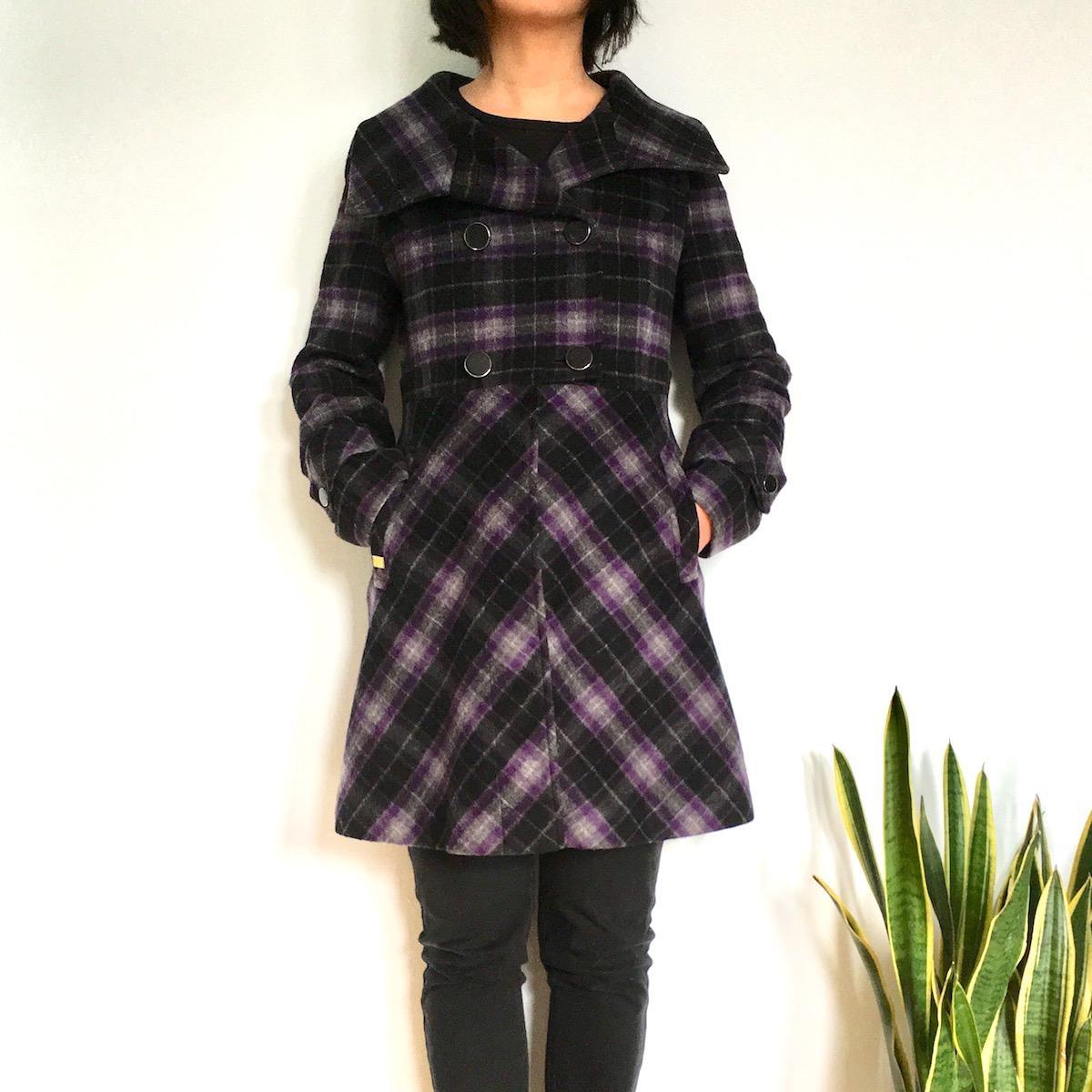
Selling on Poshmark: Tips from a Posh Ambassador: A woman with dark hair models a purple and black plaid coat

Selling on Poshmark: Tips from a Posh Ambassador

Today I’m sharing part 2 of my guide on how to sell on Poshmark. If you, like me, have been watching “Tidying Up with Marie Kondo,” then you’ve culled some things from your wardrobe and have set aside some of them to sell. In my first post about Poshmark, I laid out some info about how the app works, especially in comparison to eBay, and why it’s my platform of choice for selling women’s clothing. (Take a look at my Poshmark closet here.)

Make a good first impression

The most important step, in my opinion, is taking good photos. Like Instagram, Poshmark has a visual feed where people can browse through the items of people and brands that they follow. You want your items to stand out and elicit that you-want-this feeling.

1. Natural light is your friend.
What’s the key to taking good photos? A big part of it is the light. I’ve considered buying a lighting kit like this one (affiliate link). But that would be another thing I’d have to make room to store. If you’re a casual seller like me, you don’t need a lighting kit. You can use something for free: natural light. Photos taken at night produce grainier shots, so I always take my photos during the day to take advantage of the light. I’ve found that certain times of the day are better than others, though. Late afternoon light seems too harsh.

2. Don’t use the filters.
Poshmark gives you a bunch of filters to use. I don’t know why they do this as it distorts what the objects actually look like. Plus, I don’t think they look good. I recommend that you avoid them. Here’s one of the very first listings I created — using a filter — when I first joined Poshmark. The horror!

A listing for an item on poshmark: a black and white satchel bag. There is a filter on the photo, which was put a thick black frame around the photo and faded the edges of teh photo.

3. Choose the right kind of covershot.
The first photo in your listing is called a covershot. Take special care in creating it as it’s the photo that people will see in their feed. There are several styles of covershots I create depending on the item:

Styled – Sometimes I style a piece of clothing with other items to show what you could wear it with. It’s reminiscent of a magazine spread. This does take extra work as you need to put some thought into what you’re putting together, but I think it works well with wardrobe basics, say, a pair of black trousers. Help people see the possibilities of your item. Beware of overstyling your shot, though. Sometimes people include so many items in a shot that it’s unclear which item is for sale. I always try to display the item for sale most prominently in the photo.

Simple – Sometimes, though, it’s best just to present something straightforward. I’ll hang the item up on a wooden hanger and photograph it that way. It creates a clean and simple shot. I do this a lot with coats and shoes, letting the item speak for itself.

The Close Up – Some items have great details that may not be apparent from a distance, so I’ll take a closeup shot and just display part of the item. The houndstooth pattern and shiny buttons on this vintage sweater jacket are more intriguing when viewed up close.

Modeled – Then, there are clothes that look better on a person than on the hanger. I try to model most clothing so that people have an idea of what it looks like on. Of course, this is not always possible. (Some things don’t fit me anymore or they don’t look good on me in the first place which is why I’m getting rid of it.)

(Ideally, there wouldn’t be an outlet in this photo, but hey, this is the wall space I have. Later on, I figured out to hide it with a plant.)

4. Don’t steal photos.
Lastly, sometimes you can find stock photos of an item from a brand’s website. I think it’s OK to grab these. But I also always include photos of the actual item so that people can see the exact item for sale. But don’t be an asshole and take photos that another seller created. It’s their intellectual property. Also it’s just rude. On some occasions, I’ve found a blogger or influencer modeling an item I’m selling and I will include their photo to give styling ideas, but I always, always credit the blogger because it’s the right thing to do. (Technically, I should also be asking them for permission, but that would take time and I figure bloggers want publicity.)

Choose Your Words Carefully

1. Use keywords in your title.
Don’t just put “dress” or “shirt” in the title. Include the brand and describe the physical attributes of what you’re selling. What’s the style? The materials? Think about what people might use as search terms to find your item. I’m not just selling a “black dress.” I’m selling a “Banana Republic Black Fringe Knit Dress.”

2. Don’t skimp on details.
I don’t know how many times I’ve seen a seller include just one phrase in the body of the description. And I always think: Really? In my descriptions, I try to give some sense of how the item would work in your wardrobe. Is it a versatile piece? What does it look good with? Is it a wardrobe staple or a statement item? I indicate features (number of pockets, where the zipper is located, interesting design details) and the fiber content. And I always give the size. Yes, it’s a required field, but I’ll restate the size and include measurements such as the bust, waist, and length. I also indicate how I think it fits. Is it true to size? Does it run small?

3. Disclose flaws.
Carefully examine your item and describe the condition and any flaws. If it’s brand new, by all means, indicate that, but don’t throw the words “perfect” or “mint” around. People do it so much that’s it’s become meaningless. The first item I bought on Poshmark was a brooch in “mint” condition but it arrived with scratches all over it. As a buyer, I now run away from a seller if I see those words. It’s better to be upfront about your item’s flaws so that your buyer won’t be disappointed and feel cheated. Better to over-describe flaws than to under-describe them. Also, photograph these flaws clearly.

That being said, if something has a lot of flaws, it’s best not to sell it at all. Just don’t.

Price It Right

How to sell on poshmark: six items, all shirts or sweaters, listed for sale on poshmark.

People search for things online and shop secondhand for several reasons. Sometime they’re looking for something specific from several seasons ago or they like shopping secondhand for ethical reasons. But let’s not forget that one big reason is that they want to save money. Price accordingly! I am guilty of thinking, “I paid $X for this, so I want to recoup $Y for it.” But that’s not going to help you clear closet space.

Put yourself in the buyers’ shoes. How much would you pay for something that you’re buying online, can’t try on, and can’t return? People are here for the deals. To me, this means that an item needs to be at least 50% off retail, unless there’s something unique about it or it’s not easy to find. For something gently worn, I price it even lower. On average, my items are about 60% off retail.

That being said, people can make offers on your items, so leave yourself some room to negotiate. I always price my items a little higher than what I’d be willing to let them go for, anticipating that people will want to negotiate.

Be Attentive

1. Socialize, but just enough.
I went into this in my last post, so I won’t repeat myself here. But Poshmark is a social app, so make sure to share your items to parties and in general on a regular basis so that your items are always updated. That way, they’ll show up higher in a search.

2. Respond to inquiries quickly.
I don’t like leaving my notifications on for most apps. Those little red numbers stress me out. But I do leave them on for comments in Poshmark. I aim to respond to all inquiries in a day. On the flip side, if I ever buy something, I always ask a question of the seller to see how quickly they respond and how detailed of an answer they give. That lets me know if I’m dealing with someone who is more likely to be responsible.

3. Make a deal.
Poshmark allows buyers to make an offer to you. But, as a seller you can also make an offer to everyone who has liked one of your items. When doing so, your offer must be at least 10% off your listing price and include a shipping discount. (Otherwise, Poshmark won’t notify likers of the offer.) I try to send offers within a day of someone liking an item while it’s fresh on their mind. But I also periodically go through my closet and put offers on everything.

4. Ship with care.
When you make a sale, wrap the item with care for shipping. Some sellers wrap their items up like gifts. I personally don’t do that since I don’t like using excess materials, like wrapping paper, that just gets thrown away. (Did you know most wrapping paper can’t be recycled?) But I do protect items with tissue paper and other materials that I’ve saved from my own online shopping. Instead of using regular tape on tissue paper, I use washi tape. Not only is it more festive, but it’s better for the environment. (Washi tape is usually made out of natural fibers like hemp while regular tape is plastic.)

I also make notecards out of catalogs or other nice paper that was already destined for the recycling bin and write a quick note. (Usually the note tells them that I laundered or dry cleaned the item so that it’s ready to wear. I also ask them to kindly reuse or recycle the packaging.)

Hope these tips have been helpful. This is what has worked for me. (Now, of course there are people who take crappy photos, write one-sentence descriptions, and still make sales. ¯\_(ツ)_/¯  )

New to Poshmark? Consider using my code, MELISSITA, when you sign up to get $10 off your first order.

UPDATE 6/11/19 – Poshmark has added a new category: home decor, which includes bedding and bath.

UPDATE 3/20/21 – You can now include a video clip (up to 15 seconds) on a listing.
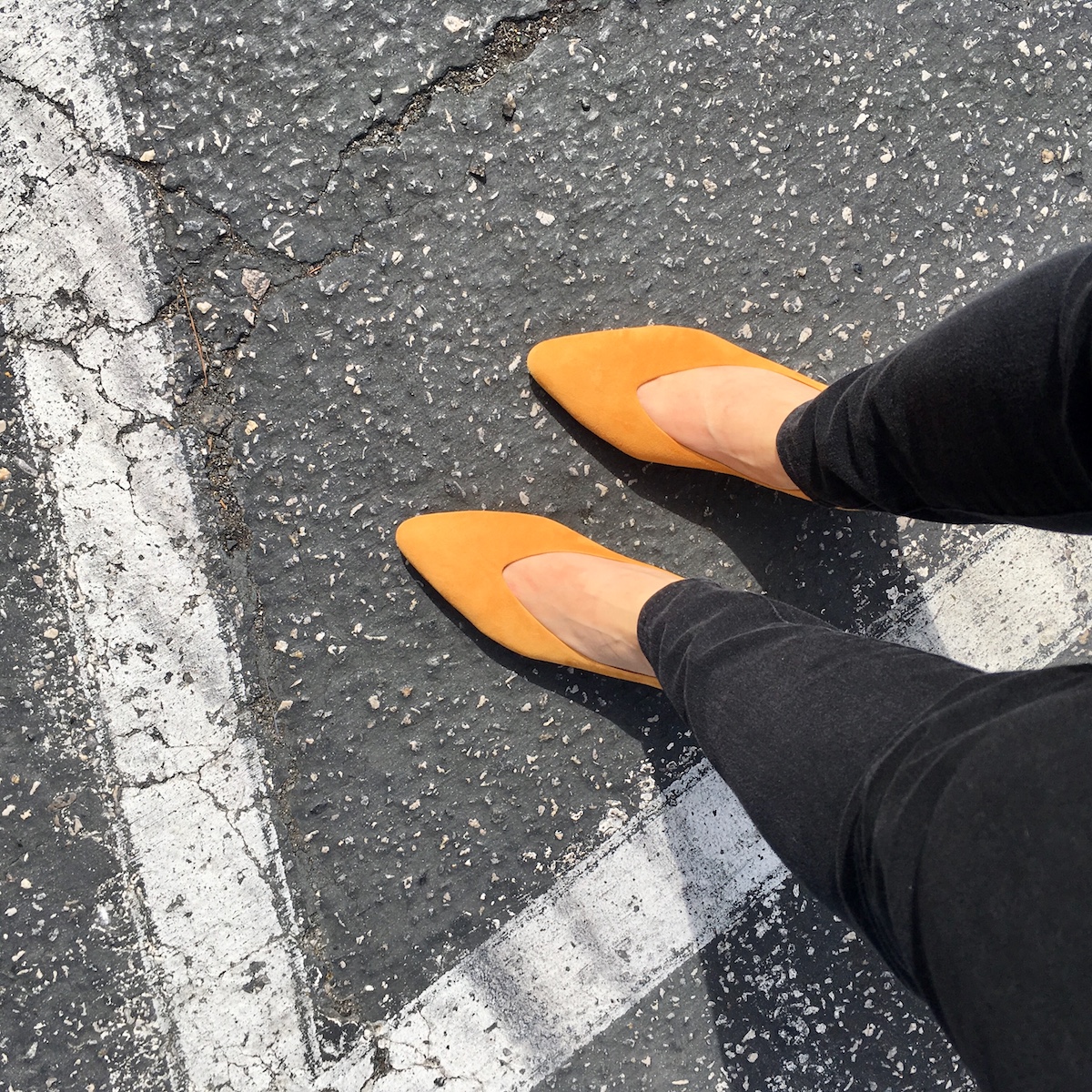
View of shoe as worn from above. Shoe is against a black pavement with white paint lines.

Top Posts of 2018

Happy new year, dear readers. 2018 marked my second year of blogging, chronicling the objects I love, the things I wanted that didn’t work out, and also my attempts to be a more conscious consumer. Here’s a look back at the most-read posts of the year.

Most-Read Posts of 2018

1. A First Look at Universal Thread at Target
2. Lively Review: My New Favorite T-shirt Bra
3. Fitting Room Review: Marimekko x Uniqlo
4. Fitting Room Review: The Everlane GoWeave Easy Pant
5. Fitting Room Review: Target’s Universal Thread High-Rise Skinny Jeans
6. Ethically-Made Zip Wallets by Baggu, Cuyana, & Everlane
7. My Search for a Midcentury Modern Plant Stand
8. Summer Stripes: The Everlane Collarless Belted Shirt Dress
9. Vintage Vibes: The Everlane V Heel
10. In Love with Everlane’s Soft Cotton Boatneck Sweater

A woman with black hair wearing the striped Everlane cotton collarless belted shirt dress. Her hands are in the pockets. A hand holding a red textured Cuyana small zip wallet
An Eames shellchair with a colorful pillow next to a white plant pot with a snake plant on a wooden midcentury style stand with 4 legs. Me wearing the Everlane GoWeave Easy Pant. They are baggy. I have my hand in one pocket.

** affiliate links below **

Some of my favorite buys of the year:


In 2018, these things also happened:

Thanks for visiting my little corner of the internet!

a navy button up shirt with white polka dots

Picks for Everlane’s Choose What You Pay Sale – Winter 2018

It’s the end of December, which means that Everlane is running its biggest Choose What You Pay Sale of the year. (Though they have them throughout the year as well.) Here’s a list of a few items I recommend, which took twice as long for me to pull together because I’m visiting my folks and they have very slow internet. Argh, the holidays!

Yellow Everlane V Heel as viewed from above

The V Heel – This is the first Everlane shoe I actually bought because most of their footwear fits funny for my wide-ish feet. All four colors (black, light blue, pink, mustard) are on sale! (I was contemplating getting these in another color, but my size is already sold out.) My review here.

A pair of navy colored shoes with a rounded toe and elastisic back

The Day Heel – Perhaps Everlane’s most well-known shoe. Looks like most of the suede ones (plus 1 patent and 1 regular leather) are now as low as $85. Here’s my review.

A black and white striped tank top against a white background.

The Relaxed Cotton Tank – This tank top is one of my wardrobe staples. Only the black and white mini stripe version is on sale. My review here.

Black and white striped tank dress against a white background

The Cotton Tank Dress – I also get a lot of wear out of the tank top’s cousin, the Cotton Tank Dress, during the summer. Again, only the striped one is on sale. My review here.

Stock photo of Everlane Form Sandals, taken from above. They are a light gray color and have crossover straps on top.

The Form Crossover Sandal – This simple slide sandal is comfy and molds to your feet. Six colors have been marked down to as low as $70. My review here.

a navy button up shirt with white polka dots

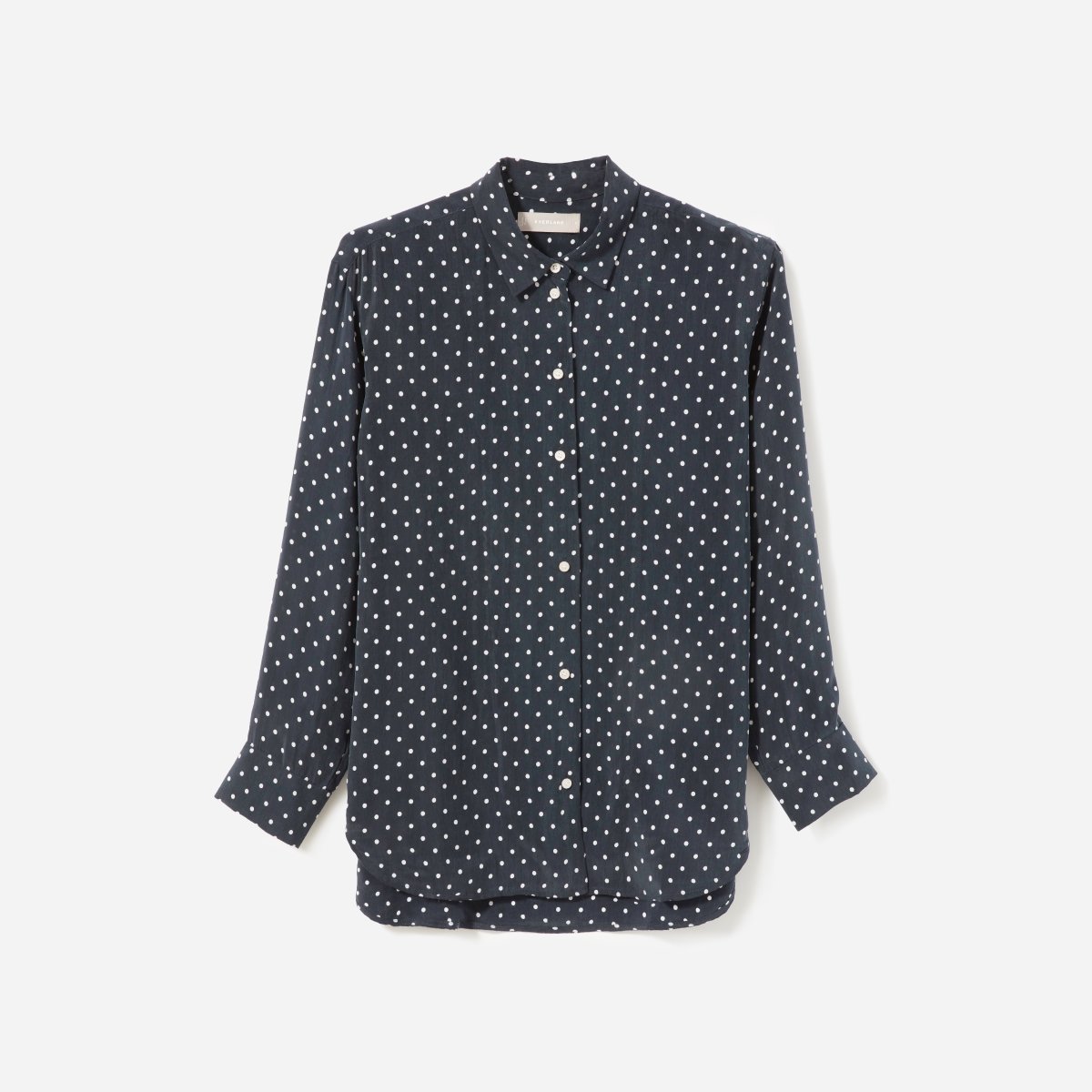
The Polka Dot Oversized Shirt –  I love a simple polka dot shirt that’s not too loud. The button up also drapes nicely. Both the navy with white dots and white with black dots is on sale at 20% off.

A pair of wide leg pants in a rusty red color

The Wide Leg Crop Pant – These wide leg pants have a high rise, all the better to lengthen your legs. Four colors are on sale.

A red and white striped shirt dress

The Cotton Collarless Belted Shirt Dress – I have the blue and white striped version of this. (Review here.) The red and white striped one has been marked down by half, to only $38.

A red and navy striped boatneck sweater against a white background

The Soft Cotton Boatneck Sweater –  If you’re a fan of stripes this sale is very good for you. It seems like Everlane put only the striped version of some of their goods on sale. I love this sweater, but honestly, I prefer it in a solid color. Review here.

There’s a few things on sale that I don’t necessarily recommend because they didn’t work on me (a petite with wide feet), but your mileage may vary. Check out my reviews for the Japanese GoWeave Tank Dress, the Silk Short-Sleeve Square Shirt, the Street Shoe, and the Editor Heel.

I put in an order myself for the Slouchy Chino Pant. Can’t decide if they’re cute or frumpy. There’s only one way to find out. [Update: I found out.]


You can find all my Everlane reviews here.

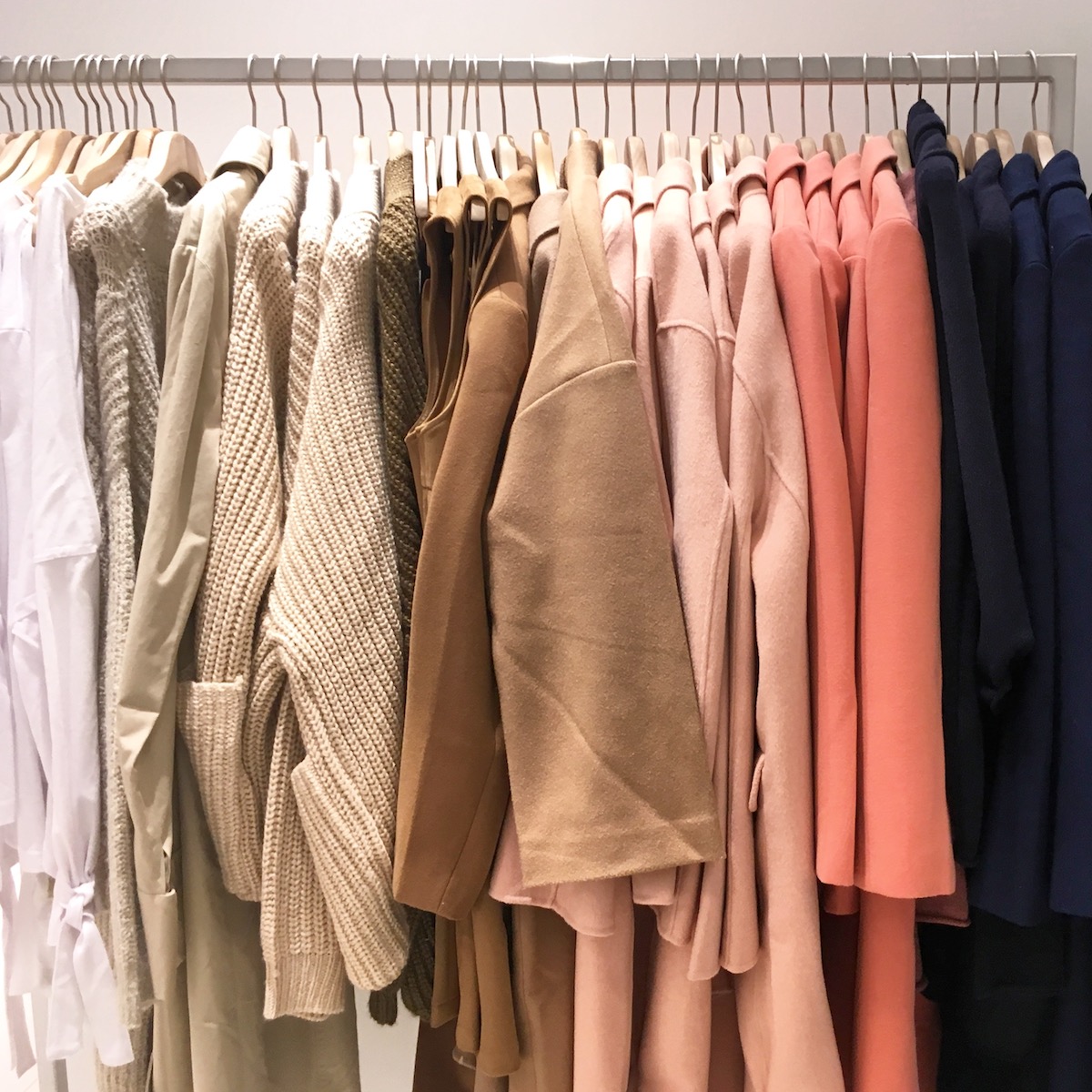
A rack of clothes in neutral colors, pink, and navy

A More Minimal Closet: The Year in Shopping Less

2018 marked my second year into trying to shop much less. I’ve kept a log of almost every piece of clothing I’ve bought over the past 8 years. So, how did I do? Looking back over those years, I succeeded this year in spending the least I’ve ever spent, dollar wise.

This year, I spent about $1,100 on clothing — and I covered the costs by reselling clothes that didn’t work for me anymore (mostly on Poshmark, which I give tips on in this post). Not including socks and underwear, I bought 31 articles of clothing. Here’s the breakdown:

Shoes – 8
Tops, including sweaters – 9
Dresses & Jumpsuits – 4
Pants – 3
Accessories – 3
Pajamas – 2
Bags – 2

When I see it broken down that way, some things seem excessive. Wow, 8 pairs of shoes? I have a hard time finding shoes that are comfortable, though. You never really know until you’ve worn them for a bit. So that’s one part of my wardrobe that’s a constant revolving door.

A pair of red wedge shoes next to a shoe box. The lid of the box has "Hopp" printed on it.

One of the 8 pairs of shoes I bought this year, from ethical brand Hopp Studios. These are a keeper. (My review.)

Of the new items I bought, I’ve already decided not to keep three. Two of those — a set of seersucker pajamas and a pair of shoes — were the result of my feeling compelled to buy something because it was on sale. Learning to control my impulses around a sale has been a big part of cutting down on my shopping. I’ve gotten better at it.

Still, I caved this year when I saw those pajamas marked down at Muji. I didn’t stop to consider if I needed another set of short-sleeve pajamas living in the temperate climate that I do. (I did not.) The shoes I didn’t keep were a pair of sandals that checked the comfortable box for me. But I was never entirely happy with the way they looked on me. I felt they were a bit “old lady” on me, but I told myself that I could style around them. The third item was a backpack from Muji that was not comfortable for me once I loaded it up with stuff.

Lessons learned to cut down on shopping:

1. Be strong in the face of a sale and don’t let your emotions overtake you. Sales manipulate your feelings. Just because it’s on sale doesn’t mean it’s a good fit — literally or stylewise — for you.

2. But, also, listen to your feelings because it might be telling you something. (I don’t feel good about how I look in the sandals so I never wear them.)

3. If you find yourself rationalizing a purchase, then you probably shouldn’t buy it.

4. Also, test out a backpack as soon as you buy it so that you can return it in time! Duh.

Me, a woman with black hair, wearing the Everlane cotton boatneck sweater with high-waisted jeans and ankle boots.

Some of the things I bought this year: Everlane boatneck sweater (review), which I wear often, and Vionic ankle boots.

Compared to five years ago, I’m doing much better. In 2013, I bought 88 items of clothing and spent $3,000 — nearly three times as much! That was a particularly excessive shopping year, though, fueled by my getting sucked into the hype of designer collaborations at Target. (It was the year of Prabal Gurung and Phillip Lim). Plus, a few of those purchases I blame on serving as a bridesmaid.

About a third of my purchases this year were from ethical brands. A fair number of things were from Muji, which strives towards sustainability. (However, I don’t know whether their production is ethical.) And then I still shop sometimes at fast fashion spots, namely Target and Uniqlo.

I also went through my wardrobe and weeded out a lot — about 40 items — which I either donated or set aside to sell. So overall, I only really reduced by closet by 12 items (40 went out, but 28 came in). I’m hoping those 28 items are ones that I will wear more often, though. And I can probably weed out more too.

Still, I feel a little embarrassed writing down these numbers because it goes to show just how much stuff I have. 31 items averaged out over the course of 52 weeks means I bought one thing every 1.5 weeks. I don’t consider myself a shopaholic anymore, but these numbers — especially from 5 years ago — indicate otherwise.

I recently downloaded one of those closet apps where you can catalog your wardrobe and track how often you wear things. Have you tried one? On the one hand, I think it might be a time suck as it really hits that organizing/cataloguing button of mine. But maybe it will also help clarify even more what I really need and what I should do without.

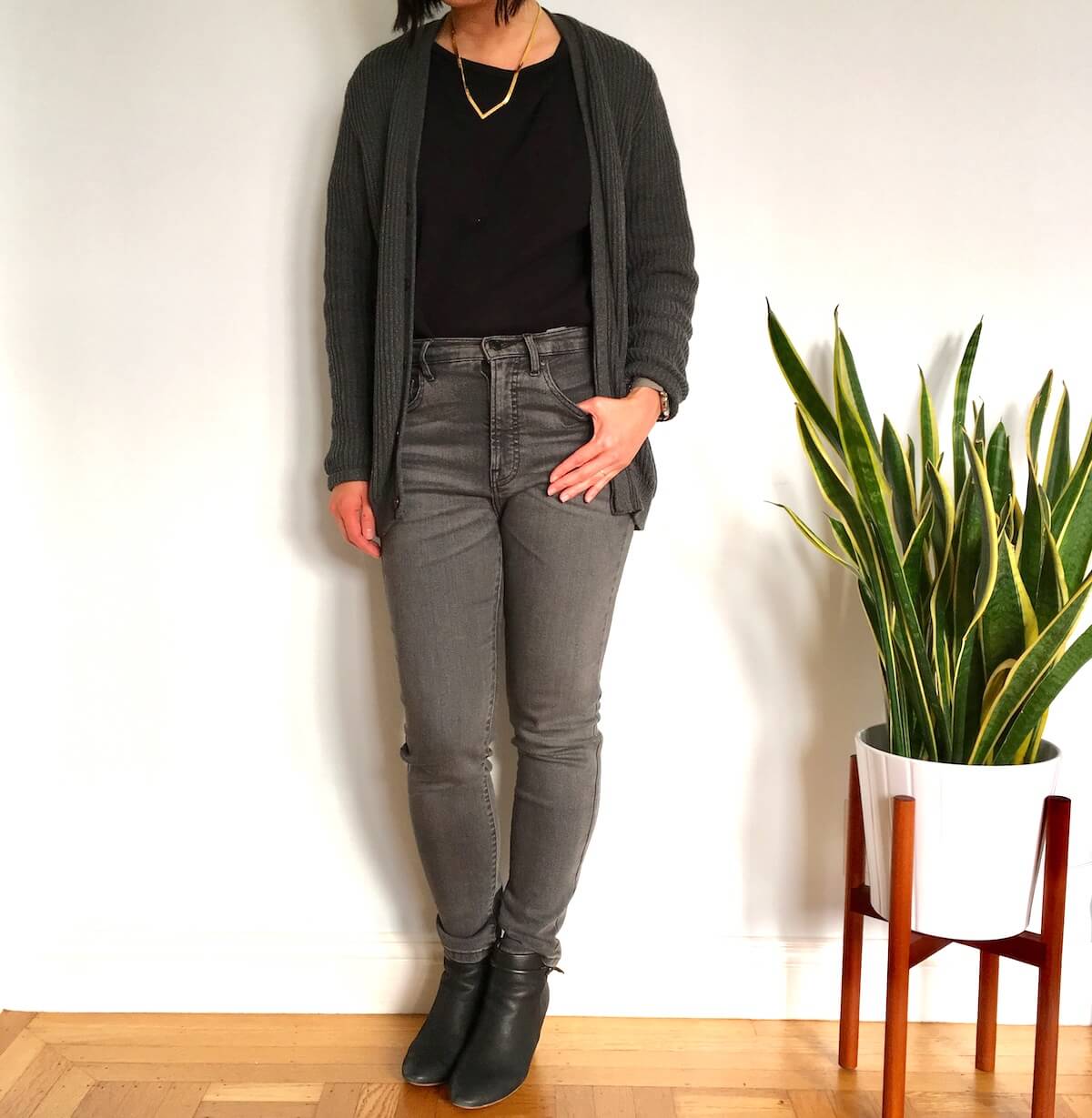
Everlane authentic stretch high-rise denim review: a person wears washed black jeans with a gray cardigan.

Everlane Authentic Stretch High-Rise Denim Review

Ever since I reviewed Everlane’s denim last year, I was hoping they’d come out with something stretchier. While I get a lot of wear out of my High-Rise Skinny Jeans, they’re made out of a stiffer denim that doesn’t stretch much. Well, Everlane read my mind (and probably many other people’s) and released their Authentic Stretch jeans this September. I visited the San Francisco store to try on a few pairs. I only tried on the high-rise options since that’s what works for me.

The Authentic Stretch High-Rise Cigarette Jean

Tow images of models wearing high-rise cigarette jeans in black. The model on right is wearing cropped jeans.

Everlane The Authentic Stretch High-Rise Cigarette Jean – RegularAnkle – $78

First up: the Authentic Stretch High-Rise Cigarette Jean, shown above in regular and ankle lengths on models who are 5′ 7″ and 5″ 10″. It comes in three colors right now: black, mid blue, and washed black (which reads kind of dark gray to me). The color above is the washed black. The fabrics between the washes felt similar. They were thick and similar to denim, though the washed black felt softer than the black. The fiber content is 87% cotton, 12% elasterell-p, and 1% elastane. I hadn’t heard of elasterell-p before.

According to Wikipedia, it’s “an alternative to the generic term “polyester” for a specific subgroup of inherently elastic, multicomponent textile fibers.” In other words: a stretchy synthetic. I’m trying to avoid synthetics, but I guess it’s hard to make stretchy jeans without any.

Here is 5′ 4″ me wearing the ankle version of the jeans in my regular denim size.

Compared to the High-Rise Skinny Jeans I bought last year, the rise on the cigarette jeans is a little higher (11″ versus 10.5″). Because these jeans feature a button fly instead of a zipper, they seemed to add a bit of bulk from the side. I didn’t love the way these hung on me, particularly on the legs. They’re a little baggy, especially around the knees. Not for me, but your mileage may vary. If you don’t want a super skinny leg, this is a good option to check out.

Authentic Stretch High-Rise Skinny

Tow images of a model wearing a turtle neck and high rise skinny jeans with flats.

Everlane Authentic Stretch High-Rise Skinny – RegularAnkleTall – $68

Next up: the skinny leg version of these jeans. Above: the jeans on a 5′ 10″ model, again in the washed black. These are available in four colors, including a dark blue wash. Like the cigarette jeans, these also feature an 11″ rise, which falls just above my navel. Again, I tried on my regular denim size. Upon getting them on, I thought, “Wow, these look great!”

However, they also felt tight. Yes, I could get them on, but it was a bit of a struggle with my thighs. I kept wondering how the next size up would fit. They were out of that size in the store, so I ordered them.

Here’s a comparison between my regular denim size, a 27, to the left, and one size up to the right. The larger size wrinkles more at the knees, and also doesn’t fit as tightly against the legs (which you can really see when comparing the bottom hem). Neither size looks like they did on the model. On her, they looked like jeggings.

Two images of a person, from the back, wearing a white t-shirt and skinny jeans in two different sizes.

From the back, they’re similar. I went back and forth trying to decide which size to get. I read reviews on the Everlane site where it seems the majority of people bought their regular denim size. But I felt a bit constricted in my regular size. In the end, I decided to go with the bigger size — the 28 — for the sake of comfort. (My hips are 37″ for reference.)

I wore the jeans around for a few weeks. The fabric loosens up a bit as you wear them, but it also holds its shape. They don’t sag in the waist or butt.

A person standing outside in front of a wall wearing a white sweater and gray skinny jeans, holding a coat in one hand.

Uniqlo U Cotton Sweater // Everlane Authentic Stretch High-Rise Skinny Jean Ankle // New Balance 574s  // Everlane Twill Zip Tote [review]

Here are the jeans on me after I spent an afternoon walking around. (I didn’t fix anything or look in a mirror before this photo was snapped, by the way. This is how they look out in the real world on a real person.) There’s some serious wrinkling going on around the knees. I don’t know what that’s about.

The High-Rise Skinny Jeans I reviewed last year, which are 98% cotton and 2% elastane, also wrinkled at the knees. At the time, I attributed the wrinkles to the stiffness of the denim. The Authentic Stretch High-Rise Skinny is 77% cotton, 17% modal, 2% elastane, and 4% polyester. It has plenty of stretch, debunking my original theory.

I don’t know if it’s possible to make a pair of stretch denim jeans without some wrinkles in the knees, though. My favorite high-rise skinny jeans up to this point (though not ethically-made in a LEED-certified factory) are Uniqlo’s High-Rise Ultra Stretch Jeans. Those also get baggier in the knees as I wear them.

A person standing outside in front of a wall wearing a white sweater and skinny jeans, as seen from the side.

Other than the knees, I think they fit well. There’s no gaping at the waist. I also really love the washed black color.

A person with dark hair standing outside in front of a wall showing the back of the jeans they are wearing.

However, a few days after these photos were taken, I noticed a defect in my jeans. The stitching was coming undone near the top of the zipper. It had unraveled almost half an inch, leaving a gaping hole. In fact, you can see it in the very first photo at the top of this post if you look closely. (I didn’t notice it at the time I was taking the photo.)

I contacted Everlane’s customer service and they refunded my money within a day and sent a shipping label so that I could send the jeans back to their production team. Shout out to Everlane’s customer service! They’ve always been prompt and done right by me when I’ve contacted them about an issue.

This isn’t the first time I’ve had a problem with the durability of stitching with Everlane jeans, though. The first pair of High-Rise Skinny Jeans I tried last year in this review also had stitching come undone near the zipper, though in a different spot. Everlane replaced those jeans for me. The second pair has held up fine, though. I’ve been wearing them on the regular for a year.

Overall, I’m a fan of these jeans and plan to replace the pair I sent back. Part of me is still wondering if I should go with the smaller size even though they felt too tight initially when I put them on. I’m a few pounds more than I usually am at the moment. But it’s not like my hips are going to change.

UPDATE 12/18/18 – I went back to try on the Authentic Stretch High-Rise Skinny jeans in the dark blue wash, and in those I fit my usual size. ¯\_(ツ)_/¯ The black washes seem run tighter than the blue washes.


Find a directory to all my Everlane reviews here.

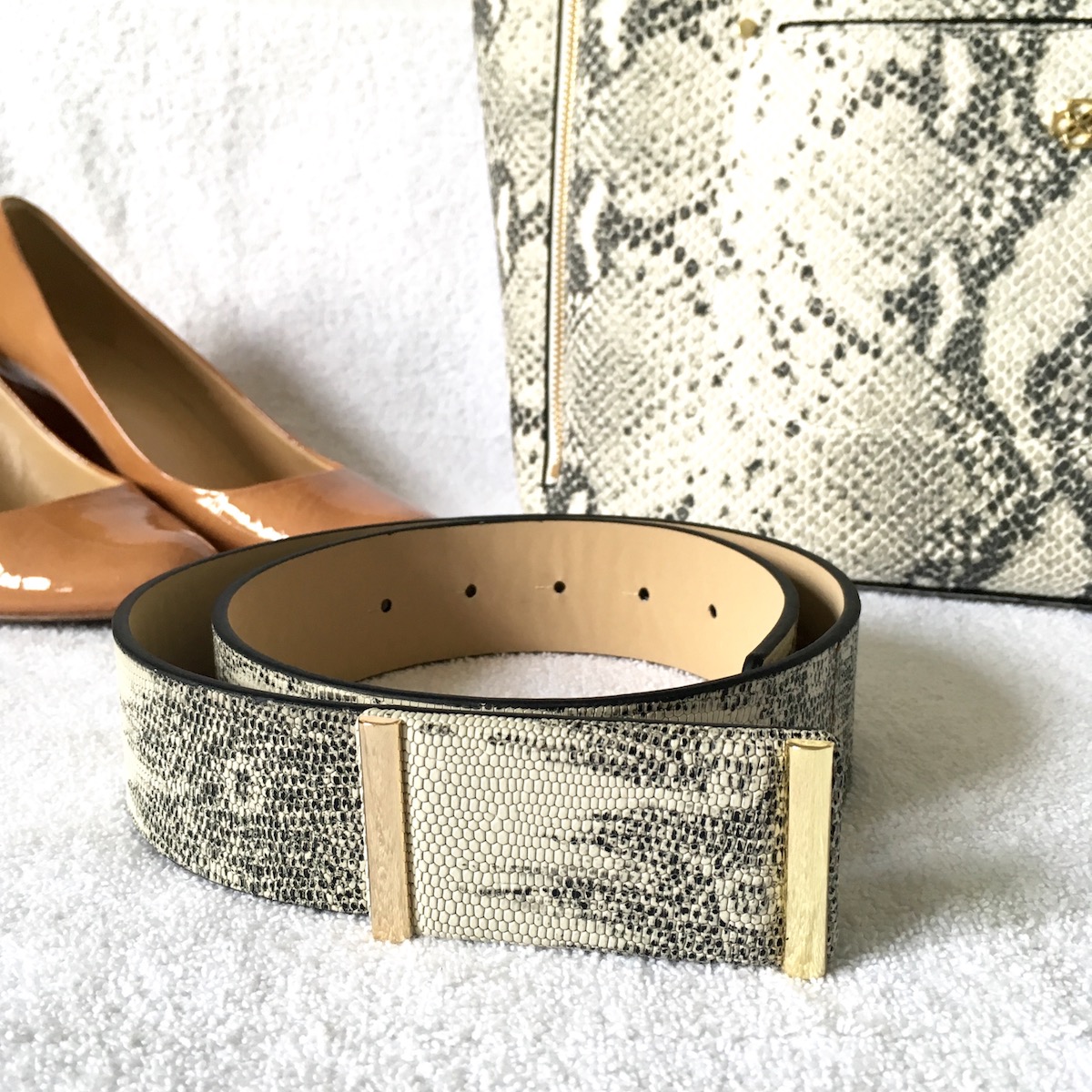
A snakeskin patterend belt in the front, with shoes and a matching bag in the background.

Selling on Poshmark vs. eBay

One thing about striving towards sustainable style and trying to be pickier about what I keep in my wardrobe is that I’ve expelled quite a few things from my closet. I donate some of those items, but some things I hold on to for clothing swaps or to sell. I like to sell, not just because of the potential to recoup some of my costs, but because the clothes will go to someone who wants it. (The vast majority of clothing sent to charity thrift shops don’t sell. As much as 80% go to textile recyclers.)

I started off selling clothes on eBay, but in 2012 I joined Poshmark. Last year, after 5 years on the app, I became a Posh Ambassador (what they used to call a Suggested User). A friend asked me for tips, so I began writing this guide for her, but figured it would be useful for others.

Sceenshot of a Poshmark closet for user Melissita, showing some items for sale.

If you’ve never used Poshmark before, there are some things you should know about it. I think of Poshmark as a mobile app, though you can also open it up on a desktop browser. In that way, it feels like it was designed for ease of use — and I do find it easier to use than eBay. (Yes, eBay has a mobile app, but I’m not a fan of it.) How do the two platforms compare?

1. Listing an item for sale is easier on Poshmark.

On eBay, there are lots of fields to fill out before you get to your item description. Depending on what your item is, it will ask for various details. Let’s say you’re selling some shoes. eBay asks for brand, model, product line, material, color, MPN, occasion, style, heel height, width, pattern, features (ankle strap? bows? crochet?), toe type, and so on. Sure, many of the fields are optional. And yes, these fields exist to make it easier for folks to search. But wow, so many fields. With Poshmark, you upload your photos, write your title and description, and fill out 8 fields, 4 of which are optional.

(Yes, I just got these shoes, and no I’m not actually selling them. Just showing you the interface.)

One quibble I have with Poshmark is that there’s a character limit to the descriptions. Usually this isn’t a problem, but I like to go into detail sometimes, especially if there are features (or flaws) that I want to point out. (On eBay there’s no limit.) So sometimes I have to spend time editing down a listing.

But, overall, Poshmark wins in this arena as I generally think it’s less of a hassle to list there. One handy thing in the Poshmark interface is that it tells you right away what you’ll make from a sale.

2. But photos are generally easier to deal with on eBay.

One advantage to eBay is that its photo quality is better. It posts photos at a higher resolution than on Poshmark. eBay also hosts up to 12 photos, whereas Poshmark allows 8 per listing, though if you really wanted to get around this, you could create a second listing with more photos. Poshmark also crops everything into a square, so ideally, all your photos should fit into a square. You could upload something that doesn’t fit into a square, but then it generates a distracting black background around it. To get around this, I downloaded another app that helps add white space to a background and resizes photos to fit into a square. (UPDATE 5/5/21 – Poshmark now has room for 12 photos, as well as video.)

3. Poshmark takes the guess work out of shipping.

On eBay, you have to figure out the shipping situation. How much does it weigh, roughly? Which service will you use? Will you offer free shipping?

Shipping details on eBay

Shipping is a flat rate on Poshmark through the U.S. Postal Service. At the time of this writing, everything costs $6.49 for Priority Mail, no matter the size and weight, unless you go over 5 pounds. Taking the shipping guesswork out of it means one less thing for me to think about as a seller — and no surprises. I’ve definitely undercharged for shipping on eBay and have been unpleasantly surprised at much something actually cost to ship. With eBay, I have to weigh my package and make my own shipping label. (Or in the olden days, take it down to the post office and stand in line!)

When someone buys your item on Poshmark, a shipping label gets generated and emailed to you. One con, though, is that $6.49 can feel like a lot to pay for a smaller item that weighs less than 13 ounces and can be shipped for less via First Class mail. That high shipping cost can deter someone from purchasing your item. On eBay you can offer different shipping options at different prices. But it does take more work. On the flip side, that $6.49 shipping on Poshmark looks great when you’re mailing something heavier like shoes. Shoes usually cost between $8 and $15 to mail if you’re doing it yourself, so $6.49 is a deal. UPDATE 5/5/21 – Earlier this year, shipping increased to $7.45.

4. The fee structure on Poshmark is more straight forward, though it’s also higher.

Poshmark has a simple fee structure. For all sales under $15, Poshmark takes a flat commission of $2.95. For anything that sells for $15 or more, Poshmark takes a 20% commission. What’s the cut on eBay? Well, it depends. I don’t actually know off the top of my head because calculating what I’ve spent on an eBay transaction takes work.

eBay charges an insertion fee (though every month 50 listings are free, which is more than enough for me). Then there’s the final value fee on the item itself, usually 10% for clothes, and then a final value fee on shipping and handling. (Yes, eBay takes a cut of what you receive for shipping, though you also get a discount on shipping costs.) Oh, and a PayPal fee of 2.9% when you receive money. I had to make a damn spreadsheet just to track all these fees. Although it sounds like the total fee should be around 13%, in practice it varies. Sampling a few clothing items on my spreadsheet and taking shipping into account, total fees I’ve ending up paying have been as high as 20% and 30%. In general, eBay’s fees are lower, but not always.

5. Poshmark is a time suck.

Built into the Poshmark universe is a social aspect. Like Twitter or Instagram, you follow other people and people follow you. In order for your items to gain notice, you have to share them. You can share them at any time to your followers. You can also share them during certain times of the day to “parties,” real-time virtual shopping events. There are several per day, some themed by type of clothing (shoes and plus size clothing in the example above) or certain brands. There’s one each evening at 7 PT that usually has a theme so broad that anything can be shared to it.

Sharing an item frequently also ensures that it shows up near the top if someone searches for it. For example, let’s say someone is looking for a trench coat from +J, the Jil Sander collaboration with Uniqlo. The coat that was shared an hour ago will show up higher in the feed than the coat that was last shared a week ago.

Poshmark rewards your participation. There’s an etiquette of sharing other people’s items. If I share someone’s item, often the other person will return the favor by sharing one of my items to their followers. You can also connect your Poshmark closet to Twitter, Instagram, Pinterest, and other social media channels. So there’s the opportunity for your items to be seen by more people if you actively engage on the app.

However, do I really want to spend my time doing more social media? No, I do not. Poshmark can be a time suck. When I first started out on the app, I spent way too much time on it. I joined share groups (where people promise to share items from each  other’s closets). Those are hours of my life I can’t get back. If this were the main way I made a living, that’s one thing. But for me it’s not a job.
So I limit the amount of time I spend on the app. I think of it as maintenance so that my items stay fresh and visible. I’ll open up Poshmark and share items if I’m waiting for the bus or in a line to pick up a prescription. If I’m at home, I definitely timebox it and try to spend no more than 10 minutes on it a day. (That’s still more than an hour a week if I look at it every day — and that doesn’t include the time it takes to list an item.)

Of course, there’s no social aspect like this on eBay, and I consider that a good thing. You list an item and then you don’t need to check back in on it. (Well, for the most part. eBay does this very annoying thing where if you set up a Buy It Now listing and don’t accept offers from buyers, it changes it to accept offers without your permission. Bitch, if I wanted this listing to accept offers, I would have set it up that way in the first place! You change it back, and then they’ll change it again. Ugh.)

6. Miscellaneous considerations when it comes to seller protection.

So, it’s time to talk about a sucky thing about selling, which is scammers and non-paying buyers. More than once I’ve had to deal with an eBay buyer who ghosted. When that happens, you have to wait a certain number of days to allow the buyer an opportunity to pay. And then you can file a report to get your final value fee refunded. On Poshmark, users have to connect a credit card, PayPal, Apple Pay, or Android Pay, so people pay. Once the buyer has accepted the package (which they have 3 days to do), the funds are released to you.

I’ve heard from other sellers on Poshmark, though, that buyers sometimes scam sellers. They’ll file a claim saying that you sent them a completely different item and send in a photo of that other item. Or they’ll claim there’s some flaw. Poshmark customer service will adjudicate. On eBay, there’s some indication of how trustworthy a buyer is through their feedback and you can block buyers with low feedback. I haven’t encountered that kind of scamming behavior on eBay, but then again, eBay is not a social platform where I might get wind of bad apples. But now, regardless of platform, I take video of myself packing up each item I sell in case I ever need to defend myself against a fraudulent claim.

Another con to Poshmark is that there are buyers who go around low-balling you. They’ll offer $5 for something, which is just ridiculous considering the $2.95 commission. No, I’m not going to pack this up and go down to the post office to mail it to make $2. Buyers can make offers on eBay as well, but you can set a minimum to reject offers immediately that don’t meet your threshold. That’s a time-saver.

7. Which platform to use depends on what you’re selling.

In general, I’ve found that clothing sells better on Poshmark. However, certain things sell better on eBay. You have to consider which platform the audience for your item likely uses.

My mother asked me to sell some of her barely-used Coach bags. I listed them on both platforms and for whatever reason, most of them sold on eBay, not Poshmark. Men’s clothing also sells better on eBay. While I bet Poshmark has taken a lot of business from eBay when it comes to women’s clothes, men have not migrated to Poshmark as much. (Poshmark added men’s and kids clothing categories in 2016.) Certain brands like Madewell sell quickly on Poshmark.

Work clothing (like dresses) sell better in my experience on Tradesy, another site that I tried. UPDATE: I no longer use Tradesy as sales have been slow there for me and the return policy means things can get sent back to you. A buyer returned an item and I learned that while Tradesy will cover the cost of shipping the item back to you, the seller is out the money spent shipping it out to the buyer in the first place. I have now lost money on this transaction.

(An aside on Tradesy: I find its interface more clunky than Poshmark and it also has a convoluted fee structure that requires some work to figure out how much of a cut it took. Like a consignment store you get more value when you keep the money as credit to spend on the site as opposed to withdrawing it. Also, you can’t write your own titles on Tradesy, which irks me. Tradesy creates titles based on info that you enter in its fields.)

screen shot of 4 items which have sold on poshmark: a shirt, two pairs of shoes, and men's jogger pants.

Poshmark is also only available in the U.S. — and limited to clothing, accessories, and new makeup. (Um, I’ve seen someone trying to sell a showerhead on Poshmark, but that’s against the rules.) So if you think an item will do better with an international audience, use eBay.

If you have something that’s highly coveted, then selling on eBay might be the way to go. People go to eBay to search for something specific. My vintage items sell better on Poshmark, and I think that’s because more browsing happens on the app. eBay buyers seem more serious than Poshmark buyers to me, yet I’ve made more sales on Poshmark. Overall, when it comes to clothing, I prefer selling on Poshmark to eBay and Tradesy due to how straightforward it is, even though I have to maintain it.

I started this post with the intention of writing some tips on how to sell, but I’ve already written more than 1,800 words! I’ll stop here for today, but I’ll share those tips in an upcoming post.

Brand new to Poshmark? Consider using my code, MELISSITA, when you sign up to get $10 off your first order.

UPDATE 1/17/2019 – Part 2 of my Poshmark guide, with tips about how to sell, is now up!

UPDATE 3/31/2019 – Some recent experiences with eBay have really soured me to the platform. eBay continues to to change the format of my Buy It Now listings to ones that accept offers. Another thing that happened recently is that eBay restricted my account so that I can now only list 15 items for sale at a time. Why? Because someone else opened an account that led them to believe that I had opened a second account (which is against their policies). I absolutely did not open a second account and was alarmed that someone may have stolen my information!

When I called eBay about it, they wouldn’t tell me what type of information was similar. Was it my email? My personal information? Something financial? They just kept saying, “Don’t worry” and that they would file an appeal. Yet I haven’t received any notification of an appeal. The other account has now been shut down, yet my account is still restricted. I looked on some forums and apparently this is not an uncommon occurrence. I have been selling on eBay for more than 15 years and have an excellent feedback score, yet when I report fraudulent activity — someone who has enough info to pretend to be me — they don’t seem concerned and continue to punish me by restricting my listings. It’s time to take my business elsewhere.

UPDATE 6/11/19 – Poshmark has added a new category: home decor, which includes bedding and bath. Glad to have another marketplace that’s not eBay when it comes to those types of items.

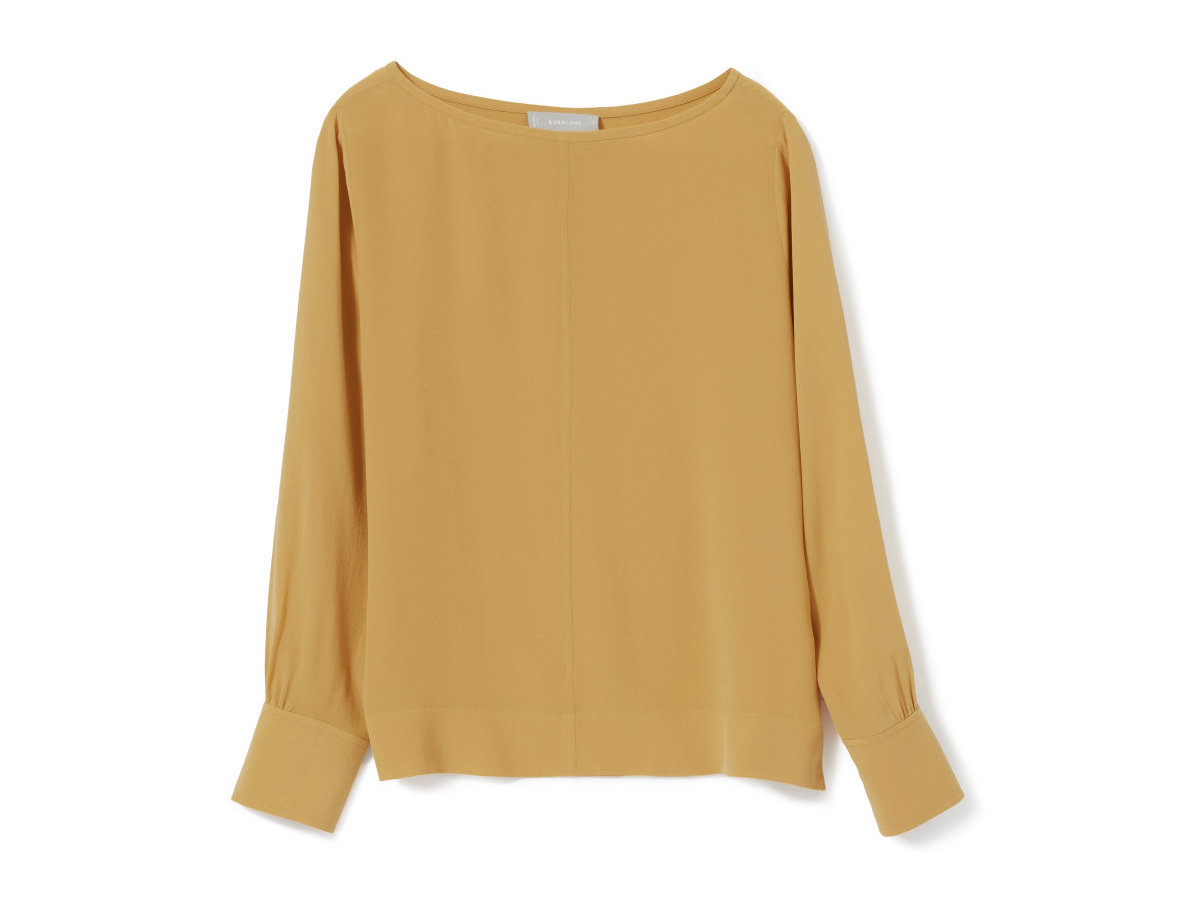
Stock photo of the Everlane Clean Silk Boatneck blouse in mustard gold.

Fitting Room Review: Everlane Clean Silk Shirts

My cousin was curious about Everlane’s Clean Silk line, so I went to the San Francisco store to try them on and report back. What’s Clean Silk? It’s what Everlane calls their line of silk products made by a producer in China who uses safer dyes in an energy efficient LEED certified factory. That’s just the first part of their silk initiative. You can read more about how they plan to become even more sustainable with their silk production in this article in Fashionista.

The Clean Silk Short-Sleeve Square Shirt

I didn’t have high hopes for this shirt because of how boxy it is. I know it’s designed that way but I was afraid it would just be too much on petite me, and it was.

Two images of the same person trying on a boxy striped short sleeve shirt, taking a selfie photo in the mirror.

Trying on the mini stripe colorway in size 4 and 2.

On the left I’m wearing my normal size, a 4. On the right, I’m wearing a size down in the 2. They were both too big on me; the ends of the sleeves nearly hit my elbows. I guess I could have kept sizing down. Maybe I should have tried that. I think I’m just not tall or long-limbed enough for this shirt so it’s kind of overwhelming on me. (I’m 5′ 4″.) The front is a little bit shorter than the front. I could see it being cute in that oversized way on someone taller.

The Clean Silk Boatneck Blouse

Next, I tried the boatneck blouse. As I professed in my review of this Everlane boatneck sweater, I love love love boatnecks. So, I was excited to try on this boatneck blouse, which seems so chic and elegant.

Two images of the same person trying on a boatneck blouse in two sizes and taking a selfie in the mirror.

Sleeves were too long for someone petite.

Again, this shirt wasn’t made for someone petite. Wearing my usual size on the left and a size down on the right. In both cases, the sleeves are too long. Spouse actually liked it, but it’s a no-go for me because the sleeves! (Also, I shouldn’t have worn a dark bra to try on light-colored silk. Oops.)

The Clean Silk Relaxed Shirt

This basic button down silk shirt is a wardrobe classic. It’s great in the spring by itself and perfect for layering in the colder months.

Given that it’s relaxed, I went down a size, which is what I’m wearing above. Oh hey, look at that: the sleeves are too long. Surprise, surprise. I roll up a lot of my shirt sleeves anyway — you get used to that when you’re petite — but that makes it harder for layering.

You can probably guess that I didn’t get any of these. I reported back to my cousin — and now to you — that these shirts don’t work as well for petites. If you’re taller, check them out. One refreshing thing was that none of the button down shirts had that gaping problem over your chest as shirts sometimes do. As to the fabric itself, it was light, soft, and on the sheer side. It seemed of good quality and that it wouldn’t wrinkle too easily. I love that these pieces are more sustainably produced and hope Everlane offers petite sizing in the future.

UPDATE 12/18/18 – Went back to Everlane and tried on the size 0 in the Short Sleeve Square Shirt. I still don’t understand this shirt.

A person taking a selfie in a fitting room mirror wearing blue skinny jeans and a black short-sleeve button up boxy shirt.


You can find all my Everlane reviews here.

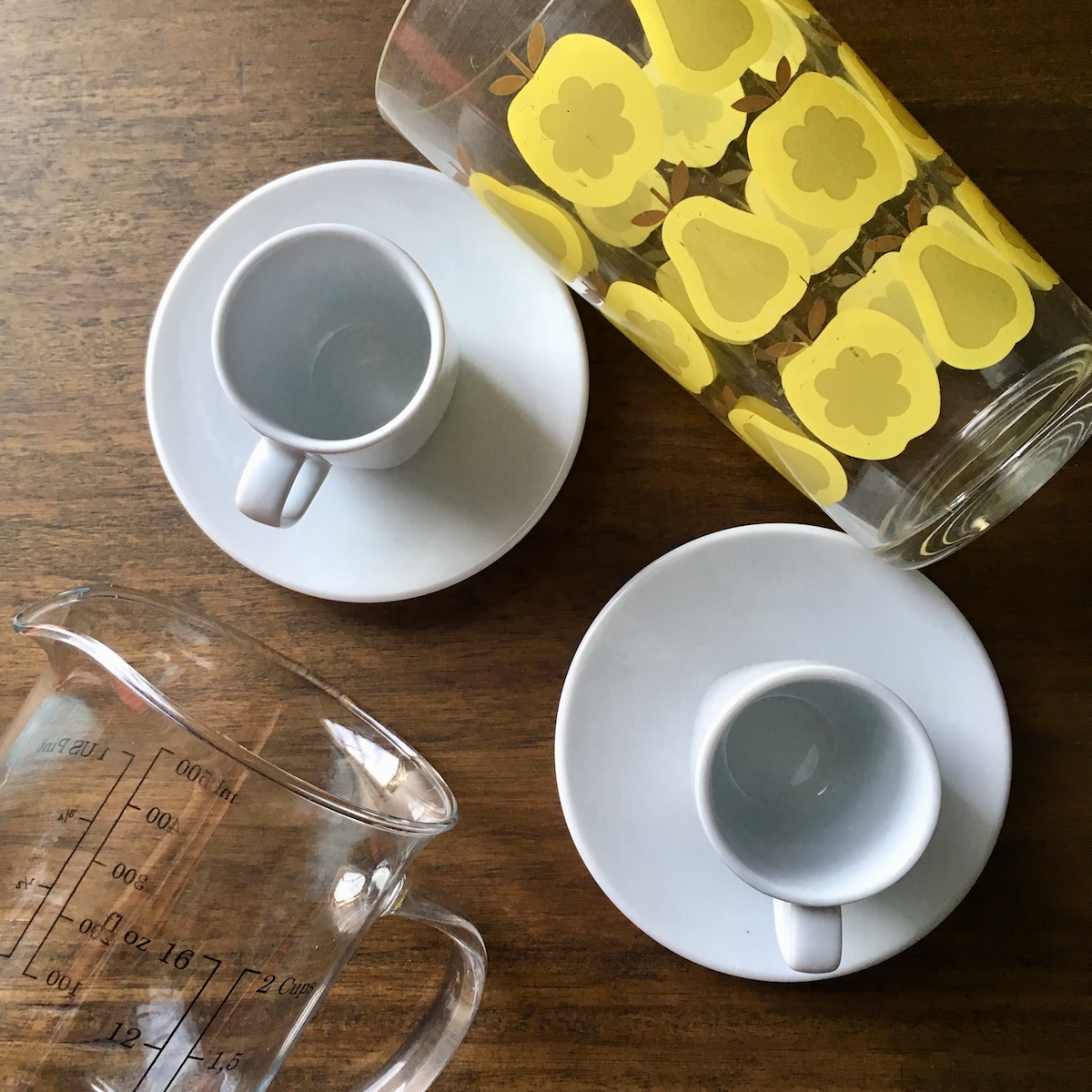
2 espresso cups, a measuring cup, and a cup with a pear pattern on it on a wooden table.

Thanksgiving KonMari-ing

Hope everyone had a good Thanksgiving and safe travels. While I did indulge in a little Black Friday shopping (hitting up a few businesses on my ethical holiday sales list), I only bought two things. Instead, I spent most of the weekend doing the opposite: trying to get rid of stuff. For some reason, I felt the urge to purge. One thing I write about in my About page is how this blog is about my struggle between loving stuff and my desire to pare down. I hardly ever write about it, so I guess today’s the day I do.

** this post contains affiliate links **

I grew up in a frugal immigrant family where we saved nearly everything because it might come in useful. My parents weren’t hoarders exactly, but they kept a lot of stuff. Our garage became the resting place for anything that they couldn’t let go of: college textbooks, pretty much every toy my siblings and I had ever played with, stacks of paper grocery bags, decor. It was a 2-car garage and at one point, they could only park 1 car in it because of all the stuff. I grew up with the same attitude until one year in college when I moved 5 or 6 times in one year. That quickly made me a believer in downsizing.

I fantasize about being a minimalist, but I still love things, especially well-designed things. And now that I’m more settled in one place, I can’t believe the amount of stuff I’ve accumulated. It’s a privilege, of course, to be in a position to have stuff. But we also live in a consumerist culture that is always enticing us to buy things.

Sometimes I feel overwhelmed by my stuff. Part of my brain is constantly trying to declutter. I read Marie Kondo’s book when it first came out and though I don’t like all her methods, I agree with the basic premise of it: you should only surround yourself with things you love. Her method of holding each object and asking if it “sparks joy” is something I was already doing in my own way. She promises that if you KonMari your home in one go (however long that takes), then you will only be surrounded by things that bring you joy and your life will change.

Well, I started KonMari-ing 3 years ago and I never quite finished. Books and music were not easy exactly, but I managed. The easy stuff for me is kitchen and clothing. I’m always reconsidering the items in my closet, actually, which is why I have a pretty active Poshmark store. But getting to a quality-over-quantity wardrobe is just one piece of the picture. I never got through the last stage of KonMari-ing: photos, letters, mementos from projects I’ve worked on, etc, the personal stuff that’s meaningful probably only to me. (If you have a good method of handling this kind of stuff, let me know!) Meanwhile, things slowly creep into the home.

So, I kicked a bunch of things out of my kitchen this weekend. That red vacuum coffee carafe? Used it once. Espresso cups? An impulse buy at Ikea because they reminded me of a trip to France, but I never make espresso. Those Orla Kiely for Target plastic glasses that I was so stoked to find? Getting a little worn; I have too many glasses anyway. Kondo says that you should thank your items for their service when you let them go and I like this part of her ritual. I removed about 20 items from the kitchen, but then I went and ordered placemats on sale from Target because I have a weakness for woodgrain patterns on textiles. Doh.

A cabinet with white plates and drinking glasses

A kitchen cabinet, post-Kon-Mari-ing.

There’s also things I own that don’t spark joy, but it seems wasteful to replace them. For example: a pizza cutter that I bought from Target when I was in my early 20s. It’s cheap and not aesthetically pleasing to me, but it works fine. I don’t know what the pizza cutter of my dreams would look like. Is it even possible for a pizza cutter (or a wrench) to spark joy?

I also started going through my office, and that was harder. Parting with something that I think will be useful is still a struggle. For example: art supplies. I mean, the whole point of art supplies is to have them on hand so that you can use them, right? But I have supplies I haven’t used in years. What to do? I’m sure Kondo would tell me to throw it all out; I could buy those supplies again when I needed them in the future. But ugh, that seems wasteful. In the end I told myself I could only have 1 box worth of art supplies. So I removed some things, mostly frames, fabric, and gift boxes (which I’ve been saving because maybe I’ll need to put something in a box and I’ll have the perfect one.)

As the spark joy method doesn’t work with everything, I’ve gone back to my experience of moving 6 times in one year. Now I also ask myself: Is this something I would take with me if I moved to another city? More often than not, the answer is no.

I also make an effort to try to find the best use for the things I decide to discard. I hate to think of things just going to the landfill. Here in the Bay Area, we’re lucky to have some great places to donate your unwanted goods to. So, I’ll end by mentioning a few of them. In addition to the usual suspects, like Goodwill, there’s also:

Community Thrift – San Francsico – This local thrift store gives its proceeds to more than 200 local charities. You can even pick which charity you want your earnings to go to.

SCRAP – San Francisco – A nonprofit org that takes your art, craft, and office supplies and sells them for cheap to artists and teachers. They also give them away on a regular basis to public school teachers. (My pile of gift boxes and fabric will be going here.) SCRAP is also one of my favorite places in San Francisco to wander around.

East Bay Depot for Creative Reuse – Similar to SCRAP, but located in Oakland.

Friends of the San Francisco Public Library – San Francisco – They take books and media for their Big Book Sale, which raises funds for the public library.

St. Anthony’s – San Francisco – Donations of clothing to this charity go to its Free Clothing Program for those in need.

Freecycle – Informal email lists where people list what they are giving away or what they’re looking for. I’ve given away items here that are still in good working order but maybe aren’t in nice enough shape for the thrift store. Or they’re not things that would sell in a thrift store. My last giveaway was 30 identical jars.

UPDATE 11/24/25 – Proud to say that I’m still doing this as a personal annual tradition. And since the pandemic, my local Buy Nothing group has taken over Freecycle as a way to give things to neighbors. It’s the only reason I’m still on Facebook, honestly.

Ethical Cyber Monday: a keyboard and mouse on a clean surface, with a pen and notebook nearby

2018 Ethical Black Friday & Cyber Monday

We do very little gifting of objects in my family for the holidays. I grew up with practical parents who preferred to give us cash for gits. And while I always appreciated it, I also thought it was no fun. Now that I’m older, though, I recognize this no-nonsense approach as optimal for not contributing to stuff that people don’t want or need or for taking up time making returns or exchanges.

But that doesn’t mean I don’t like to surprise someone with a present now and then. Or, um, buy something for myself.

I’m starting my ethical holiday sale list early this year because one particular maker I love has a sale right now. I’ll keep updating this post as I learn about more Black Friday and Cyber Monday sales.

** this post contains affiliate links **

Amour Vert – Based in San Francisco, Amour Vert makes the majority of their clothes in the area. As their name implies, they’re inspired by French style. In addition to their own clothes, they also carry shoes, bags, and jewelry by other brands, like Coclico shoes. 20% off everything with GREENFRIDAY through 11/26.

And Comfort – Minimalist plus size clothing. 15% off with THANKS15 through 11/26.

Baggu – My favorite reusable bag! They also make leather goods. 20% off sitewide. 25% off orders of $50 and more. 30% off orders of $100 and more.

Bash + Sass – Minimalist and gender neutral tees, hoodies, and rompers for babies and toddlers. Made in San Francisco. 20% off with PUMPKINPIE through 11/26.

Carol Young | Undesigned – Sustainably designed clothing for women made in Los Angeles. 20% off with THNKFUL.

Coyuchi – Minimally processed and ethically sourced bedding and textiles. (I keep eyeing one of their blankets but they’re still expensive. Sigh.) 25% off, ends 11/26.

East Fork – Earthy ceramics made in Asheville, NC. 20% off non-pot items with TRIMMINGS through 11/26. (Sucks that it doesn’t seem to apply to ceramics, though.)

Erin Templeton – This Canadian brand makes bags with minimal hardware, some of them out of reclaimed leather. 20% off with BLACKFRIDAY18 through 11/26.

Everlane – Leave it to Everlane to do things a little differently. Their tradition is not to hold a sale. Instead, they contribute to a Black Friday Fund to raise money for a cause. One year, it was helmets for their factory workers in Vietnam. This year, they’re donating $13 per order, up to $250,000, to the Surfrider Foundation to clean up 20,000 pounds of plastic off beaches. $13 is the cost of cleaning up one pound of plastic. They do, however, hold periodic “Choose What You Pay” sales and one is taking place now. Curious about how something fits? Check out my reviews of Everlane items.

Graf Lantz – Bags, laptop sleeves, accessories, and housewares made in Los Angeles. I love the simplicity of their merino wool felt placemats and coasters. 30% off with THANKS30 through 11/27.

Midcentury modern style plant stand with white cylyndrical pot and a snake plant.

Hook & Stem

Hook & Stem – The makers of the midcentury modern style plant stand I raved about earlier this year, started Black Friday early with 25% off their stand and cylindrical pot combo! For example, a 10″ pot with a short stand is now $73.49 instead of $97.99 (before shipping). And if you want just a stand, they’re 15% off. The sale goes through 11/26.

Hopp Studios – This brand of comfy shoes is made in Texas. 30% off with CYBER30 through 11/26. The discount applies to sale items too. I may or may not have just ordered some wedge shoes.

Ilano Design – This Oakland-based brand partners with artisans in Mexico and the Philippines to make their sandals, bags, and rugs. 40% off with THANKFUL through 11/26. Plus, Ilano will donate a portion of proceeds to Al Otro Lado, which provides pro bono legal services for asylum seekers and deportees in Tijuana, Mexico.

Jenny Lemons – Limited edition clothing and textiles in whimsical prints that are hand painted or block printed. 20% off with THANKS18 through 11/26. Applies to their workshops too, which are held in San Francisco.

Lo & Sons –  Makers of stylish travel bags. Some items are marked up to 50% off. Also, enjoy extended returns (60 days instead of 30). Sale ends 11/26.

Londontown – I was impressed by this cruelty-free, 9-Free nail polish brand in a recent review. 40% off polishes and nail care with code EARLY40. Free shipping on order $30 and up.

Marley’s Monsters – Reusable goods for the home like washable “paper” towels, cosmetic rounds, and baby care. 25% off with GIVETHANKS through 11/26.

Nettle Studios – Small batch production of flowy clothing in natural fibers. Made in San Francisco. 10% off $200, 15% off $250, 20% off $300, 24% off $400. Through 12/3

Ethical Black Friday and Cyber Monday: Woven loafers with a stick of holiday leaves and berries.

Nisolo

Nisolo – This ethical shoe maker has put a selection of shoes and sandals on sale. Plus, take 15% off with EXTRA15.

North of West – Based in Portland, OR, this retailer offers simply-designed women’s clothing and kids clothes in fun prints. Housewares too. 20% off with SHOPLOCAL.

Nordstrom – Items marked down up to 60% off. Plus, if you spend $250 online, you’ll receive a $50 egift card in January. Through 6am PST on 11/28. I look for the ethical brands, like Eileen FisherRachel Comey, and Reformation.

Reformation – Speaking of Reformation, everything is 30% off on their site. Many sustainable brands have a minimalist aesthetic going on, but not Reformation, which I think of as certain kind of L.A. style. Get your form-fitting tops and dresses with high slits here.

Pigeon Toe – Ceramics made in Portland, OR. 25% off site-wide through 11/26.

S’ip by S’well – My favorite reusable water bottle. (Review here.) 20% off with BF2018 through 11/26. Their sister brand S’well is offering

The Stowe – Leather bags ethically made in Spain. 20% off with TGIF.

Stratia – Mark your calendars for 11/26. That’s when skincare brand Stratia is putting everything on sale at 20% off (except for gift cards.) I’m a fan of their Liquid Gold moisturizer which strengthens your skin barrier. Yes, it really works, at least on me.

Taylor Stitch – Responsibly-made men’s clothing. 20% off through 11/25.

First Image: Amy Hirschi/Unsplash

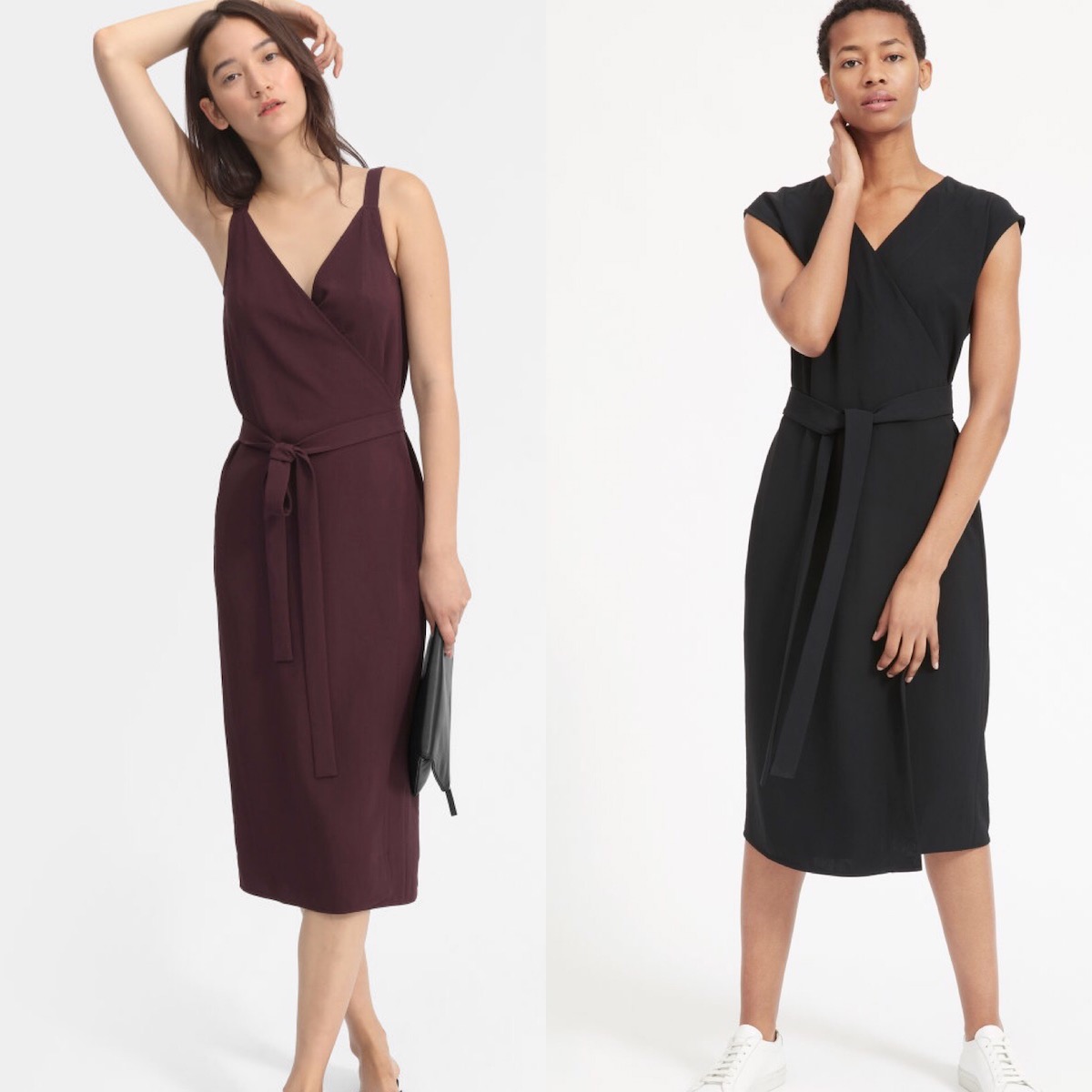
2 models wear wrap dresses

Fitting Room Review: Everlane Japanese GoWeave Wrap Dresses

Oh hey, it’s November. When did that happen? I should be reviewing sweaters, coats, and the like, but I have a backlog of items I’ve been meaning to review, things that I tried on and took notes on, so I might as well share my thoughts. So here goes my seasonally inappropriate post. Everlane released their Japanese GoWeave wrap dresses back in May. They have that minimalist thing going on and seem like they’d be easy to wear casually or dressed up with accessories for an event. I went to try them on.

The Japanese GoWeave Tank Wrap Dress

The dress retails for $100 and comes in six colors. I especially like this plum. There’s also some bright colors, like a lovely poppy.

A person with dark hair trying on a black V-neck wrap dress in a fitting room, holding up a phone to take a selfie. The photo is kind of blurry.

Apologies for the fuzzy photo.

I tried on my regular size, a 4, and it was just a disaster around my bust area. I tied the ties as tightly as I could, but there was just too much material. It wouldn’t lay flat, exposing my bra on one side.

I don’t think I could have sized down; the way it wrapped around my rib cage felt like the right size. Perhaps the straps are too long for me; I bet shortening them would solve the bra exposure problem.

Overall, the proportions were wrong for me; it’s quite long for a petite. (I’m 5′ 4″ and the models in the first photo are 5′ 10″ and 5′ 8″ respectively.) If I had this dress, I’d not only have to alter the straps, but hem it by quite a bit. On me, the hem doesn’t land at a flattering spot. There’s a shorter version of this dress, the Japanese GoWeave Tank Mini Wrap Dress, which falls above the knee on the model, so it would fall at the knee on me probably and look better. Still, there’s the pesky strap/bust fit issue.

The Japanese GoWeave Short-Sleeve Wrap Dress

Next, I tried on the short sleeve version. This one ran big, so I went down a size.

A person with dark hair trying on a short sleeve wrap dress from Everlane in a fitting room, holding up a phone to take a selfie in the mirror.

It’s OK. Not bad, but nothing special. Again, on petite me, it’s too long and a bit overwhelming on my frame. There’s a mini version of this dress as well. This version of the wrap dress did have pockets, so at least there was that!

Both dresses are made in an 800-person factory in Suzhou, China. Both dresses have tie belts and inner ties that seem secure. I wouldn’t worry about either of these dresses accidentally unwrapping on you. The GoWeave fabric felt like a good weight; it was a medium to slightly heavy weight, didn’t cling, and draped nicely.

What is Japanese GoWeave?

So, what is this magical Japanese GoWeave that’s drapey and wrinkle-resistant? 100% triacetate as it turns out, a synthetic fiber that’s similar to acetate, but more heat-resistant because of acetylation. And what the heck is acetylation? According to Wikipedia, it’s “the process of introducing an acetyl group (resulting in an acetoxy group) into a compound, namely the substitution of an acetyl group for an active hydrogen atom.”

Err, I don’t really understand what that means, but I do know that these fabrics are derived from cellulose, which is wood pulp. Wood pulp undergoes a lot of chemical processing to make it into a fiber though. Through a chemical reaction, it becomes a flake. Then, the flakes are dissolved and filtered to make a solution. The solution is extruded through a machine with tiny pores to make yarn.

What chemicals do they use? Are they bad? I don’t know. This chemical engineer on Quora says no. Of course, chemicals are not absent from the making of natural fabrics too. Cotton, grown the conventional way, uses tons of pesticides. Conventional textiles-manufacturing is a dirty business, though some small companies are trying to change that.

I don’t know how I feel about this fabric. On the one hand, triacetate is durable, mildew-resistant, and doesn’t pill much so if you bought this dress and then wore it for decades instead of consuming other things that fell apart more quickly, well, that doesn’t seem like a bad thing. On the other hand, it’s synthetic. Trusted Clothes, an ethical and sustainable fashion organization, gives triacetate an F grade.

If one of these dresses looked amazing on me and I could see myself wearing it repeatedly for years to come then I’d be more willing to overlook the fabric. (I think the most sustainable approach to shopping is to stop consuming so much in the first place.) However, these dresses were nothing special on me. So that’s a pass from me.

Though these particular cuts didn’t work for me, I’m glad Everlane made wrap dresses since the style flatters many different body shapes, but I’d like to see them in natural fibers. (And shorter petite-friendly lengths!)


Find all my Everlane reviews here.