Latest Posts

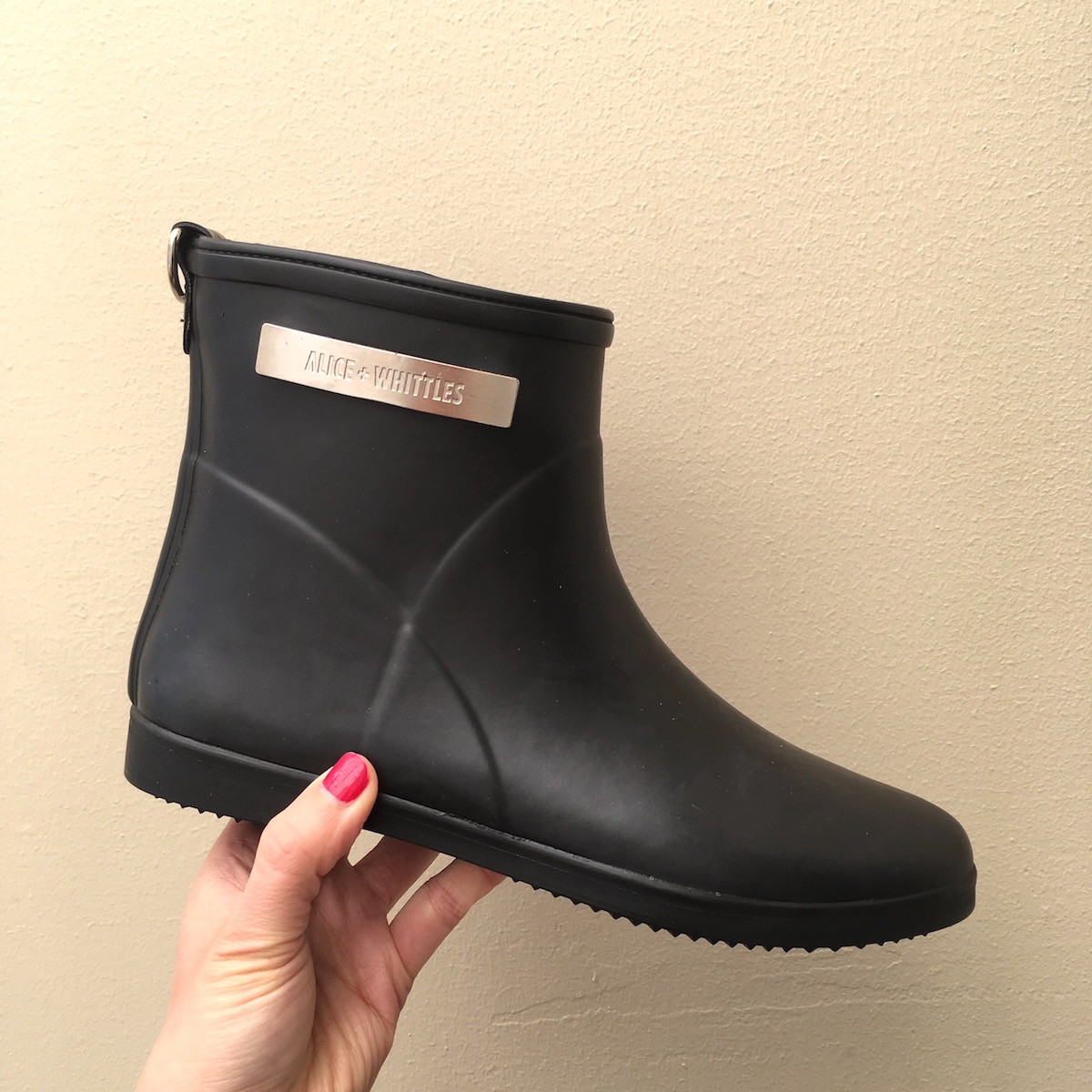
Alice + Whittles ethical rain boot review: A hand with red nail polish holds up a black rain boot. There is a metal plate at the top of the boot, which reads, "Alice + Whittles"

Another Look at Alice + Whittles Rain Boots

So, Alice + Whittles got wind of my review on ethical rain boots, where I compared their product to Everlane’s. (You should read that post first if you haven’t already.) They asked me if I wanted to try their boots in size 7, which they believed would be a better fit for my 6.5-sized feet. (I had tried on size 8 in my last post). I was skeptical that they would work since my feet are wide-ish and their shoes run narrow. But I have to admit that free stuff is enticing, so I agreed. They sent me their Classic Black Ankle Rain Boot.


This post contains affiliate links and a gifted item. If you shop through my links, I may earn a commission. As always, all opinions are my own and I only write about items I’m interested in. Thanks for supporting Welcome Objects!


The boots retail for the same price ($96) as the Minimalist Ankle Rain Boot I first tried. The main difference is the metal plate with the logo. On the Minimalist pair, the logo is vertically placed on the back of the boot and molded into the rubber. (You can see photos in my first post.)

The metal plate seems extraneous to me. Like, why waste resources making a metal plate? I feel this way about a lot of things. For example, I bought a nice dress once and the tag had a circular piece of metal connected to the string. I saved it, along with some other random pieces of metal and gave them to SCRAP SF, hoping that someone would be able to do something useful with it. But, honestly, I am probably giving SCRAP crap. Maybe they just ended up throwing it out. (In my defense, I also gave them art supplies I no longer use.)

Besides, most people probably don’t have a resource like SCRAP near them — or even if they did, wouldn’t think to give them random metal pieces — and would just cut the tag off and throw it away. (BTW, here’s a post where I take you on a tour of SCRAP.)

Anyhow, that’s a long way of saying I’m not into the metal plate with the brand name on it or extra touches in general. It doesn’t look bad; in fact it kind of lends a luxe touch to the boots. But I prefer them sans plate. Alice + Whittles does make an all black, no plate version, and I should have specifically asked for that pair to try. Baby blogger mistakes.

Construction & Fit

As to the construction and features, it’s the same as the other pair I tried on: made out of natural fair-trade rubber, removable insole, metal pull tab on back, and very lightweight. (Each boot weighed in at 14 oz on my postal scale.)

OK, now on to the fit. I noticed that Alice + Whittles updated their site since I first wrote about them. Now their fit description reads. “Our boots have a narrow fit. We recommend that you order up a size to your closest full size. (e.g. If you are a 6.5, order a 7. If you are a 6, order a 7).”

Hey, that’s me! A 6.5 trying a 7. I tried a boot on my left foot first and was pleasantly surprised that it seemed to fit, at least width-wise. It felt snug, but not too tight. Then I tried the right foot. Dear reader, that’s when I realized how much freaking wider my right foot is than my left. I mean, I’ve known for some time now that my right foot is bigger. But the way that boot squeezed my right foot and not the left, wow.

This made me sad, as clearly the boots didn’t fit. What a waste.

But I’m stubborn and decided to wear them all day anyway for the purposes of this review. And well, well, well, what do you know — they stretched! I wore them again the next day and they held their stretch. The right boot is still tighter than the left boot on me, but they’re not uncomfortable like they were at first. They kind of molded to my feet!

I didn’t know this would happen. I own a pair of rain boots by a non-ethical brand that are also rubber, though synthetic. The whole reason I started looking for rain boots in the first place is because those older boots are too tight for my wide feet and don’t stretch. While they seem OK when I first put them on, by the end of the day they pinch my toes too much and my feet are unhappy.

Natural rubber, it seems, have some give, even with the fabric lining of the Alice + Whittles boots.

I wore them out and about, running errands in the neighborhood even though it was sunny. (We’re not projected to get rain anytime soon.) Comfort wise, they seemed fine, but nothing special. I still prefer the more cushiony insole of the Everlane rain boots. The Alice + Whittles boots were a little big in the heels for me. This was not ideal, but after I walked around a bit, it wasn’t as bothersome as I thought it’d be either.

View of black rain boots from above, as worn by someone who has black skinny jeans on.

I do like the almond toe shape of these rain boots.

I still find the opening of the boot too wide. As in: it seems possible that rain could fall in. This might just be the prevailing design of rain boots that don’t have a Chelsea stretch panel, though. (I looked at some Aigle boots online and they seemed similar in that regard.) If you carry an umbrella over you, this is probably not a big deal on a day with moderate rain fall. But I like to wear a rain poncho so I can go hands-free. I fear water would roll right off my poncho and into the boots.

Final Thoughts on Alice + Whittles Rain Boots

Overall, after being given a second chance to try these boots, I like them more than I did before. Of course, they’re a better size for me now. I still love the way they look, and feel like I can style them with my normal clothes. (You don’t have to stick to black, either. Alice + Whittles also makes fun colors every season. Right now there’s a bright yellow and a neutral-ish pink version, both with gold hardware.) They’re reasonably comfortable, though not the most comfortable. I’m going to keep wearing them and see if they continue to mold to my feet.

I have to ask myself, though, does the fact that they were gifted to me make me feel more fondly towards them? Honestly, I think it might a little bit. But also, if they hadn’t been gifted to me, I wouldn’t have worn them around outside and realized that they stretched.

UPDATE 5/22/19 – We’ve had some rainy days here in the SF Bay Area and I can now report that I tried these rain boots out in moderate rain. I wore a poncho and did not carry an umbrella and rain did not fall into the boots. I also purposely walked through puddles and they were watertight.

The boots have not continued to mold to my feet, so there’s a limit to how much they can stretch. They’re still a tight across the top of my right foot (which is wider than my left), but they don’t pinch my toes. I walked 30 minutes to get home the other night and they seemed fine. But I wondered how they would feel after a whole day.

If you generally wear wide widths, these will likely be too narrow for you, even if you go up a size.

Some black rain boots on a wet sidewalk, as seen from the perspective of the person wearing the boots. There are some purple flowers in front.

Out and about on a rainy day.

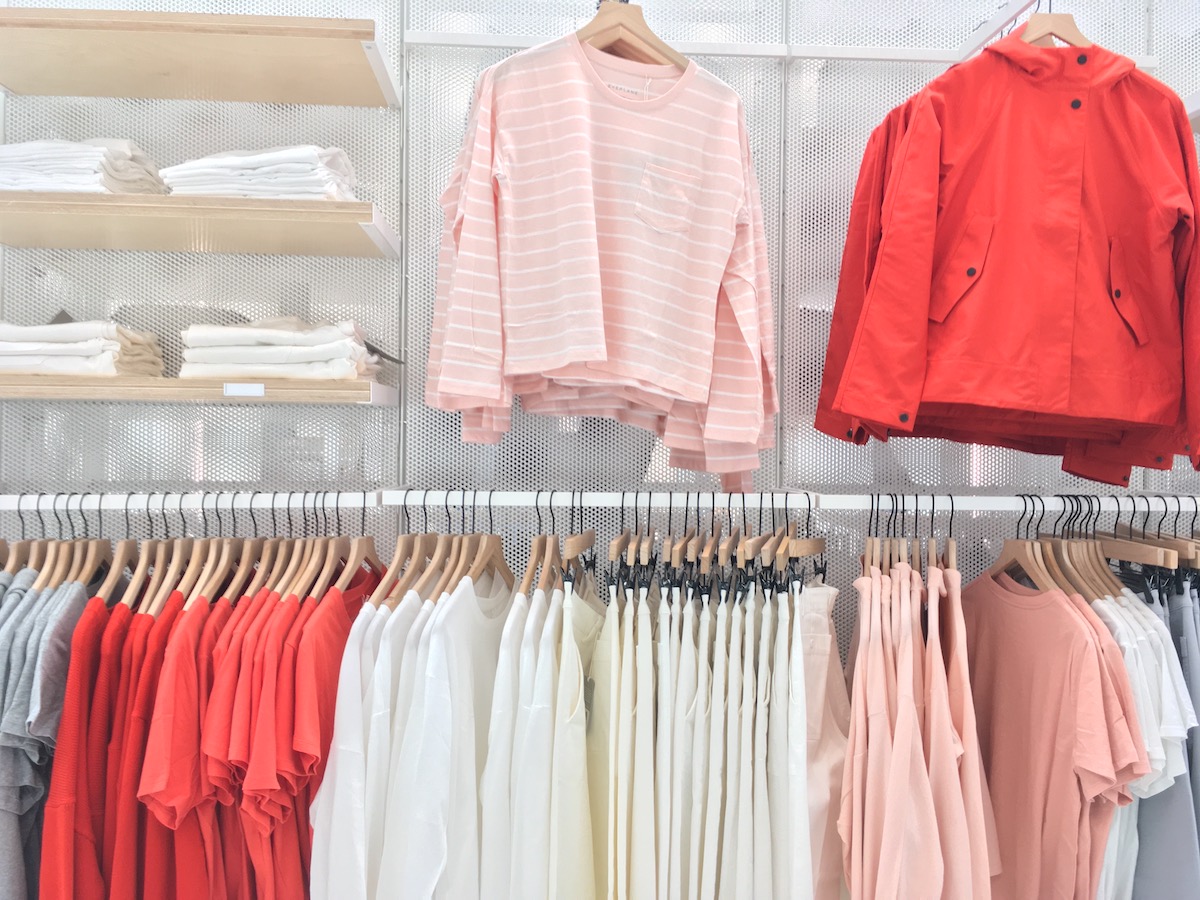
Racks and shelves of clothing at the Everlane store in San Francsico, showing pink, orange, and white clothing.

April 2019 Shopping Diary

What I Bought

What, it’s May already? Sigh. This year feels like it’s going by quickly.

I thought I’d do a quick check-in about my consumption of stuff. After window shopping too much in February, I stuck to the wardrobe shopping list that I made. Sweaters figure heavily on that list, so I checked some out during winter clearance sales, but none of them worked out.

As to home goods, we barely spent any money on those in Q1. (Food and unexpected healthcare costs, though, were another matter.)

** affiliate links below **

I upgraded our plastic shower curtain rings to aluminum hooks from Target. (Similar to these, but with just one hook.) While the plastic ones did the job, they were strictly utilitarian. The marketing copy for the new hooks actually reads, “Ditch those cheap plastic rings and upgrade your shower.” Um, guilty as charged. I was not a fan of pulling the plastic rings apart every time I wanted to wash the shower liner. Such a first world problem, I know.

So, I was very good about not consuming much in the first three months of the year. April, though, is another story.

First, I bought two things from Everlane. I couldn’t resist the one-day sale on wide leg pants and grabbed a pair of the Wide Leg Crop. I only started wearing wide leg pants last year after coming across these. Did I need another pair of pants? No. But I pretty much only wore skinny jeans in the fall and winter and liked the idea of pants with a different silhouette, rendered in a thicker fabric for cooler months.

Variety is the enemy of a minimalist closet — and I easily fell for it. UPDATE: I ended up returning them. Review here.

The other item I acquired was the Form Bag, which I first wrote about in October. After thinking about it for six months, I finally bought it. (I’ve added some photos of my new bag to that post and will be updating it with a review once I’ve tried it for a month. UPDATE: New review here!)

I also gained a pair of rain boots (one of the items on my list). Alice + Whittles saw my review of ethical rain boots and gifted me a pair in a size that fit me better. New review here. (However, it hasn’t rained here lately, so it’s not as comprehensive of a review as it should be.)

After not buying anything (except for shower hooks) for three months, I’m feeling kind of hungry to shop. And that makes me realize how ingrained shopping is to me as a habit. (For example, I’ve been looking at Vetta Capsule and wondering which shirt: the Boyfriend Shirt or the Girlfriend Shirt would look better on petite me?) Again, I’m forcing myself to pin things I want to my Pinterest boards to think them over. I also started a board with things that I’ve tried and rejected (an idea I copied from Xin).

I did purge some items, though. Do I get brownie points for that? Looking at my shoe collection, I realized there were an awful lot that I never wear. One pair I hadn’t worn since 2011!

I decided to line them up by my entry area. Every time I went on an errand in the neighborhood, I’d put on a pair. Thus, on walks to the library or post office, I determined that all of them were either uncomfortable or no longer my style. I used to put up with walking around on the balls of my feet in order to be 3″ taller. Nah, not doing that anymore. I purged four pair of shoes and could probably stand to do another sweep.

Four pair of shoes against a white background. There is a plush pink shoe with a wedge heel, a teal shoe with a cone heel, a black kitten heel shoe, and a red shoe that's the same as the teal shoe. They are all peeptoe style.

The great shoe purge of April 2019

What I Read

Do Plastic Bag Bans Work? – A statistic in this op-ed on the global movement to ban plastic bags jumped out at me. Apparently, “the average American throws away about 10 single-use plastic bags per week, but New Yorkers use twice the national average.” What? Who are these people who don’t hoard plastic bags under the kitchen sink or in the pantry? Do they not even reuse them once as trash can liners?

I only throw them out when they’re torn and unusable. (And by throw them out, I mean recycle them. San Francisco now takes bundled-up plastic bags and plastic wrap for recycling, but before I took them to Target. Bundling them together into a basket-ball sized ball is key, I learned. Otherwise they get caught in the machines.) I only really throw them away if they’re dirty.

However, plastic bag bans can backfire, as people tend to buy more plastic garbage bags if they don’t have access to “free” ones. And those bags are thicker and use more plastic. Free is in quotes because they’re not actually free. We consumers don’t see the costs as retailers pay for them.

San Francisco and other cities have instituted bag fees to encourage people not to take them. Here, we have to pay 10 cents per bag. (And they’re not supposed to be those super flimsy ones, but sturdier ones that you can reuse.) An economist who studied the issue says that bag fees are more effective than outright bans and that New York’s new plastic bag ban is bad policy as there’s no similar ban or fee on paper bags. People will just switch to paper instead of changing their behavior to use a reusable bag.

Cotton Totes vs. Plastic Bags – Another interesting read was this story about how cotton tote bags may be worse than plastic bags when it comes to environmental impact — putting the issue of plastic litter in our oceans aside. This story has a chart with bag types and the number of “reuses necessary to have same cumulative environmental impact (water use, energy use, etc.) as a classic plastic bag.” For a cotton tote, they calculated that it would take 7,100 reuses. For organic cotton, it’s 20,000 times! For a polyester bag (and they specifically listed Baggu as an example), it’s 35 times. So I feel good about my Baggu because I’ve definitely surpassed 35 uses with each of them.

Banks & The Gun Industry – I also read this story in the New York Times about banks that invest in the gun industry. That prompted me to close my account with Chase, which was rated an F. (You can check how your bank rates at IsYourBankLoaded). I still have a credit card with them, though, so as soon as I find a replacement card, I’ll be getting rid of that too. (Let me know in the comments if there are any with good rewards that you favor.)

The customer service rep who took my call didn’t ask why I was closing it, so I went out of my way to tell him and asked him to make a note of it. Like using a reusable bag, it’s one small thing I did on my own. But I’m hoping others did as well and they’re getting the message.

Welcome Objects 2019 Wardrobe Count To Date
Additions: 3 items = 3 items total for the year
Subtractions: 4 items this month = 27 items (more or less)

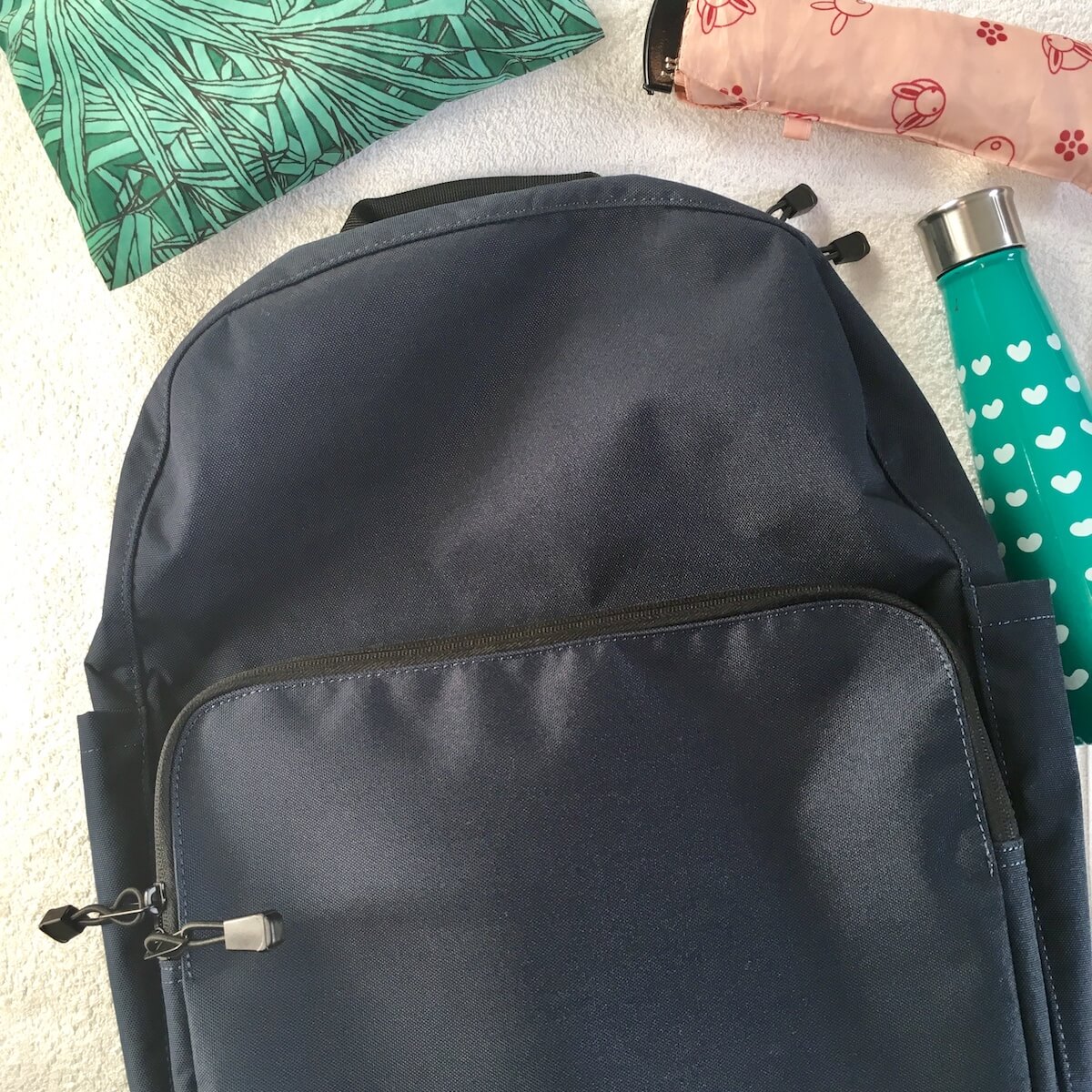
Lo & Sons Backpack Review: a flat lay of a navy backpack with some items such as an umbrella and water bottle.

Minimalist Travel Backpack Review: Lo & Sons Hanover and Hanover Deluxe

I’ve been in the market for a new backpack for travel. When traveling, I prefer to keep my hands free for opening doors, wheeling my suitcase, or what have you. While I already own a backpack, it’s not big enough to schlep all the stuff I bring when I travel. As I mentioned in a prior post, I bought a lightweight backpack from Muji last year, but failed to test it before taking it on a trip. Turns out it didn’t fit me well and strained my back. So, in search of a replacement, I turned to Lo & Sons, an ethical company that specializes in travel bags.

** this post contains affiliate links **

Lo & Sons has a cute brand origin story, which is that the founder, Helen Lo, was frustrated by not being able to find practical but stylish travel bags. I love this line from their website: “Unfortunately, the options were either too heavy, too frumpy, too tech-y, overpriced, overly designed, or pocketless black holes.” Same, girl, same!

Like Helen, I shopped around but found nothing right for me. When you google “travel backpacks,” what comes up are large backpacks that take the place of your carry-on suitcase. That’s not what I’m looking for. I’m talking about a backpack in place of my purse, the “smaller item to place under your seat” on the plane.

Looking at more regular-sized backpacks, what I found was that if they were lightweight, they tended to be ugly outdoorsy ones, like this. If they had a more minimalist aesthetic they didn’t always have good laptop protection, like this one from Everlane. And if they were built for laptops, they weren’t for travel and lacked a suitcase sleeve like this one from Incase. Here’s my criteria for this backpack search:

  • Reasonably lightweight, preferably under 2 pounds
  • Sleeve that goes over the handles of a suitcase so that you can set the backpack on the suitcase
  • Outside pockets that fit a water bottle
  • Minimalist aesthetic

So, that’s how I ended up at Lo & Sons. (I’ve been eyeing their leather belt bag for a while now and noticed that they also made backpacks.) They design for travel, without any loud logos — which, as you may recall from my review of the Everlane Form Bag, I’m not fond of. They also care about sustainability.

Lo & Sons makes four backpacks: the Hanover, the Hanover Deluxe, the brand new Rowledge (released just this week), and the Edgemont, a convertible tote-backpack that I will review another day. I tested out bags by loading them up with all the stuff I’d usually carry on a trip:

When Welcome Objects Travels: laptop, a book (and sometimes a magazine too), my journal, a meal and snack, water bottle (review), spork (review), sunglasses, down vest that packs down, Baggu reusable bags (review), and pouches for laptop power supply, cables, my wallet, and other small things (you can see what’s in them here).

The Hanover

This bag is the smaller of the two. It’s constructed out of 600D Recycled Poly, which is made from recycled water bottles. They also make it in a Ripstop Recycled Poly, which is lighter, thinner, and has a bit of a sheen to it.

Closeup of two backpacks next to each other for comparison of texture. Backpack 1 is blue and backpack 2 is black and the fabric is shinier.

600D Recycled Poly and Ripstop Recycled Poly

The backpack has a main compartment, one flat exterior pocket, and a hidden pocket at the side with a key leash.

A hand holding a keyleash.

Yay for a key leash!

All Lo & Sons backpacks feature removable padded inserts, which are held in place by six snaps on the inside edge of the bag. If you want want to carry your laptop (up to 13″ in the Hanover), use the insert. But you can also remove the whole thing, which is handy if you want to transfer the contents to another bag quickly. The insert has organizational pockets. In addition to the slip pocket for the laptop, it has two other slip pockets, plus one elastic mesh pocket that can hold a water bottle or umbrella.

An insert for a backpack with a padded area for a laptop

The insert for the Lo & Sons Hanover backpack.

The Hanover is decently lightweight at 1.75 lbs for the 600D Recycled Poly. It weighs just 1.3 lbs in the Ripstop Recycled Poly. (Also, I just want to say that I so appreciate that Lo & Sons actually lists the weight of their bags. Many sites don’t tell you this crucial piece of information.) The insert by itself weighs 9 oz.

The Hanover Deluxe

This backpack, as you might guess from the name, is bigger than the Hanover. Also made out of 600D Recycled Poly, its additional features include side pockets and a 3D front pocket (with key leash, 1 zip pocket, and 2 mesh pockets). It doesn’t have the hidden side pocket, though. The padded insert is similar to the Hanover’s, but it has an additional mesh pocket and can accommodate a 15″ laptop. It weighs 2.2 pounds with the insert weighing in at 10 oz.

The insert for a backpack with a padded laptop area.

The insert for the Lo & Sons Hanover Deluxe backpack.

The back of a blue backpack.

Comfy, padded straps with mesh.

How the Hanover and Hanover Deluxe Compare

The Commonalities

  • Same water-resistant material: 600D Recycled Poly (except for the 1 Hanover in black Ripstop Recycled Poly)
  • Adjustable shoulder straps with memory foam padding and mesh on the underside to ensure that they stay in place
  • Removable inserts
  • Zipper pulls (plastic) with stretchy parts that allow you to thread one into the other (a small security measure to make to harder for someone to open your bag)
  • Sleeve for suitcase handles (there are zippers at the top and bottom of the sleeve so you can keep the sleeve closed when you don’t need it, or even treat it like an extra pocket)
Zipper pulls on a backpack

Securing the zipper pulls.

Two backpack inserts side by side.

Size comparison: Inserts for the Hanover Deluxe and the Hanover.

The Differences

  • The Hanover Deluxe is larger (18″h x 12″w x 6″d) compared to the Hanover (16.25″h x 11.5″w x 7″d)
  • Thus, the Hanover Deluxe can carry a 15″ laptop as opposed to a 13″ in the Hanover
  • The Deluxe is also heavier by 7 oz (2.2 lbs vs. 1.7 lbs in the 600D Recycled Poly)
  • 1 elastic mesh pocket in the insert of the Hanover, 2 in the Hanover Deluxe
  • Flat front pocket on the Hanover vs. the 3D pocket on the Hanover Deluxe
  • Hidden side pocket on the Hanover (not available on the Deluxe)
  • 2 side pockets on the Hanover Deluxe (not available on the Hanover)

Lo & Sons actually has a pretty great comparison on their website, complete with charts and photos of how they look on people of different heights. I took some photos anyway to show how they compare on, well, me. These photos were taken with all the items from the first photo stuffed in them.

A person wearing a backpack, back view and side view.

Hanover backpack // Everlane sweater // Allbirds shoes [review] I’m 5′ 4″ in case you were wondering.

I think the Hanover looks better on my petite frame. While the Hanover Deluxe measures just half an inch wider than the Hanover, with stuff in the side pockets, it looks much wider.

I loaded up each backpack several times to try them out, walking around my apartment. They both felt comfortable. While the Hanover Deluxe was a tad heavier, it didn’t feel that noticeably different from the Hanover.

In the end, I went with the Hanover Deluxe because of the side pockets. I always travel with a water bottle, and I like storing it in an outside pocket (not inside close to my laptop just in case of a spill, though this water bottle brand has never leaked on me.) I also like stashing my prescription sunglasses in the other side pocket for quick access.

How the Backpack Fared After a Day of Travel

I’ve taken the Hanover Deluxe on a few trips since I first got it in December. So far, it still looks new. Fitting it under an airplane seat is no problem. (However, you might need to take a water bottle out of the side pocket if you’re in the aisle seat as those spaces are narrower than the space under other seats.) I have no complaints about the organization of the bag. It has just the right number of pockets and compartments for me.

One minor quibble is that there’s not a way to adjust the side pockets or cinch them to secure them (though a cinch would also detract from the clean, minimalist look). They can accommodate a large water bottle, but that meant my skinny S’ip bottle had a lot of wiggle room. Inside, the only thing I’d add is a Velcro strap over the slip pocket for the laptop to keep it even more snugly in place.

Even with the amply padded shoulder straps, my shoulders hurt after a day of travel that involved public transit to the airport on one end. I wish the bag were a little lighter, but to be fair, most of the weight comes from my stuff. At 2.2 pounds, the Hanover Deluxe weighs in reasonably light compared to other backpacks. I’m a small person (and one who holds a lot of tension in my shoulders too). So perhaps there’s no backpack that wouldn’t feel tiring to me after a day of travel. I own a smaller backpack for commuting, one with a padded back, and when I carry a laptop and adapter in it and walk for half an hour, it also hurts my shoulders.

There is one more bag that I’m curious about and that I didn’t think to try initially: the Away backpack. It also has a minimalist aesthetic and good organization with three compartments. But it’s a little heavier at 2.8 pounds and also more pricey at $200. At $148, the Hanover Deluxe is a little cheaper, though not what I’d consider cheap. (The Hanover is $128.) Lo & Sons holds sales from time to time, though. I snagged mine during one, which brought the price down to fit in my $100 budget. If you can’t wait for a sale, sign up for their mailing list and you’ll get a 15% off coupon right away.

Overall, I like the Hanover Deluxe and think both backpacks are good options to consider. I really appreciate the simple design, thoughtful organization, and how minimal they look. They seem well made, too, like they would stand up to the rigors of travel or everyday use. I’ll probably update this post in a year or more to let you know how my backpack has held up.

UPDATE 11/13/19 – Lo & Sons has updated these backpacks! There’s now the Hanover 2 and Hanover Deluxe 2. Design improvements include adding a little zip pocket to both bags on the the top that fits a passport. The external side pockets on the Hanover Deluxe 2 now come with zippers so that you can expand them (or not). Adjustable pockets was one of the things I suggested above. Now I want the updated version! (But I will remind myself that I should just use the bag I already have.)

UPDATE 4/13/24 – It’s been more than five years since I bought my Hanover Deluxe and it’s still going strong. Obviously it didn’t see much travel for the first two years of the pandemic. But now that I live in NYC, I use this backpack not only for travel, but regularly for my Trader Joe’s runs too (sans insert). This bag still looks great and I continue to be impressed by the quality. Lo & Sons also introduced an even fancier version of this bag, the Hanover Supreme, in November 2023.

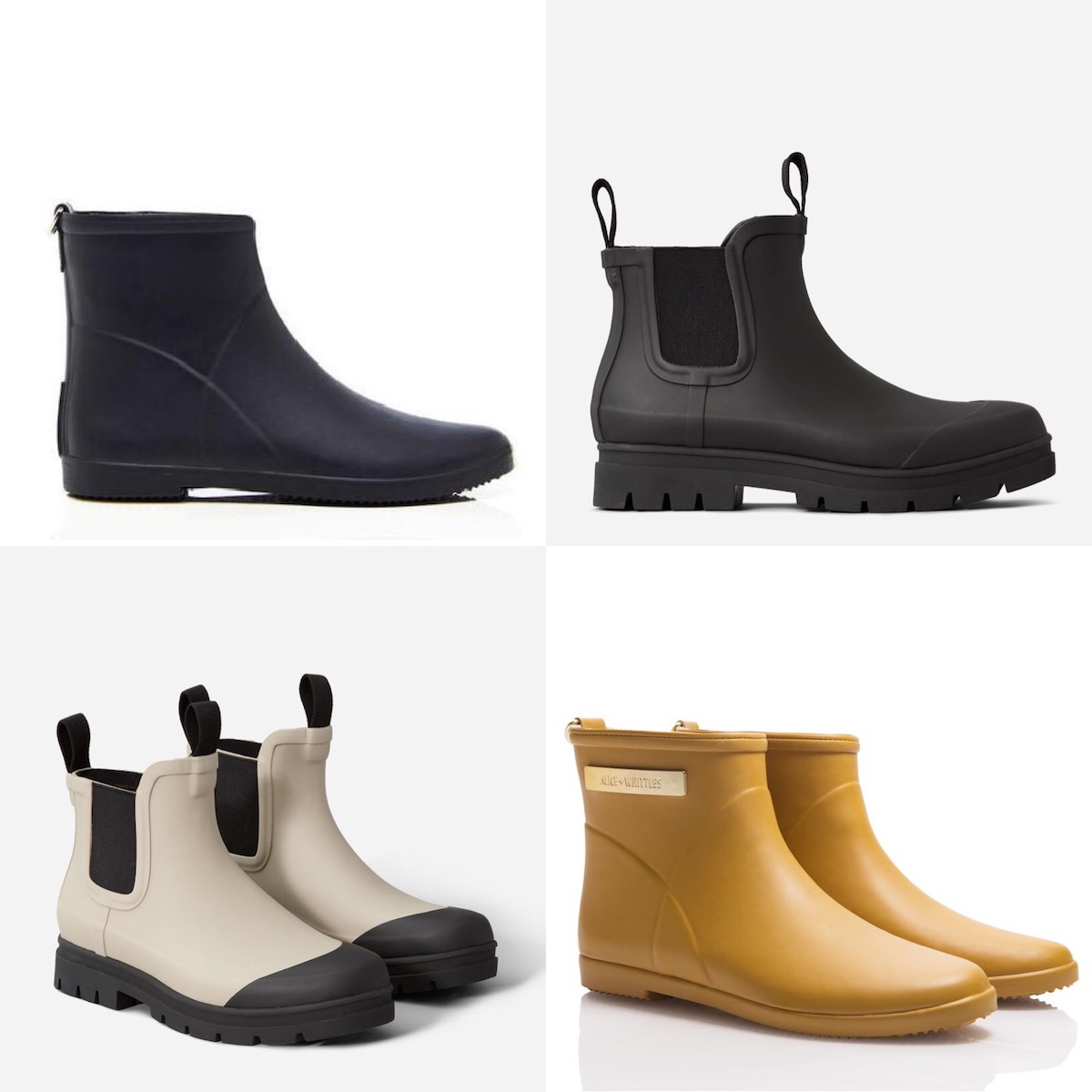
Everlane vs Alice + Whittles ethical rain boots: Stock photos of four pairs of rain boots, one in each quardrant of the square image.

Ethically-Made Rain Boots: Everlane vs. Alice + Whittles

As I mentioned in a recent post, I’m trying to stick to a wardrobe shopping list to cut down on frivolous spending. One of the items on my shopping list is rain boots, preferably ethically-made. Today I’m looking at two brands North American brands: U.S.-based Everlane and Canadian brand Alice + Whittles.

In my research I also came across some ethical European brands, like Aigle (which makes boots by hand in France), but while Zappos used to carry them, they no longer do. You can still snag certain styles like this one from third party retailers on Amazon. (But I’m trying to minimize Amazon shopping. I’m also a bit wary about third party sellers on Amazon and whether it’s easy to return things, especially since I have a hard time with shoes.)

Before I go into my review, there are some things you should know about my feet. First, I’m a half size: a 6.5. This is relevant because most rain boots come in only whole sizes. Also, my feet are a little on the wide side. (I sometimes wear wide widths, but mostly I wear medium widths in brands that tend to run wider.)

Everlane Rain Boot

Materials: 100% rubber (Everlane didn’t indicate if it was natural rubber, so it’s probably synthetic.)

Aesthetics & Details: Everlane’s rain boots have a rugged kind of look that I’m not into. They have a pronounced cap toe and a chunky aesthetic. That’s a strike against it for me because I want something that works with an everyday outfit. (I’m not the kind of person who generally carries around another pair of shoes to swap into.) The black colorway seems the sleekest-looking to me since the cap toe blends into the rest of the shoe. Everlane’s boots do have a lot of details that feel well thought out. It has Chelsea stretch panels and pull tabs on both the front and back that make them easier to get on. The treads are also pretty substantial — it doesn’t seem like you would slip in these.

Fit: Everlane says to get your usual size if wearing them with thick winter socks. “With other socks, size down. Half-sizes, size down from your usual size.” I’m a 6.5 and tried both a 6 and a 7 with thin socks. I found their recommendation accurate. The 7 was too big for me in the heels. The 6 felt like the right size to me: snug without much gaping at the top. However, they also felt a little too tight for my slightly-wide feet. For someone with narrow feet or a more average width, this probably wouldn’t be a problem.

The sales associate told me that she found her pair stretched a little with wear. I don’t doubt that this happened for her, but I’m not entirely convinced this would work for me. (As you can imagine I have tried to stretch a lot of shoes for my wide-ish feet and results vary. It’s better just to get something that fits well in the first place.) More alarmingly, though, she said that one of the tabs on her first pair ripped off. (Everlane replaced them, but that does make me wonder about the quality of the construction. I will say, though, that whenever I’ve had a problem with an Everlane product, their customer service has taken care of it right away.)

Comfort: The insole seemed pretty comfortable and I was surprised to find that they had a slight bounce to them. However, the boots were also on the heavy side and felt kind of clunky.

Price: $75

Where to Buy: Everlane website (shipping is free with two items) or visit one of their retail stores (at this time, only in San Francisco and New York.)

Alice + Whittles Rain Boot

Materials: Natural fair-trade tree rubber. I really wanted to support Alice + Whittles because of the way they source and make their shoes. The rubber they use come from trees in Sri Lanka and they only work with farms that undergo regular audits by the Fair Rubber Association.

Aesthetics & Details: I love the minimalist style of these boots! They don’t scream rain boots and I could see them working well with the rest of my wardrobe. The insole is thin and removable. (A reader shared that she put her own insoles in hers.) The heel is short, just 3/4″, and the treads on the bottom are a light zigzag pattern as opposed to the deeper treads on the Everlane boots. There’s a small metal pull tab on the back. The Alice + Whittles logo is also tastefully discreet on the back of the boot (though there is a flashier version with the logo on a gold metal plate.)

Fit: Alice + Whittles says, “Our boots have a narrow fit. We recommend that you order a full size up!” A full size up from my usual size would be a 7.5, but since these boots only come in whole sizes, I ordered an 8. The width of the 8 ended up being good for me, but it was too big everywhere else, especially length wise. I slipped into them easily because there was so much room. The opening at the top was huge (as you can see from my try-on photo looking down at the boots). Perhaps this is the case because they’re just too big for me. It seems to be part of the design though, as they appear that way on the models on their website too. I don’t understand this because it seems like rain could fall right into the boot with such a large opening.

Comfort: These boots were very lightweight, which felt great. However, the insoles were average in comfort compared to other rain boots (ethical or not) that I’ve tried. The soles seemed stiff, and I think they would probably tire out my feet. To be fair, comfort is a hard thing to gauge when the shoe isn’t even the right size for me. But, compared to Everlane’s boots, they were less comfortable.

Price: $96 – $110 for a short boot. Shipping — to the US and Canada only — is an additional charge. If you opt for the cheapest shipping option, called standard shipping, Alice + Whittles is “unable to replace packages that are lost, stolen, or damaged.” You have to upgrade to $20 secured shipping (via UPS pr FedEx) to ensure coverage in the event of loss, theft, or damage. Am I an unreasonable consumer for thinking that a company should always use shipping that covers these unfortunate situations? Something else that struck me as unfriendly is that “sale items are only eligible for an exchange or store credit.” No refunds! Full price items can returned for a refund or exchanged once for free. [Update: Shipping is now free for orders over $110.]

Where to Buy: You can buy directly from Alice + Whittles for the largest selection, but a few other retailers carry smaller selections. I found a burgundy Alice + Whittles rain boot marked down to $64 (final sale, though) on Athleta.

And the Winner Is…

As you can probably guess, I didn’t go with either of these brands since they didn’t fit me. However, if forced to choose one of these brands, I’d go with Everlane for comfort and a better fit. I’m not settling for style or comfort, though, so it might be a while before I find a rain boot that works for me.

UPDATE 5/3/19 – Alice + Whittles heard about my review and sent me a pair of rain boots in a smaller size to try. Read my update here.

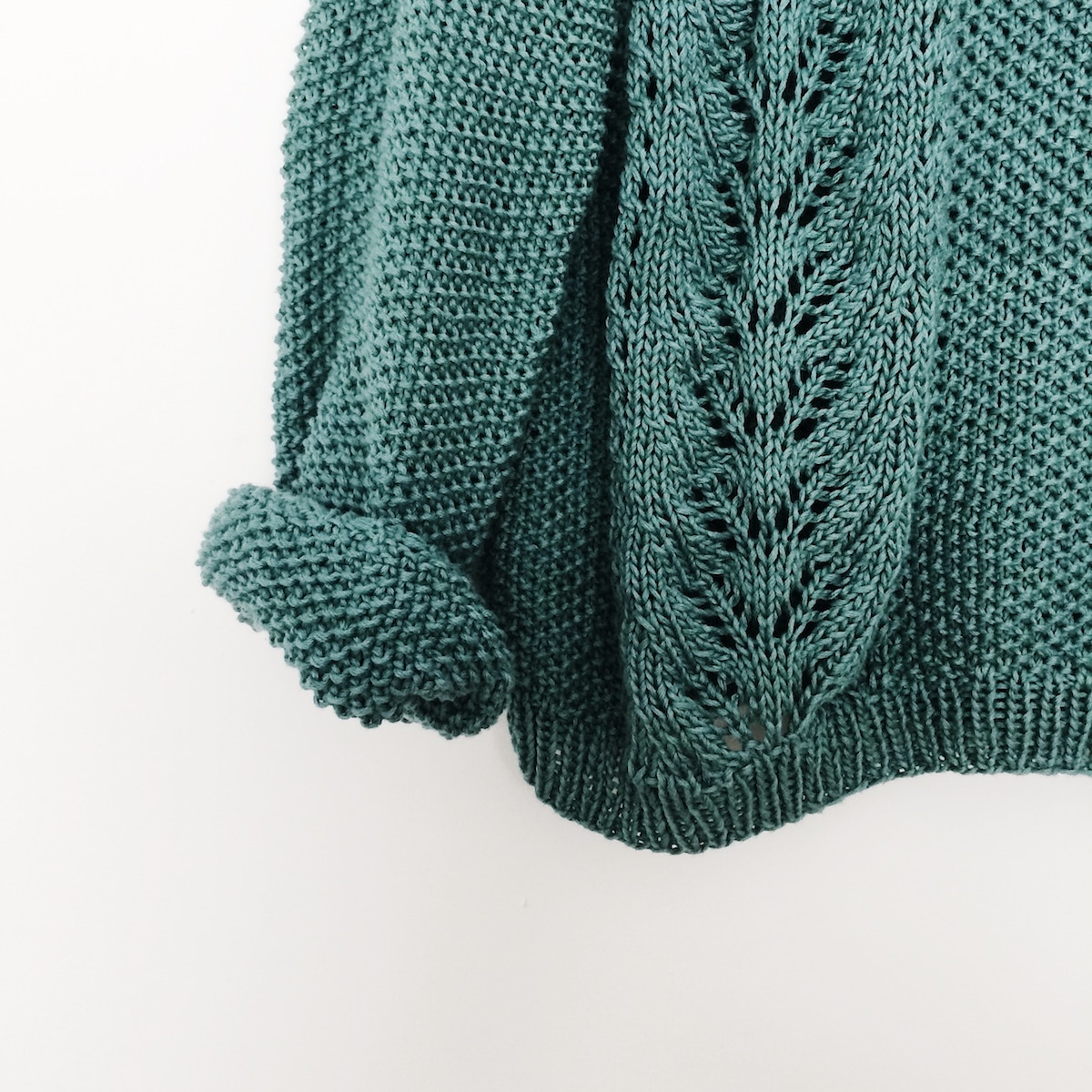
How to take care of your clothes and make them last: A close up of the sleeve and bottom hem of a blue sweater

How to Care for Your Clothes and Make Them Last

Ah, the first day of spring is here. The weather is warming up, which means it’s time to put away winter clothes. Seems like a simple task, but I’ve gotten it wrong. So, today I’m sharing what I’ve learned about cleaning and storing clothes. I am by no means an expert. In fact, I confess that I hate doing laundry. For many years I didn’t pay attention, which meant I ruined things. Cue self loathing over shrunken shirts, pink clothes that used to be white, and other laundry mishaps.

Last year, I pulled out of my favorite dresses to wear, only to realize there was a stain on the front. What the?! I was positive that I had laundered it before putting it away. And yet, here was this brown stain. Did I not wash it thoroughly? Was something dirty stored next to it and somehow the dirt/food/whatever transferred? After soaking it in a mix of laundry detergent, water, and vinegar, and then soaking it again in an OxiClean solution for six hours, the stain lifted. Whew.

After that I went on a closet cleaning frenzy, determined to prevent this scenario again. I cleaned everything. Here’s what I learned.

** This post contains affiliate links but was not produced in partnership with any brand. **

Laundry Tips

1. Take the time to sort, not only by color, but by fabric too. In addition to separating my dark clothes from lighter ones, I separate synthetics into a Guppyfriend to catch the microfibers. (More about the Guppyfriend in my review here.) If something is more delicate, like a sweater, I protect it in a wash bag. And if something has a zipper, I zip the garment shut so that the teeth won’t rub against other clothes. Read the care labels! (I say this as someone who didn’t use to do that.) There’s important information there. Lifehacker has a nice chart explaining what all the symbols mean.

2. Wash in cold water. Not only is washing in cold water more energy-efficient, it also helps keep clothes from shrinking or fading. For the most part, I wash in a washing machine, though I will hand wash my most delicate items. For machine washing, my go-to detergent is a biodegradable one from Common Good, reviewed here.

3. Avoid the dryer. No matter what the chart says, though, I hang up or lay flat to dry. (Except for socks, underwear, towels, etc, in which case I throw in some wool dryer balls to help keep things separated and to increase airflow.) The dryer is what does the most damage to your clothes. According to this study, high heat can damage the fibers. Heat can also cause shrinkage.

Not only does avoiding the dryer help your clothes last longer, but it saves energy. I use this drying rack from IKEA and to maximize room, I also hang clothes on hangers all around the edges. You can find similar ones like this. (But I don’t recommend this accordion style one because there’s not enough room for the clothes to spread out.) For sweaters, you can also use a drying rack like this. To speed the drying process along, I point a fan at my clothes.

A bottle of Forever New Fabric Care Wash and Soak detergent.

Detergents I use for hand washing: Forever New and Soakwash.

4. Use the appropriate detergent for the fiber. I’ve read that fibers from animals, such as wool and cashmere, are naturally acidic, so you can’t just use any old detergent on them. Some might have a high PH level that’s too harsh. In any case, when hand washing more delicate garments, I go for something gentle. I used to use Woolite because that’s what my mom used. But Woolite has a kind of slimy feeling to me. For lingerie, I’ve switched to Forever New, a citrus-based biodegradable powder that dissolves in water. It was formulated especially for lingerie. For everything else, I use Soakwash, an all-purpose detergent that works with pretty much all fabrics, including wool, cashmere, and silk. It’s biodegradable, phosphate-free, dye-free, and sulphate-free. It’s also doesn’t require rinsing.

Be careful with silk because it’s not always colorfast.

Be careful with silk, though, because it’s not always colorfast. Sometimes when silk is labeled dry clean only, this is why! (Sadly, I speak from experience.) One trick you might have heard about silk is to give it a rinse with a little bit of white vinegar to restore its luster. Then, rinse again with water. Another material to be careful with is wool. Make sure that you can wash it in water. Some wool shrinks in water! Again, if the label says dry clean only, then that might be the reason why. These days, I read labels when considering whether to buy a garment to see if it’s something I can wash myself or not.

With all hand-washed items, never wring water out. It’s alright to give things a good squeeze, though. For larger items like sweaters, I put them on a clean towel, roll the whole thing up, then squeeze. Lay flat to dry. If the sweaters dry with wrinkles, I use a steamer briefly on them.

5. Try a steamer. For those few things that can’t be dunked in water, I use a handheld steamer. (The Wirecutter recommends this one.) Sure, there are some items that I take to the dry cleaners (like blazers or certain dresses), but I try to minimize using the dry cleaners because of the chemicals. In fact, sometimes a steamer does a better job. Once, I took a pencil skirt with a stubborn stain to the dry cleaners, but they couldn’t get it out, even after two tries. My steamer did, though. Turns out the stain was a water mark. I’ve heard from a shopkeeper acquaintance that a professional steamer is  amazing and can get wrinkles out in no time. If I had room, I’d get one of those because I really, really hate ironing.

6. Wash clothes sparingly but definitely wash them before you put them away for storage. I should back up here and say that my very first step in preserving clothes is to not wash them that often. The physical process of washing clothes can weaken the fibers. Over time, this causes fabric to thin. So, to extend the life of my garments, I generally rewear them. After a day of wear, I air them out and hang them back in my closet. (Tips below for how I keep it all organized.) Since San Francisco isn’t too warm for the most part, I can even get away with rewearing a T-shirt several times. I only wash something when it starts to smell or when I’m putting it away for storage for a while.

Clothing Storage Tips

1. Use cotton storage. The biggest change I made to my closet was in how I stored things. First, I decided to invest in some proper garment bags. I had random bags from department stores and other places, but they were made out of plastic. I wanted something made out of natural fibers to allow the garments to breathe while still protecting them from dust and bugs.

I found these cotton ones at The Container Store and bought several. Because they have a 4″ gusset, you can actually get several items into one bag. I also bought some cotton shoulder covers to put over some of my coats that I don’t wear year round.

For storing sweaters, I did something my frugal immigrant mom would be proud of. While many lovely storage boxes exist out there for sweaters (like these with windows), I am not paying $30 per box — especially since they only have a two-sweater capacity. That adds up fast! I ended up buying some large square pillow cases. After depilling my sweaters with an electric defuzzer, I fold and stack them neatly, then put them in a pillow case, folding the edges underneath. (Sorry, Marie Kondo, but I’m not storing sweaters upright.) Again, the idea is to keep them from dust and other dangers but to let them breathe.

I’m also a fan of these canvas storage bins, which are relatively lightweight and come in several sizes. While they are open at the top, I usually drape some fabric or a dust bag over the top. There’s a pocket on two sides to slip in a label, and they’re moderately priced. Everyone’s got a storage bin labeled “winter glamour” filled with faux fur, right?

Closeup of a canvas bin with faux fur in it. There is a label on the bin that says, "winter glamour."

Fabric Storage Bins – $9.99 – $14.99

2. Keep your clean clothes separate from ones you’ve worn. This is kind of a no-brainer, but I wasn’t doing this before, so I reorganized my entire closet. For the most part, I organize by type of item, and then color. So all my skirts are together, all my tops, etc. (The exception to this rule are my dresses, which are organized by style, not color. For example, all my sheath dresses for work are next to one another.)

Within each section, once I have worn an item, I move it over to an area within that section consisting of other items I have worn. How do I remember what I’ve worn and what I haven’t? I separate them with empty hangers. Clean clothes are to the left of the hangers, and worn clothes are to the right.

Well, there you have it. My practical tips for taking care of your clothes. Part of cultivating a sustainable wardrobe means taking care of the stuff you have so that they will last longer. It’s also nice for your pocket book. Hope this has been helpful. Do you have any clothing care tips?

First Image: rocknwool/Unsplash

UPDATE 5/2/22 – Made a little Reel about my sweater washing and storage process. Because I moved and have less closet space now, I switched to storing my off-season clothes in stackable plastic boxes with some cedar as well as these lavender bags from Trader Joe’s.

Save this on Pinterest for reference later:

Post last updated 2/8/26

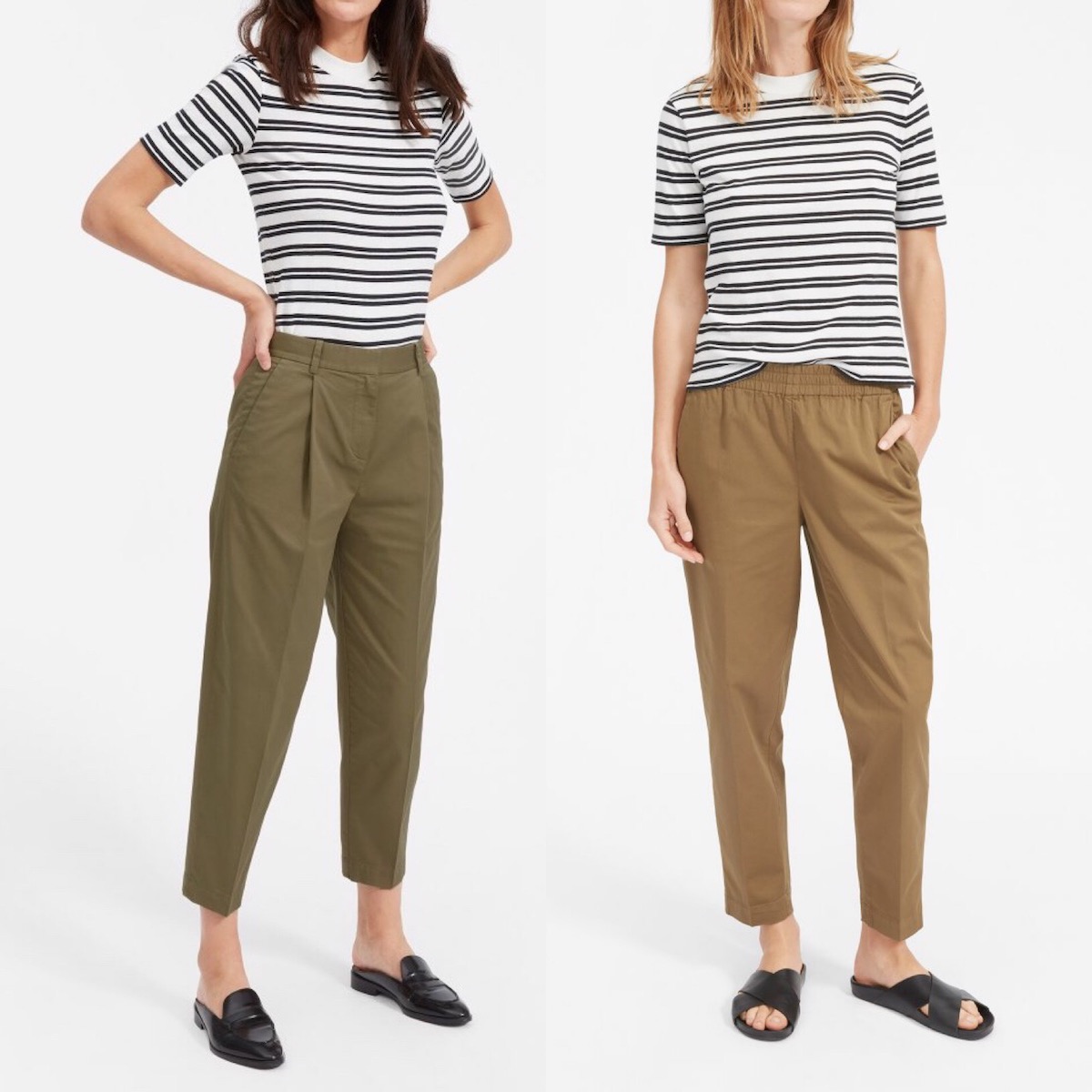
Everlane Slouchy Chino and Easy Chino Review: Models wear striped black and white shirts, olive or brown colored chinos, and black shoes. and chinos

Everlane Review: Slouchy Chino & Easy Chino

Is it spring yet? I’m ready for spring, mostly for the daylight, as our weather here in San Francisco only rises by a few degrees. It’s perpetually in the 50s to mid-60s degrees Fahrenheit here, so I don’t often get to wear warm weather clothes. But that’s not stopping me from reviewing spring clothes. Today, I’m taking a look at two pairs of chino pants from Everlane: The Slouchy Chino Pant and The Easy Chino.

The Slouchy Chino Pant

If you keep up with me on Instagram, then you already know how I feel about these, but I thought I should do a proper blog review. So, here we go! I saw these in the Choose What You Pay sale in December, which I wrote about here. (BTW, many of these items are still on sale.) At the time, I thought: these could be cute or they could be frumpy. Well, there’s only one way to find out. So I ordered them.

The reviews were kind of all over the place in terms of sizing, though most people seemed to agree these pants run big (makes sense since they’re slouchy). I ended up ordering my regular size, one size down, and two sizes down.

Here’s how they look on a 5′ 10″ model. They’re pretty cropped on her.

A model wears a striped shirt and chino pants with a baggy leg.

And here’s how they look on 5′ 4″ me after taking them right out of the package. Um, no thank you.

I’m wearing a size 2, which is the same size that the model’s wearing. It’s one size down from my usual size. My usual size definitely felt too big, though it would have sat lower on my hips, and two sizes down was too tight across the waist for me. I’m generally a fan of high-waist pants, and these have an 11.5″ rise, but in an unflattering granny kind of way. I guess the pleats don’t help here either. I used to categorically not wear any pants with pleats. My opinion on pleats on pants has changed over the years, but this is just NOPE.

Everlane Slouchy Chino Review: A person models the chinos, showing the back.

Nope, not flattering from the back either. The inseam is about 25″ and landed right above my ankle bone.

Everlane Slouchy Chino Review: a person wears these pleated chinos with hands in pocket.

They look cuter when you put your hands in the pockets, but the verdict is still: frumpy! Maybe if you’re really tall, they’d work. (I feel like I say that a lot because I just assume everything looks better on taller people.) Well, I guess you know how this ends. I returned them. The pre-shrunk fabric seemed nice quality, though. It’s a lightweight cotton with 2% elastane, but it doesn’t feel too thin. Seems like you’d have to iron them a lot to keep them from looking wrinkly all the time, though, which is something I personally can’t be bothered with.

The Easy Chino

I honestly had no intention of trying the Easy Chino because the Italian GoWeave Easy Pants were such a disaster on me and I figured they were cut similarly. But I found myself needing to throw something in my shopping cart to score free shipping, so I put these reasonably-priced pants in there.

Here they are on a 5′ 9″ model.

A model wears a button down shirt and chinos that taper in the leg, along with sandals

And here they are on petite me.

These pants also run big, so I also sized down. Again, the model and I are both wearing size 2. I’m wearing the same shoes and T-shirt (but in another color) as I did in my try-on of the Slouchy Chino above for the ease of comparison.

They’re hmmm … not bad! Are they the most flattering pants ever? No, they are not. They’re roomy in the thighs (and I got thick-ish thighs), but then again, they’re easy pants, so they’re supposed to be loose. I think they actually look better in real life than in photos, but maybe I’m kidding myself.

Everlane Easy Chino Review: a person models the chinos, showing the backside.

I found them to be comfy and easy to style since they’re just plain black pants. I’m not going to lie — I love the elastic waist. (Is this so predictable or what, though, since I’m getting older.) The rise is 10″ so it’s medium, but on the high side and the inseam is 26″.

Everlane Easy Chino Review: a person wears these pants with hands in pocket.

These are also cuter when you put your hands in the pockets. (Maybe all pants are.) The fabric (100% cotton) is not as smooth and crisp as the Slouchy Chino. These seem more casual, but also less wrinkly. Pleasantly surprised, I decided to keep them.

I haven’t worn them out much yet because, you know, 50 to 60 degree San Francisco weather, but I’m prepared now for warmer weather. The few times I’ve worn them, I noticed that they tend to sag a little bit as you wear them. (Definitely can’t put my phone in a pocket as that weighs the pants down and makes them sag.) I sometimes have to pull them back up to my waist. A belt would help with that, but there’s no belt loops. It’s a small annoyance though. I find myself reaching for these on the weekend when I want something comfy, and well, easy, to wear.

Both pants, by the way, are made in ethical factories in China, but in different cities.

Styling the Easy Chino

UPDATE 6/17/19 – Now that we’ve had some warmer weather and I’ve gotten the chance to wear the Easy Chino some more, here are a few ways I styled them.

This is my comfy and casual running-out-the-door to grab coffee outfit. I think this works because the boxy tee is a bit short so it doesn’t cut me in half.

Everlane Easy Chino Review: a person wears the chinos with a gray t-shirt and slide sandals.

Everlane Easy Chino // Oak + Fort  // DV Sandal

Here I cuffed the pants. (This is with two folds. They stayed in place no problem.) Rolling up pant legs or shirt sleeves is one of my quick tricks for looking a little more pulled-together. I tucked my tank top in and then wore a gauzy striped shirt over it. I often tie button down shirts in the front like this to make them shorter. Again, it’s all about giving myself better proportions.

Everlane Easy Chino Review: a person wears the chinos with a striped shirt and sandals.

Uniqlo Tank Top  // Universal Thread Button Down Shirt [similar & ethical] // Everlane Easy Chino // AGL Sandals // Everlane Pocket Tote [review]

I have to say, these pants have really grown on me. They’re true to their name: Easy. I’m contemplating getting them in another color.

UPDATE 7/23/19 – I just realized that I forgot to talk about one aspect of these pants: what they look like when you sit down. Well, they’re bunchy, perhaps because of the pockets, which are a good size. This is not ideal, but it’s not a deal breaker for me (and I’d rather have good pockets).

Everlane Easy Chino Review: a person sits down on a stool wearing the chinos.

I’ve been really into this look lately, which I call my faux jumpsuit look.

Everlane Easy Chino Review: A person wears the black chinos rolled up with a black tank top.

Uniqlo Silk Tank Top // Everlane Easy Chino  // Everlane V Heel [review]

Also, I wanted to report that on my last trip to Everlane’s San Francisco store, two colors of Easy Chino were available. Out of curiosity, I tried on a size 0 — two sizes down from my regular size. While they looked better in a way (they were slimmer in the leg, though that defeats the point of them being relaxed), they felt a bit tight in the crotch and thighs when I sat down. In any case, the try-on affirmed that going down one size is the right size.

I’ve been wearing the Easy Chino a lot lately and am surprised by how often I reach for them. They’ve loosened up in the waist a little bit (the elastic is not as tight as when I got them) and the black has also faded slightly from washing and air drying. Overall, they seem to be wearing well. I wore them on a four-hour flight recently and they were comfy. Happy with this purchase and am definitely getting more pairs in other colors.


See all my Everlane reviews here.

When old shopping habits die hard: A rack of clothing in various colors, mostly black, pinks, and grays.

When Old Shopping Habits Die Hard

I mentioned in a prior post that I was good in January and didn’t buy anything. Well, that has all gone out the window in February. I’ve only bought one thing so far (it’s on the way and we’ll see if I keep it). However, I’ve walked into a lot of stores lately. I’m sliding back into my old habit of indulging in retail therapy when I’m feeling a little down.

Part of it is retail trickery. I know the tricks, yet they still get me sometimes. For example: J.Crew sent a $25-off-any-purchase-of-$25-or-more coupon. So, I feel like I have to use it. Because free money, right? That’s silly because unless I spend exactly $25, I’m still going to be paying out of pocket for something, something that I probably don’t need.

Still, I find myself looking at leopard print sweaters and browsing the sale section. J.Crew is a brand I’ve shopped less at in recent years — partly because I’m trying to shop more ethically (and they are not an ethical brand). But also, because their style doesn’t speak to me as much anymore.

They do carry petite sizing though, which is why I sometimes find myself taking a look. (If you know of any ethical brands that offer petite sizing, let me know in the comments.) I’m heartened by the recent news, though, that J. Crew and their sister brand Madewell are now producing fair-trade, more environmentally-friendly denim. They’re utilizing the same LEED-certified factory in Vietnam as Everlane, Saitex.

I also have about $30 in store credit from Oak and Fort due to their crappy return policy. You can return for store credit, but not a refund. So, when I’m nearby, I pop in to browse. I’ve been doing this for more than a year and a half now and I always leave empty-handed.

While I like their minimalist aesthetic, the quality of some of their items is meh. Other times, I pick up something that seems promising, then look at the fiber content and put it down because there’s nylon, acrylic, or polyester in it. Sigh. The hours of my life I have wasted trying to spend my $30! Lesson learned: always ask about the return policy when shopping in a new place.

Also, I blame social media. Looking at other’s people’s outfits and blogs, there’s always something that catches my eye. Suddenly I’m on a website looking at something. This is how I ended up ordering this Madewell sweater (not ethical, but it’s 100% cotton, and it was on sale). Then there’s this Modern Citizen dress that keeps popping up as an ad in my Instagram feed. Damn, Instagram, how did you know? (Well, I bet it wasn’t hard. They targeted women around my age who live in San Francisco, New York, and a few other cities who have used the hashtag #minimalism and who also follow Everlane and well, there I am.)

But of course, I can only blame myself. No one is making me look at websites or walk into stores. So what I’m going to do right here is make a list of wardrobe gaps — things that I feel are missing in my wardrobe that I’d wear a lot. I’m also going to put this list on my phone. And then I’m only going to shop for those things.

I might also try something that Xin from An Invincible Summer does, which is to pin items on a Pinterest board when you’re thinking about buying them, then coming back to them later to see if you still really, really want them. I already walk away from things when I first see them to determine if I’m just caught up in the moment. (Unless I’m at Nordstrom Rack.) That was my tactic upon seeing the Everlane V Heel for the first time. (I ended up buying them later.) But I like the idea of keeping a visual board too.

A person in a dressing room wearing a leopard print sweater, and holding up a phone to take a selfie in the mirror.

Up to no good trying on this J. Crew sweater.

Winter Wardrobe Gap Wish List

1. A short chunky cardigan
A few years ago, I realized that I never wore any of my cardigans because they were the thin kind and I didn’t like how tight they were on my arms. So, away they went and now I only have one thick cardigan. It’s long, but I feel like that limits me to wearing long coats over it. I find myself wishing I had a shorter one. Everlane released their texture cotton cardigan recently, but it’s too chunky looking for me. (It’s suspiciously similar-looking to the pricey Babaà cardigan.)

2. A cozy pullover sweater
I’m thinking something a little oversized and warm for chilly days, but chic and minimalist. Something like what Vince would make, but proportioned for petite me and ethical, if possible, but also not $400.

3. Other sweaters
Even though I live in a climate where layering is a necessity and where it’s not warm, I strangely don’t own a lot of sweaters. I could use more. I wear my Everlane cotton boatneck a lot, so I might just get it in another color.

4. A blazer
At one time I owned somewhere between 8 and 10 blazers, but last year I got rid of almost all of them. Most of them were cheaply-made fast fashion blazers and they looked cheap. I only have one cropped blazer left now. So I’m looking for a regular-length one that I can wear with almost anything.

5. Ankle boots
I have a hard time with shoes and it seems like every year I’m buying a new pair of ankle boot. That’s the problem with shoes. You never know if they’ll work out for you until you’ve worn them for a while. I recently sold three failed pairs of boots on Poshmark. And while the Vionic ones I have now are not bad and have arch support (I even got them in two colors), I realize now that they’re a little too tight in the toe box for me. They squish my poor pinky toes. Plus I don’t love how they’re kind of distressed on purpose in front. I’m intrigued by Hopp Studios’ boots since I find their wedges comfortable, but they’re almost out of sizes.

6. Rain boots?
My shoe woes extend to my rain boots. I have a short pair by the Spanish brand Igor that’s handsome, but again, a bit narrow for my wide-ish feet. They seem fine at first but a few hours in and my poor pinky toes suffer. I wore them out in a downpour recently and water got into them, completely soaking my socks. I don’t know if this means I should get taller boots. Tall rain boots just seem like a lot of inflexible boot. Or, do I just need to find a short boot that’s better designed? I’ve read that the new Everlane one are comfy but I don’t really like the rugged look. Alice + Whittles is an ethical brand that makes a fair trade rain boot that’s more in line with my style, but they look narrow.

But maybe I don’t really need a new rain boot at all. I bought a tall La Canadienne boot at the Nordstrom Anniversary sale in 2017 that’s supposed to be waterproof, so I should test them out the next time it rains.

Stretch Goal: An Awesome Coat
Come on, gotta put a splurge on here for fun. True, I already have a decent number of coats and jackets, but I want something really high quality that goes with everything. Stylewise, something timeless like a long Max Mara coat in a dark camel color.

Well, we’ll see how this goes. I’ve kept a list of wardrobe wants on my phone before, but honestly, I’m not sure it helped keep me from shopping. Then there are those things you stumble upon that you end up loving and I wouldn’t want that to completely go away either. But I do need to put some measures in place. What are some ways that you keep yourself from indulging in retail therapy?

First Image: Laura Fleischmann/Unsplash

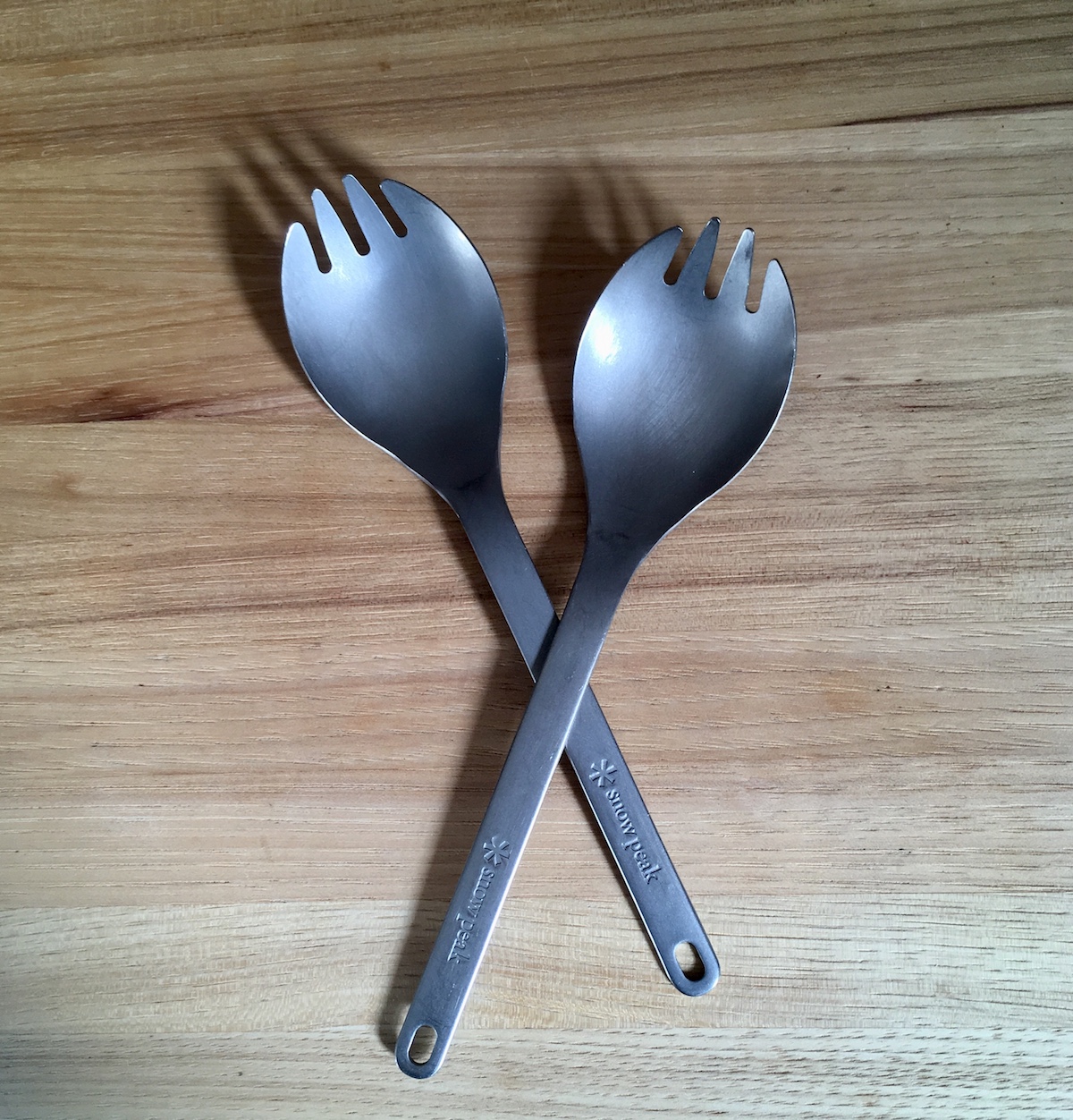
Snow Peak Sporks: Two sporks, crossed over one another, on a wooden background

Why a Spork is the One Reusable Utensil I Carry

This year, I’m trying to cut down on my plastic consumption even more — and that includes bioplastics. But why not use disposable items if they’re recyclable or biodegradable? First of all, it still takes energy and resources to make those things. As far as plastics go, only 9% make it to the recycling plant, and the recycling process is not easy nor pretty. The factories — many of them small operations — sicken the communities where they’re located. I’m willing to bet that they disproportionately affect low-income communities.

In recent years, we’ve seen a proliferation of other options, such as biodegradable plastics and bioplastics, which, by they way, are not the same thing. Confused by the terms? You’re not the only one.

The Problem With Biodegradable and Biobased Utensils

Biodegradable plastics are still made out of petroleum like regular plastic. They just have an additive that makes them break down more quickly. I don’t see how this is a good thing as it means tiny pieces of plastic get into the environment.

“Biobased” means the item is made out of organic material, but that doesn’t mean that you can throw it in the compost bin. When I asked my local waste management company here in San Francisco — a city with an aggressive recycling and composting program and a zero waste goal —about it, they told me that only items that are labeled “compostable” should go in the compost bin. And by compost bin, I mean stuff that goes to an industrial facility. I’m not talking about a backyard compost heap. (An aside here: I wish every city had a compost program like San Francisco. Farms buy the compost and the waste management rep said that they can’t keep up with the demand!)

The other items, even if they’re plant-based, go in the trash and to the landfill, where like other organic material, they release methane gas, a greenhouse gas. The best thing to do, the waste management rep told me, is to reduce and reuse first. That saying, “Reduce, reuse, recycle” — in that order — is the truth.

I’ve already written about some of the ways I’ve cut down on disposable plastics: carrying reusable shopping bags (my favorite kind reviewed here), switching to reusable produce bags when buying groceries, and bringing my own water bottle and travel coffee mug (this is what I use). It’s nothing revolutionary or new. There’s one more thing that’s part of my EDC (every day carry) that I haven’t mentioned yet and that is my spork. (Actually, two sporks.) A friend gifted my first spork to me and I realized recently that I’ve had it for 10 years now! So, I thought it was time to pay tribute to the spork with a post.

** affiliate links below **

Not Just Any Spork, But a Titanium One

Why a spork? Well, to be honest, I don’t like carrying a lot of stuff on me. So I appreciate anything that’s lightweight and takes up less space. A spork, of course, is a little bit spoon, a little bit fork, so it takes care of two utensils. (I don’t carry a knife as I find that I rarely need to use one.) But isn’t a spork just a mediocre spoon and a mediocre fork, you might ask? Well, I guess if you want to be negative about it, sure. But I think it’s a handy compromise. I’ve enjoyed soup with it. I’ve eaten salads with it. And I’ve shoveled rice and beans into my face with it.

Closeup of a spork

In spork I trust.

I highly recommend this particular spork by the Japanese outdoors company Snow Peak. It’s made out of titanium so it’s lightweight and made to last. They manufacture it in Japan. Like I said, I’ve had my first spork from them for 10 years and it’s still going strong. I got a second one for my spouse to use. (The sporks nest nicely.) Then I got two more. That way, when we’ve used the sporks, I put the dirty ones in the sink to wash as soon as I get home. Then I pull out the pair of clean sporks and put them in my bag immediately so that I am never spork-less.

The Snow Peak sporks come in four colors — but not with a carrying case. I looked around a bit before I found something that worked for me and that thing is a inexpensive plastic pencil case. When I finish eating, I wipe the sporks and put them back in the carrying case. I don’t own any of the colored ones, so I can’t personally speak to how well they hold up, but I’ve read that the color fades over time.

I frequent a farmers market every weekend not only for produce, but for a meal from a food stall. My spouse and I probably eat there about 40 times a year. Over 10 years, that’s 800 disposable utensils we didn’t use. I also use my spork when I travel, at food trucks and food courts, and at social gatherings where the host has put out disposables.

Two sporks and a plastic case

The sporks didn’t come with a carrying case, but I found they fit in this plastic pencil case.

Other options exist, of course, when it comes to titanium sporks. Toaks, Vargo, and Sea to Summit all make one. Light My Fire makes a utensil they call a spork that’s a spoon on one side and fork on the other. (But I don’t consider it a true spork.) Perhaps you get more functionality out of each side, but it also seems like it might be awkward to hold. Not to be outdone, UCO and Outsmart both make a three-in-one utensil that’s supposed to work as a spoon, knife, and fork.

I haven’t tried those other sporks, but I don’t have any desire to. I love my Snow Peak sporks. They’re smooth, comfortable to use, lightweight, durable, and easy to clean. I also think they’re the most attractive of the bunch. It seems like whoever designed them put a lot of thought into them. I think they’re kind of perfect objects.

If you prefer a traditional cutlery set, Snow Peak makes a full set (also out of titanium) with a knife, spoon, and fork. But I’m sticking to my sporks!

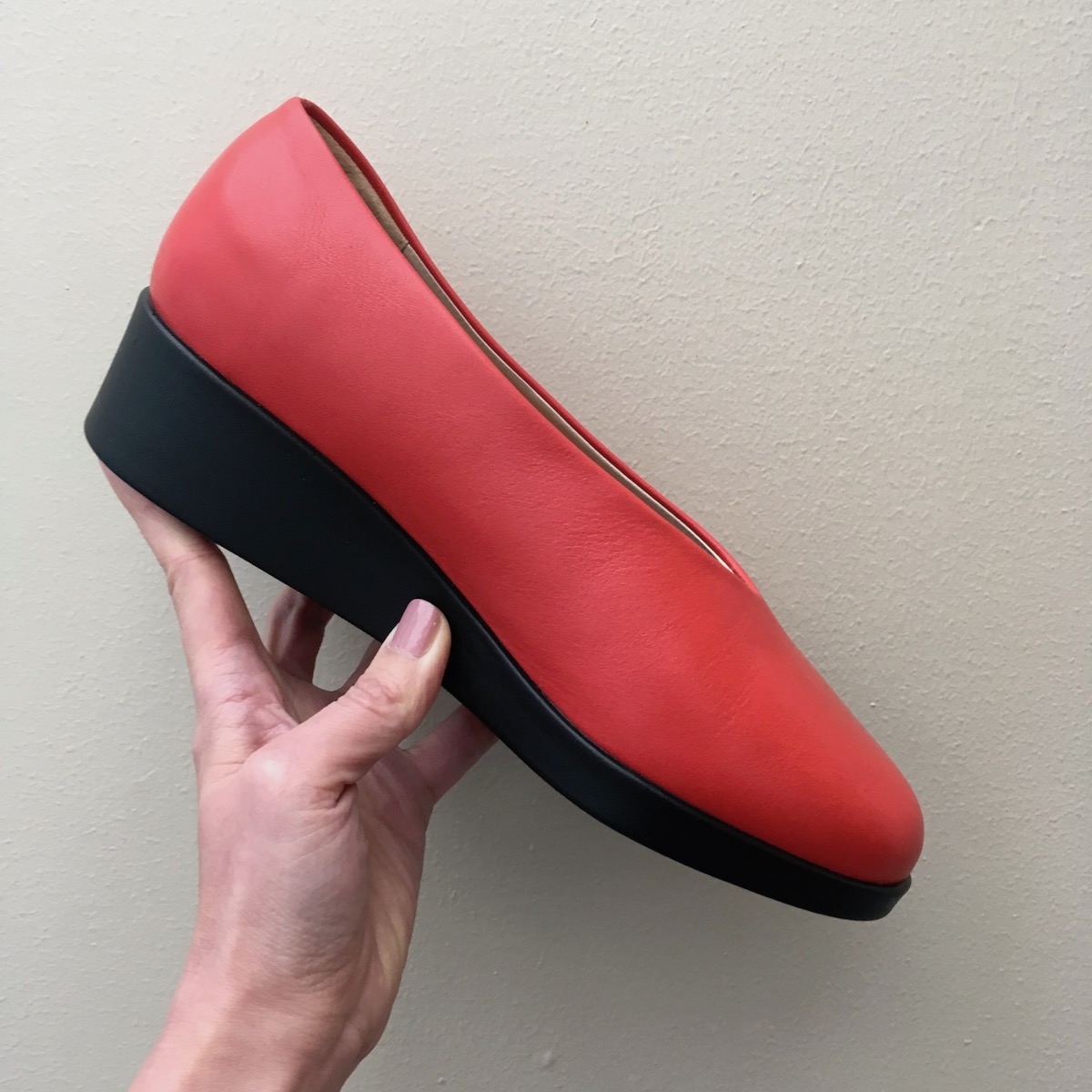
Hopp Studios Wedge Slip-On Review: A hand hold up a red shoe, the Hopp Studios Wedge Slip-On

Hopp Studios Wedge Slip-On Review

Today, I’m reviewing a pair of shoes that I bought back in November during Black Friday/Cyber Monday. I was judicious about my holiday spending and one of the things that made the cut was a wedge shoe from Hopp Studios. A woman actually stopped me on the street the other day to ask about my wedges, which reminded me to review them.

A pair of red wedge shoes next to a shoe box. The lid of the box has "Hopp" printed on it.

Hopp Studios Slip-On Wedge – $200 – red (on sale), black, white, light gray (on sale)

Founded by Eree Kim, a former Opening Ceremony knitwear designer, Hopp Studios makes comfy shoes with a minimal aesthetic. The shoes are produced in the Texas factory of another comfort shoe brand, SAS (San Antonio Shoemakers). I actually happened to browse a SAS store when I was visiting Texas last spring. But I didn’t find anything; their styles look like comfort shoes. (That is to say: they are not so cute.) So, I was happy to learn about Hopp, which is similarly comfy but more in line with my style. (You can read more about the company in the New York Times Style Magazine.)

A pair of red wedge shoes, as viewed from above.

The Nappa leather is nicely soft.

Still, I was a little worried that they’d look dowdy on me. I’m approaching middle age and I don’t need help looking more middle-aged. Upon taking them out of the box, I was pleased to discover that they’re cuter in person than I thought they’d be. The leather is soft and the interior features back heel pads. A lightweight leather liner — with light arch padding — sits on top of a shock-absorbing insole. It’s not glued down so as to not damage the perforated insole.

The bottom of a pair of shoes.

The soles are made out of molded polyurethane, which apparently won’t wear down.

The wedge is 1.5″ — a perfect height for every day walking. Made out of molded polyurethane, the soles apparently won’t wear down. (Really?! Will report back on this.) I was surprised by how lightweight the shoes are.

A pair of red slip-on shoes with a black wedge sole.

The wedge is 1.5″.

I ordered my regular size and they fit true to size. They fit perfectly length-wise and were even comfortable width-wise for my wide-ish feet. With all these good omens of comfort, I was excited to take them out on their maiden voyage.

A pair of red slip-on shoes worn out on the street, POV is from the person wearing them looking down.

The Hopp Slip-On Wedge fits true to size.

Surprisingly, though, I found that these shoes require some breaking in. I didn’t think that would be necessary since the fit seemed great when I first tried them on and the nappa leather is soft and flexible.

Closeup of a foot wearing a red slip-on shoe. There is a slight indentation mark on the foot.

Some breaking-in time is required! These shoes initially left marks on my feet.

But within 10 minutes of walking in them, they left marks at the top of my foot. I guess the vamp was somehow tight even though it didn’t feel that way. They were also, oddly, rubbing the back of my heels despite the built-in heel pads. I developed a blister on the back of my right foot and had to stay away from these shoes for a week as it healed.

Slowly over time, the shoes have gotten more comfortable and they don’t rub my skin to the point of blisters anymore. The third or fourth time I wore them I scuffed them up so now there are black marks on them. Oh well. I guess I got that over with?

Everlane cashmere rib round crew sweater as worn by a petite person in two different sizes.

Wearing my Hopps in the Everlane fitting room (doing research for my review on some of their sweaters.)

I’ve worn them for two months now — not everyday, but once or twice a week. “Hopp” means bounce in Swedish, and there is indeed a bounce to these shoes that’s delightful. I find the soles quite comfortable. As someone who mostly commutes by public transit, I walk quite a bit and my feet don’t tire in them the way they do in shoes with hard soles. I also love how lightweight they are.

They’re still a bit tight at the top (where it left a mark on me before), and they still rub slightly at the heels. But I expect that to subside over time. Overall, I recommend them and am happy with my purchase. Just know that they might take some breaking in.

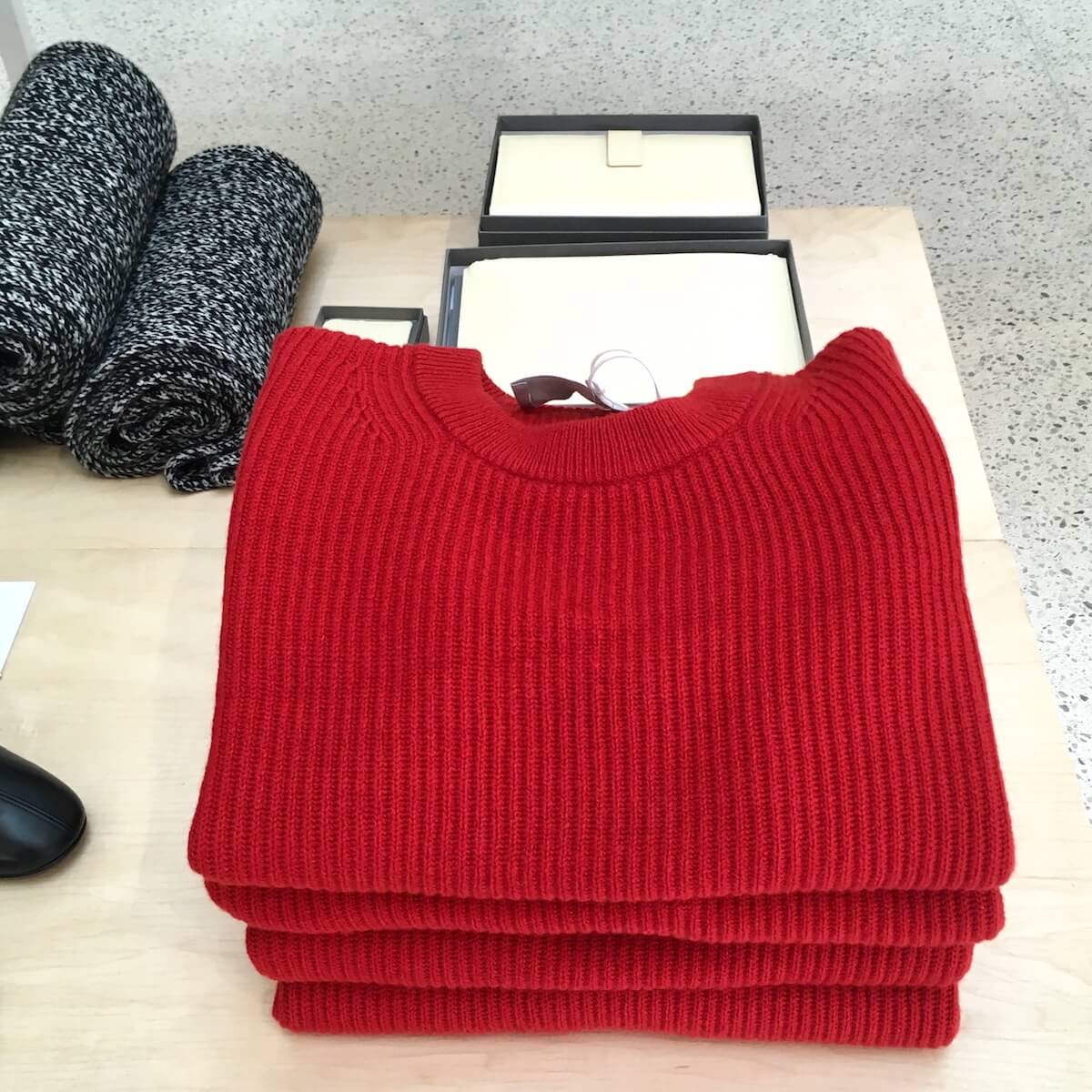
A stack of red Everlane Cashmere Rib Round Crew sweaters

Fitting Room Review: Everlane Oversized Alpaca Crew & Cashmere Rib Round Crew

It’s sweater weather, so I thought I’d review a few Everlane sweaters I tried on in the store. I’ve been on the lookout for a cozy sweater that I can throw on — something that’s casual and not fussy, but still chic. I actually don’t own that many sweaters — only four pullovers, two cardigans, and one short sleeve one that I treat more like a shirt. So even though I’m trying to own less, this is one spot in my wardrobe that I can add to.

Oversized Alpaca Crew

I was intrigued by this sweater because it’s made out of alpaca fibers. Everlane claims that they’re better for the environment. “Alpacas are soft-hooved and gentle grazers, which makes them easier on pastures than other herd animals.” Is that true? A 2014 story from Quartz seems to confirm this. “The widespread ubiquity of cashmere, the wool spun from soft under-hairs of Asian cashmere (or Kashmir) goats, is no longer sustainable,” the reporter writes. Basically, there are too many goats and not enough grass, so as goats overrun grasslands in China and Mongolia, they’re turning them into deserts.

Alpacas, on the other hand, live in highlands of the Peruvian Andes, which are “for now a less fragile ecosystem.” And that part about their soft padded hooves being more gentle on the terrain is also true. They “graze without destroying root systems,” the article says. Plus, alpacas are cute!

Look at this baby alpaca! Awww.

OK, back to the Everlane sweater. First impressions? It’s chunky but also lightweight and fluffy. I thought it felt very nice. It definitely checks the cozy box. However, I checked the fiber content and though the sweater is mostly alpaca (60%), it also contains nylon (30%) and wool (10%). Doing some more reading, I learned that alpaca fibers stretch after the first wear, so it’s often mixed with other fibers. But damn it, Everlane, why nylon? I’m trying to avoid needless plastic.

Alright, how about the fit? Well, here it is on a 5′ 10″ model wearing a small.

And here is an XS on 5′ 4″ me. (I think I’m wearing the same color, the heather charcoal.) I generally wear a S or XS in Everlane, depending on the item. Since this sweater is oversized, I decided to go with the smaller size, which seemed fine.

I like the loose fit in the body. Though I’m generally not a fan of ribbed sweaters (just a personal preference), here the ribbing is slight and adds textural interest. And I love a roomy sleeve on a sweater. These sleeves end in a fitted wrist. But of course the sleeves were too long because I’m petite. Sleeves are almost always too long on me. Overall, I thought the cut was alright on me. Not bad! Would be cute tucked in too, though there’s a good deal of material to tuck in.

The main issue, though, is that I found it to be super prickly. I tried this on by itself over bare skin, not over a shirt. As soon as I put it on, I thought, “Nope! Take it off!” Then again, my skin is sensitive. Other people seem to think it’s comfortable. There are hundreds of reviews on the Everlane site and it’s rating a 4.65 stars out of 5, so clearly I’m in the minority.

It was quite warm, though. I felt very toasty in the few minutes I had it on.

Cashmere Rib Round Crew

Next up is this ribbed cashmere sweater. I didn’t have high hopes as I’ve found Everlane’s cashmere to be scratchy in the past. (I’m not kidding about my sensitive skin.) Not as itchy as the alpaca, though, which bothered me immediately. With Everlane cashmere, the scratchiness creeps up on me.

But I went ahead and tried it on because bloggery. First impressions: nice medium-to-heavy weight. It seemed denser than the alpaca, so it’s a bit heavier.

Here’s a 5′ 10″ model wearing the XS in a gray called loden.

A Black model with short hair wears a ribbed crew neck sweater in gray.

And here I am wearing it in black. I’m wearing the S on the left and XS on the right.

Again, the sleeves are too long on my short limbs and would require some folding over. I felt that it was OK-looking but I wasn’t excited about it.

Hmmm. I feel like it’s going to be harder than I thought to find a sweater. These seem just OK on me and I’m not sure why. Maybe I need to look for something specifically made for petites. It did seem like a nicely made sweater, though, and the fiber content was grade A Mongolian cashmere. No nylon in this one. Compared to the alpaca one, it wasn’t as warm.

My favorite Everlane sweater is still the Soft Cotton Boatneck (review here), but it doesn’t work as well for colder months, so I’ll keep looking.


You can find all my Everlane reviews (including of other sweaters) here.