Latest Posts

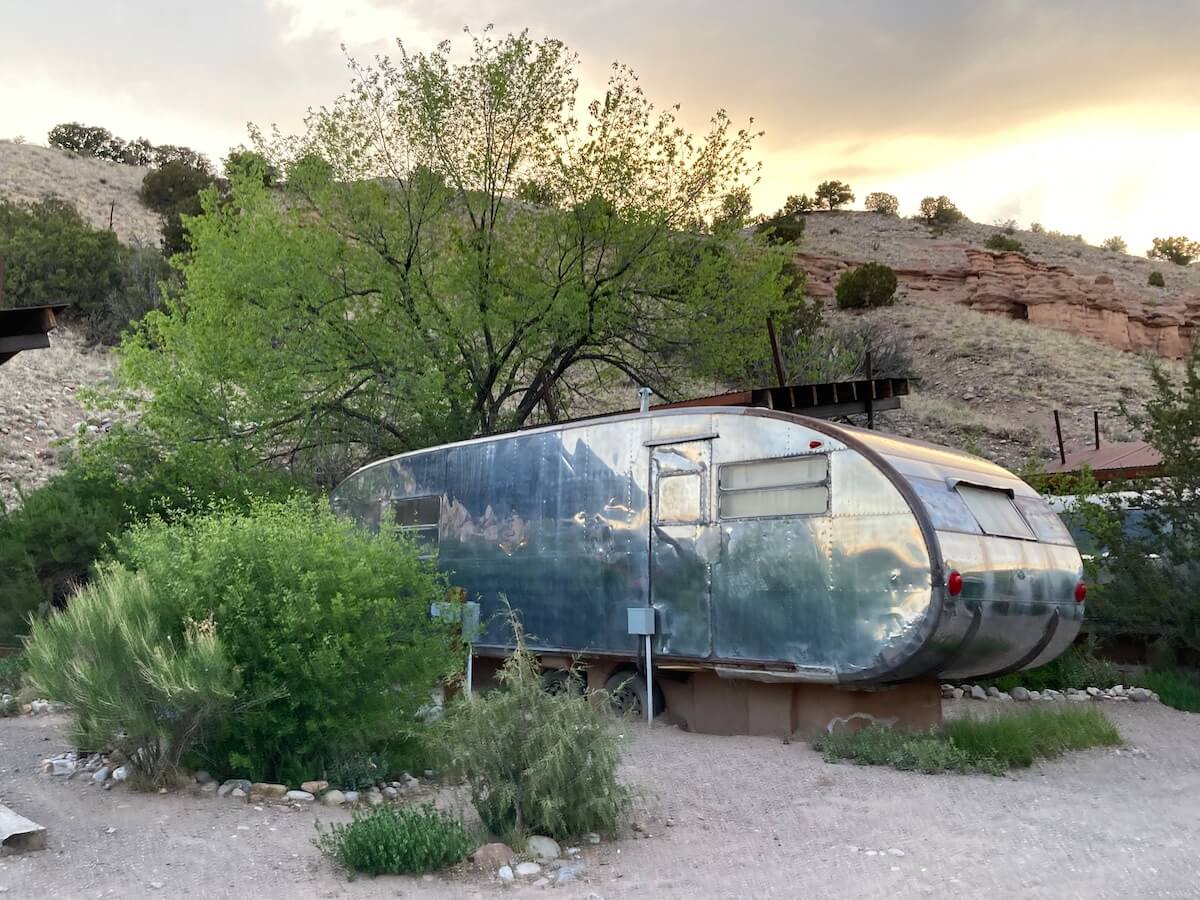
Ojo Caliente vintage trailer among the New Mexico landscape

My Stay in a Vintage Trailer at Ojo Caliente

Back in May I celebrated a friend’s milestone birthday at Ojo Caliente, a hot springs in New Mexico about an hour outside of Santa Fe. I stayed three nights in one of the spa’s refurbished vintage trailers. This write up is about my experience staying in the trailer and what you should know before booking one.

About Ojo Caliente

New Mexican cliffs overlook buildings at Ojo Caliente.

Ojo Caliente in the early morning when there are few people. The pools open to overnight guests at 7:30 a.m. before opening to day pass holders at 10 a.m.

Ojo Caliente bills itself as one of the oldest natural springs in the U.S. with a history going back more than 700 years. Different native peoples used the hot springs before the Spanish arrived. In 1534, a Spanish colonizer visited the springs and named them Ojo Caliente, but the original name is Posi or P’oseuinge, which translates to something like “village at the place of the green bubbling hot springs,” according to this article about its history. In 1868 (or 1880 by other accounts), Antonio Joseph and his wife opened a health spa and resort at the site.

My friend has visited Ojo Caliente numerous times over two decades and says it used to be a rustic, no frills kind of experience. These days, it has transformed into a more upscale resort with the construction of new luxury accommodations.

Lodging Options

When it comes to accommodations, there are many options with room rates ranging from about $250 to nearly $600. The most affordable rooms are in the historic hotel, which dates back to 1917. These rooms have a toilet and sink, but no showers, as the idea is that you’d shower in the bathhouse. (This is what guests did for more than 100 years.)

The resort also offers more modern hotel rooms with their own bathrooms; cottages with kitchenettes (these are not standalone; but have shared walls with the adjacent cottage); and more recently-built suites with plentiful square footage, fireplaces, and private soaking tubs. You can even rent an entire house.

There’s also a campground, offering a co-ed shower facility, potable water, and electrical hookups for RVs. And then there are the vintage trailers, five of them.

About Ojo Caliente’s Vintage Trailers

A vintage trailer with a patio built next to it.

There are five vintage trailers at Ojo Caliente. This is trailer number 4 aka T4.

With their shiny metal exteriors, Ojo Caliente’s vintage Spartan trailers look like they were originally made in the 1960s. While each of the five Space Age trailers is unique and different inside, they all feature a covered patio with a hammock, a kitchenette with a microwave and mini fridge, and an ensuite bathroom with a shower. There’s also an air conditioning unit, tower fan, and TV. Each trailer is about 160 square feet.

A yellow hammock and two outdoor chairs on a patio

The hammock was very comfortable. I easily took a nap in it.

I had trailer number four or T4. I unlocked it to find a sitting area with a loveseat and coffee table facing the kitchenette.

A leather loveseat inside a vintage trailer

What I saw when I opened the trailer door.

The kitchenette was stocked with mugs, glasses, wine glasses, dishes, utensils, a coffee maker, a Fellow electric kettle, dish-cleaning supplies (a small sponge and mini bottle of dish detergent), plus some coffee and tea.

The small kitchen inside a trailer, with a microwave and a mini fridge built in the cabinets

The kitchenette is stocked with some basics.

Behind the kitchenette was the bathroom, which was small but had most everything I needed, including a hair dryer. The one thing that was missing was a hook or bar to hang up a bath towel.

A bathroom with a wide bathroom sink with a mirror over it and a toilet.

Not shown in this photo: a skylight in the bathroom.

The shower area was bigger than some in apartments I’ve lived in. There was an area to sit down in the shower.

A shower with blue tile and bottles of shampoo, conditioner, and shower gel on the wall.

The shower was stocked with Ojo bath products, which are made in New Mexico and feature essential oils and wild botanicals.

And at the other end of the trailer, past the bathroom, was the queen bed. A stack of towels and robes was neatly folded on it.

A bed inside a vintage trailer, with a stack of towels and robes on it.

The queen bed, with room to walk on each side, plus outlets in the wall above.

While there was no closet, there were hooks on one wall where you could hang up clothes. (In this regard, the vintage trailer won over the room I stayed in during a vacation to Jekyll Island.) An ironing board hung from one of the hooks, and there was an iron as well in one of the bathroom cabinet drawers.

My Experience Staying in the Vintage Trailer

I found the vintage trailer utterly charming and enjoyed my stay in it. In general, I like seeing how small spaces can be made efficient, so for me it was delightful. I also liked that it was a bit removed from other guests and that I didn’t share any walls with anyone. It was quiet; I didn’t hear my neighbors at all. (Though I guess that depends mostly on how the neighbors behave. No one in the other trailers was a partier while I was there.)

I found the vintage trailer utterly charming and enjoyed my stay in it.

The trailer, while small inside, had a nice delineation of spaces. I liked that the bed was at one end of the trailer while there was a separate space to sit in and eat at the other. I ended up having to do some work one day, and while there wasn’t a desk, I was able to sit on the couch and work on my laptop. (Yes, there is wifi, and I had no issues with it.) The patio was also great for reading — and taking a nap in the hammock.

And the kitchenette was so useful. To save money (and because I didn’t want to eat every meal from the one onsite restaurant), I picked up some groceries on my way to Ojo Caliente. I made my own breakfast (microwave scrambled eggs, yogurt with blueberries), and brought snacks, fruit, and pre-made lunches.

Several vintage trailers parked.

The area with the vintage trailers at Ojo Caliente.

What You Should Know Before Booking a Vintage Trailer

  • When I went in May 2025, the rate for a vintage trailer was $259 a night, making it one of the more affordable options on the property. But you can’t book the trailers online. You need to call.
  • The trailers are located on the way to the campground and RV parking area. So it’s a little further out than some of the other accommodations. To get there, you walk past the North Cottages, and then on a dirt road, so the trailers wouldn’t be a good choice for someone with mobility issues.
  • While I found the trailer comfortable and cozy, I am a petite person. Someone who is big or tall might find the space too cramped and the furnishings too small.
  • If you like to sleep in, note that the window coverings are not black out. The trailers (or at least T4) also has skylights, including one in the bedroom.

The Pools at Ojo Caliente

A hot springs pool in front of a New Mexico dessert cliff.

The Lithia Pool is named after the depression-relieving mineral.

Much as been written about the different soaking pools at Ojo Caliente so I’ll keep this section brief, but of course they are the main attraction of the resort. The pools feature different minerals like iron, arsentic, and lithia. There’s also a seasonal mud pool. Ojo Caliente advertises their hot springs as “legendary healing waters.” I don’t know if they are healing per se, but I’m a fan of soaking in water and I found the pools to be calming and relaxing at the very least.
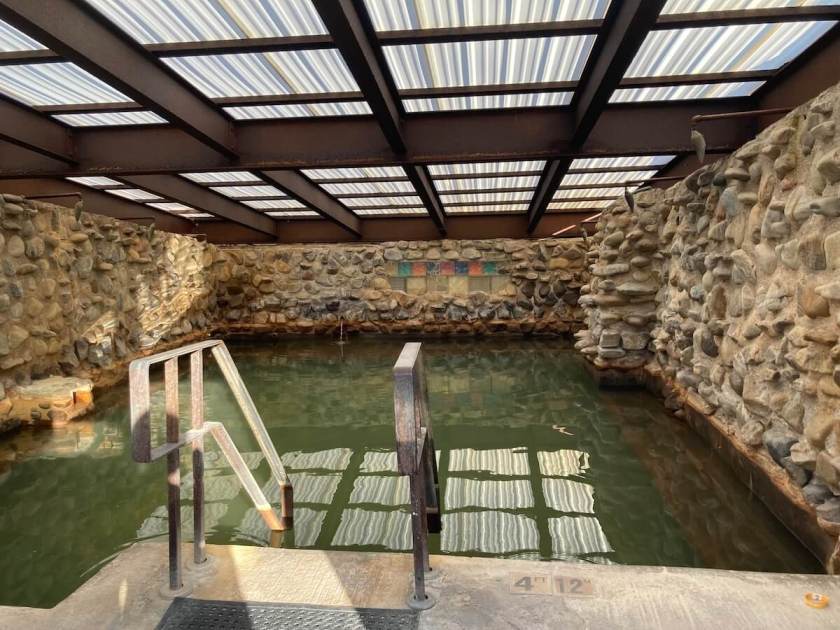
A covered pool, with rocks in the walls.

No talking is allowed in the Soda Pool.

There’s also a large circular pool, the Large Pool, which is the coolest pool. And while their website doesn’t mention this, I found it big enough and cool enough to swim in. (Though as a lap swimmer, I would have preferred the temperature to be even lower.)

A circle pool at Ojo Caliente in the New Mexican desert, with a hill with brush behind it.

The Large Pool at Ojo Caliente is its coolest cool, temperature-wise.

The resort must be in demand, as it has been expanding and building new soaking pools cliffside. The soaking area below was new to my friend.

A pool with a railing leading to it.

A newer soaking pool at Ojo Caliente.

You can also book private pools, which are clothing-optional.

Getting There

Airports: I flew into Santa Fe because my friend did, and we spent a day there. But in the future I’d consider flying into Albuquerque instead even though it’s further away. Why? Because the Albuquerque airport is much larger.

The Santa Fe airport is tiny, with just two gates, so if you experience a delay (and I did on my way out) there are not a lot of options for alternate plans. There are no direct flights from NYC to Santa Fe, so when my first flight was delayed, it caused me to miss my connecting flight at DFW. I had to rebook that second leg to a different and less convenient NYC-area airport. The initial delay cascaded into nine hours of delays! That quickly undid any relaxation I gained at Ojo Caliente.

Car: Driving is the most convenient way to get to Ojo Caliente. If you’re flying in, strongly consider renting a car. But if you don’t drive or don’t want to, it is possible to take an Uber. My friend and I shared an Uber from Santa Fe to Ojo Caliente, which didn’t seem too unreasonably priced (it was about $100). But when I needed a morning ride back to the Santa Fe airport (which is 20 minutes from downtown Santa Fe), Ubers were about $150 before tip. I asked the front desk about transit, and they recommended a local car service to me that was a little cheaper than an Uber.

Closing Thoughts

My trip to Ojo Caliente gave me a much-needed break to recharge (minus the part with the flight delays, no thanks to American Airlines). Would I visit again? Yes. And if I did, I wouldn’t hesitate to book a vintage trailer again. Not only is it one of the more economical lodging options, but the retro vibes and glamping experience makes it fun — a win-win.
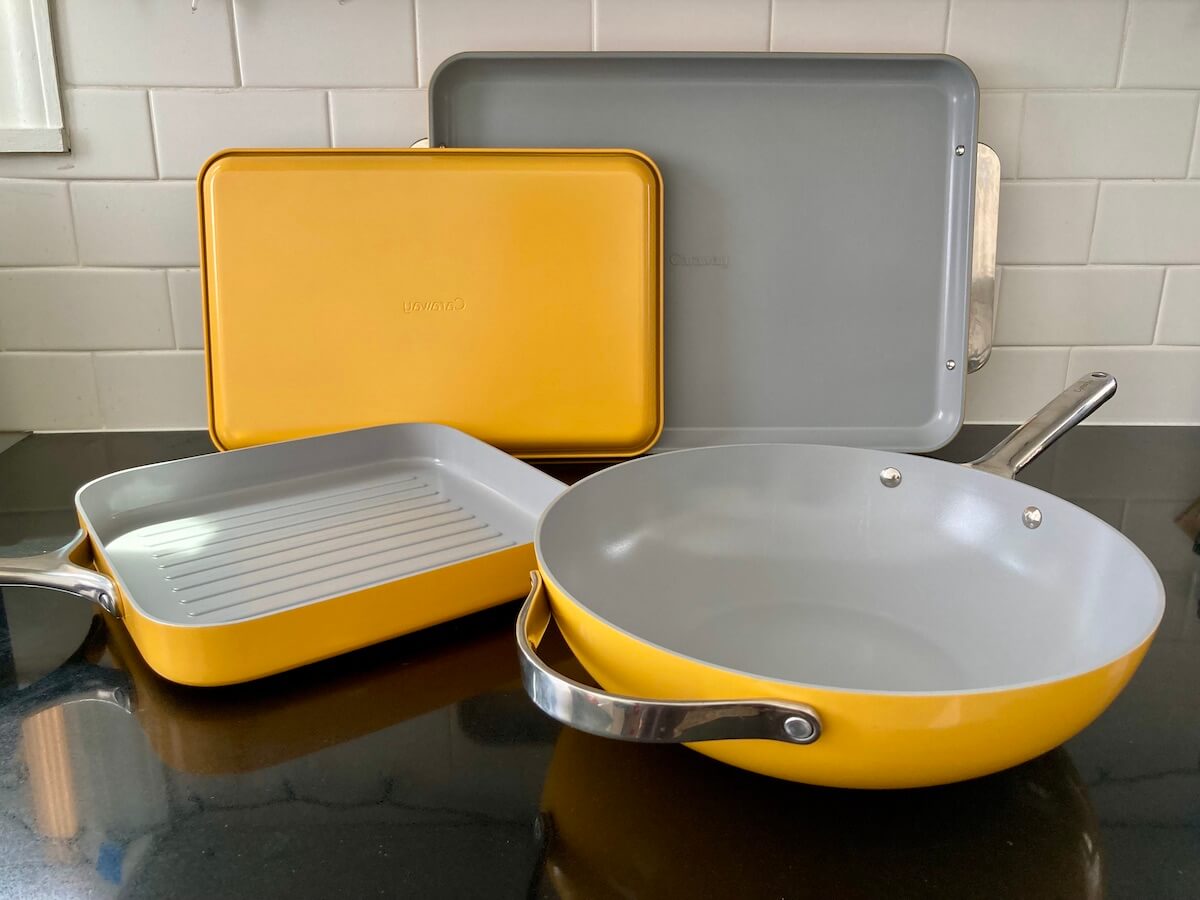
Two bake sheets, a square grill pan, and a stir fry pan, all in marigold yellow, from Caraway arranged on a counter.

I Tried Caraway’s Nonstick Pans & Bakeware (& looked into its non-toxic claims)

Today in “Is the hype worth it?,” I’m reviewing Caraway cookware and bakeware. If your social media feed is like mine, then these stylish pans, which come in an array of colors, keep popping up. In addition to being aesthetically pleasing, the other main draw of this direct-to-consumer brand is the claim that its nonstick cookware is non-toxic. While Caraway has branched out into stainless steel and enameled cast iron, it started out with — and is best known for — ceramic-coated nonstick cookware.

Sounds great! I’m all for healthier choices. But is Caraway really non-toxic? How do these popular pans perform and hold up? And are they worth the price?

I tried the square grill pan, stir fry pan, and the baking sheet duo. Before we dive in, please note that I’ve used these items for two months. That’s not really enough time to answer some of the questions above. So, I’ll be updating this post over time.


Caraway gave these products to me and this post contains affiliate links. As always, I decide what to write about and all opinions are my own.


First Impressions

A Caraway stir fry pan in marigold and a small dansk pot also in yellow on a black kitchen counter.

Hello yellow! Caraway’s stir fry pan in marigold and a vintage Dansk Købenstyle pot.

Not going to lie, I’m taken by the look of Caraway. The pans are pretty and at this writing, come in eight colors. I chose marigold because I love yellow for the kitchen and thought it’d look nice with my vintage Dansk Købenstyle enamel pot.

When my order arrived, I was surprised by how big the boxes were. Each item was packed in a sturdy box with cardboard holding the item in place. I appreciate the well-thought-out packaging, especially the lack of styrofoam or plastic bags. My first impressions: This cookware feels substantial and high-quality. The pans are well-balanced and the construction seems solid.

Rules for Using Ceramic-Coated Cookware

Caraway’s nonstick cookware works with gas, electric, and induction stovetops. They’re not for the broiler, but they’re oven-safe up to 550°F. (I’ve never needed to cook anything at such a high temperature, though.)

Ceramic-coated cookware requires a bit of babying compared to other cookware. Here are some rules to prolong its longevity:

  • Don’t use metal utensils, which could scratch the coating. Opt for silicone or wooden utensils. (Nylon’s also an option, but I’ve personally phased out plastic utensils.)
  • Don’t cook on high heat, which can cause the coating to degrade and crack. This is a low to medium heat situation.
  • Let the pan heat up for about 90 seconds before adding oil. Because the surface is nonstick, you only need a bit of oil to lightly coat the pan. Caraway says 1 to 2 tablespoons, but I use even less than that.
  • Wait for your pan to cool before putting it in water or washing it to avoid thermal shock
  • Don’t put these pans in the dishwasher. Hand wash.

Alright, now that we know the rules, let’s take a look at each product.

Square Grill Pan

If you want to get that grilled look but don’t have a grill, then the square grill pan will add lines to your food. Does it work? Yes. Behold, my fish burgers, now with lines.

Two fish burgers cooking in a Caraway grill pan.

Fish burgers, now with lines.

Also, wow, that surface is legit nonstick, so much so that when I was attempting to flip these burgers, I ended up chasing them around the pan with my silicone spatula because they were gliding all over the place.

What I appreciated most about this pan is its ample surface area. (I don’t actually care either way if my food has grill lines.) At 11 by 11 inches it can fit four tortillas on it at once. Making quesadillas has never been more efficient.

Four tortillas in a Caraway nonstick grillpan.

The square grill pan: a four tortilla capacity pan!

If you want the surface area but don’t care for the grill lines, Caraway’s square griddle pan is another option and more versatile as you can also make pancakes on it.

Stir Fry Pan

A marigold stir-fry pan with cubed tofu and bell peppers.

Stir Fry Pan – $135

With its wok-like shape the stir fry pan is marketed as an all-purpose pan whose “high-sloped walls allow you to spread food and concentrate heat onto different ingredients.” Some things I’ve cooked in this pan: a spiced tofu dish, pasta puttanesca, fried rice.

But none of those benefit from a nonstick surface. In fact, the more I think about it, I’m not sure what the use case for this pan is. I don’t think it’s well-suited for proper stir frying. Traditionally, stir frying happens in a wok over high heat. The shape as well as material (usually a thin metal like carbon steel) “enables rapid, dynamic movement of food through different zones of heat,” according to this overview at Serious Eats co-written by Tim Chin and J. Kenji López-Alt.

But as we learned, high heat is a no-no with ceramic-coated cookware. Plus this pan is too thick and heavy for stir frying action. At 3.2 pounds, it’s hard for me to move it with one hand when it’s full of food.

What do I find myself mostly using this pan for? Frying or scrambling eggs. But I could do that in a fry pan, which weighs less and takes up less room.

A silicone spatula lifts up four eggs that have been fried together in a nonstick pan.

I should have ordered the fry pan instead of the stir fry pan since all I end up using it for is eggs.

Baking Sheet Duo

Two nonstick baking sheets, a smaller one placed on top of a bigger one, and a wooden spoon next to them for scale.

Medium Baking Sheet – $50,  Large Baking Sheet – $65. Also sold as a set for $115 (which does not save money, but saves on packaging). Ikea walnut turner for scale.

Caraway also offers nonstick bakeware, including baking sheets that come in three sizes: small (13″ x 9″), medium (15″ x 10″), and large (19″ x 13″). The large is quite large, bigger than any other baking sheet I’ve owned. Six chicken thighs easily fit with plenty of room to spare when I made my fake fried chicken.

Six chicken thighs covered in crushed corn flakes on a nonstick baking sheet.

My fake fried chicken, made with corn flakes.

These chicken thighs slid right off the baking sheet. Same with the potatoes I roasted on the medium baking sheet. Cleanup was also easy and took hardly any time.

Pros and Cons of Caraway Nonstick Cookware and Bakeware

After using these products for a couple months, here’s a summary of my pros and cons when it comes to performance:

Pros

  • Very non-stick. Food slides right off.
  • Uses less oil.
  • Pans heat up evenly and cooks food evenly.
  • Easy to clean. No scrubbing necessary. Even though they’re not dishwasher safe, I don’t mind handwashing because of how easy and quick it is to wash them.

Cons

  • Heavy. If you have arthritis or prefer lightweight cookware, these are not for you.
  • The stainless steel handles get hot closer to the pan body. (There’s a helpful bump at the bottom of the handle to indicate where it might start getting hot.)
  • While cleaning the pan itself is quick, you have to wait for the pan to cool down before washing, which takes a while. I like to clean up right after eating, but in the time it takes me to eat, the Caraway pan is still not completely cool. This is not as much of an issue with the baking sheets.
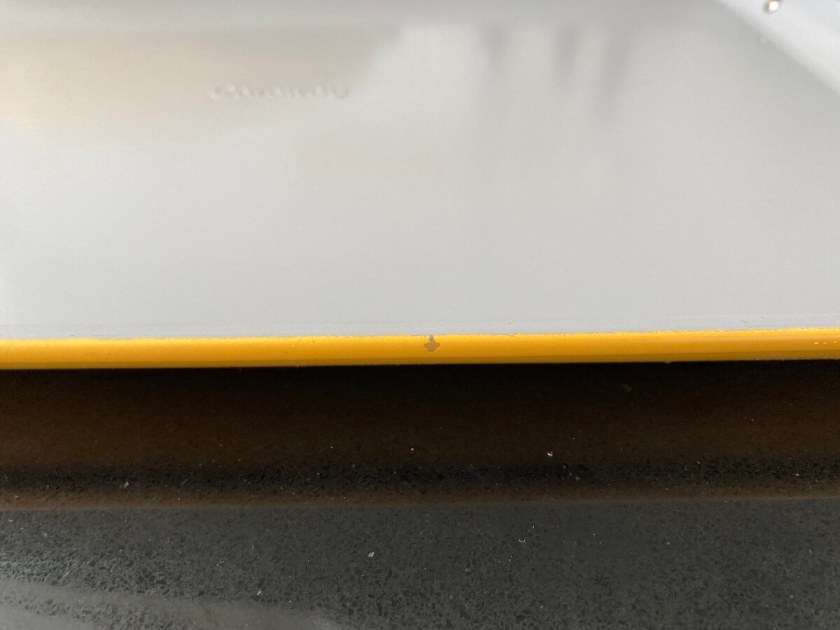
  • The exterior scratches, chips, and stains easily. (Caraway provides a magic eraser to clean the latter.)

After one use, I noticed the large baking sheet already had a chip! But looking back at my photo with the chicken above, maybe it was like that from the start? Or maybe it chipped when I stored it?

A chip on the side of a marigold Caraway bake sheet.

Did this chip during use or was it chipped from the beginning? I will never know.

But I know for sure the stir fry pan did not have any scratches initially. And now, it does.

A scratch on the bottom of a marigold Caraway pan.

A scratch on the bottom of the stir fry pan after a few uses.

How Long Does Caraway Last?

This begs the question: how long will these products last? All nonstick cookware will eventually wear out, usually in a few years. Unfortunately, it’s kind of a disposable product in that way. A few years ago, I bought a GreenPan (from one of its cheaper lines, similar to this). It only lasted about a year or so before losing its nonstickiness.

On Reddit, people report a wide range of lifespans with their Caraway, from four months to four years, so it’s hard to draw a conclusion, especially without knowing how people handle their cookware or how often they use it. If these wear out in a year, as many people report, then it’s a pricey proposition to replace them. As I continue to use these, I’ll report back.

UPDATE 11/11/25 – I’ve used these products for six months now and they’re still nonstick, though the chip on the large sheet pan has gotten much bigger.

Is Ceramic-Coated Cookware Really Non-Toxic?

I thought this was going to be a quick review, but when I looked into the question of toxicity and ceramic-coated cookware, well, it got complicated — and this post got much longer. Caraway’s nonstick pans are made of aluminum with stainless steel bottoms and handles and a ceramic coating — not Teflon — to achieve a nonstick surface. Up until 2014, Teflon was made with perfluorooctonoic acid (PFOA), which has been linked to cancer. These days Teflon is made with polytetrafluoroethylene (PTFE), which is touted as safer, but its safety is questionable. (If your Teflon cookware is scratched, throw them out.)

Enter ceramic-coated cookware, which is marketed as a non-toxic alternative. It’s essentially made of silicon dioxide (that’s the fancy term for sand) and other metal oxides, not PTFE or any other PFAS (a.k.a. “forever chemicals). The coating is applied as a liquid and cured in a process called sol-gel. From what I’ve read, ceramic-coated cookware is inert — meaning it won’t leach chemicals.

Caraway doesn’t disclose what exactly is in its coating, but advertises its cookware as free of any toxic materials, such as PTFE, PFOA, PFAS, and heavy metals. However terms like “toxic-free,” “non-toxic,” and “eco-friendly” aren’t regulated by government agencies, so claims are hard to substantiate. Consumer Reports tested several non-stick pans and found that one product that claimed to be PFOA-free was not. And in 2021, Tamara Rubin of Lead Safe Mama tested a Caraway pan and found evidence of 20 metals including trace lead and cadmium.

Testing of Caraway Products For Safety

Using XRF testing, Rubin reported that the level of lead she found seemed to indicate that it was in the aluminum, which is “not unusual to find, especially with recycled aluminum products.”

Are these trace metals harmful? Caraway uses a third-party lab to conduct tests, but I couldn’t find the tests on its website. I eventually found this 2019 leaching report and this 2020 report via My Chemical Free House and LeafScore, respectively. The tests don’t look at whether there are traces of heavy metals, but does evaluate whether the products pass FDA and EU regulations for leachable heavy metals and forever chemicals, which they do. So, even if there are trace metals in the inner layers of the pan, they don’t transfer to food.

Still, Rubin has concerns about ceramic-coated cookware in general as they haven’t been studied for long-term health impacts. “That is not to say they are definitely harming you, but for me, the science is not yet settled as to whether or not they are definitely safe as a long-term cookware piece for your family.” She personally avoids any nonstick cookware (among many other types of cookware and brands, which she lists here.)

After reading the LeafScore article, which looks into testing, ethical production, and greenwashing (which LeafScore says Caraway is at risk of), I agree with their conclusion that “As things stand, there’s no evidence that Caraway cookware will leach toxic heavy metals into food. In fact, there’s robust evidence that the ceramic coating doesn’t leach heavy metals and doesn’t contain lead or cadmium. For us, certified laboratory testing carries greater weight than handheld XRF testing of used cookware by one (albeit well-intentioned and well-regarded!) researcher.”

Personally, I feel fairly comfortable using these Caraway products, though I don’t use them as my everyday cookware (more on that below). I’m glad that Caraway sent these items to me for review, because it got me questioning the safety of other items in my kitchen.

I threw out some old bakeware from Ikea. In trying not to be wasteful, I had been using them even though they were beat up and scratched. What I did not realize (and was horrified to learn on Reddit) was that those baking sheets had a nonstick coating, most likely Teflon. Have I been poisoning myself?! Now I’m trying to learn what’s in this marble coated Korean nonstick pan, which I use on occasion.

Final Thoughts (for now) on Caraway Cookware

Scrambled eggs being cooked in a yellow nonstick pan.

Scrambling some eggs in the stir fry pan with a OXO silicone turner.

For me, the Caraway bakeware is a definitely an upgrade. I use them regularly for sheet pan dishes and roasting potatoes and veggies. And while the stovetop pans are a nice addition, they’re not core to my cooking life. I don’t consider them general purpose cookware. For most of my cooking, I use cast iron, stainless steel, or carbon steel. If you like browning or searing your food (which I do), these will give you better results than nonstick.

If you feel comfortable using nonstick, Caraway is a decent choice. Even though the company’s marketing might be overstating how eco-friendly it is, it does seem like the founder cares about non-toxic cooking. (Many brands, unlike Caraway, don’t share their testing results.) The most useful items, I think, are the fry pan and the baking sheets. If you’re fond of making casseroles, lasagna, and the like, then the rectangle pans will be useful too. Whether Caraway is worth it to me depends on how long it lasts. Time will tell.

But the safest, most environmentally-friendly option is to ditch nonstick all together. With the right technique and use, stainless, cast iron, and carbon steel can be nearly nonstick. They’re not coated with anything. And they’ll last a lot longer.


If you found my review useful and plan to shop Caraway, consider using my link. Thank you! Also, you can find a directory to all my housewares reviews here.

A view of people in row boats on the lake in Central Park.

Low Buy 2025: Q2 Check-in

Just popping in with an accountability post to say that I’m doing pretty good so far in making this a Low Buy Year. I used to indulge in retail therapy on the regular when I was feeling stressed or sad. And even though I do feel stressed and sad (among other feelings) about all the horrors taking place now, I’ve stuck to my low buy goal.

To review, my wardrobe goals for a Low Buy 2025 are:

  1. Keep my clothing acquisitions to 20 items.
  2. Half of them should be secondhand.
  3. Dress more colorfully!

Wardrobe Acquisitions

In Q2, I bought three items:

While one pair of shoes came in, one went out. I donated a pair of sneakers, which suddenly became uncomfortable. I had worn them with no problem for almost a year, but then they injured my toes! (So weird. Has this ever happened to anyone else?)

I also went through my bags and decided to let go of four of them. One of them was the first nicer bag I ever bought, the Rebecca Minkoff M.A.B. tote. (Which you can see here on eBay as the style is discontinued.) I think I still have too many bags, especially small bags, which I realistically don’t carry that much. Some have sentimental value, which has made them hard to get rid of. But removing four is a good start.

I also ejected a handful of items that I don’t wear anymore and listed them on Poshmark. (But boy is selling on Poshmark so slow these days.) I’d like to do a deeper cull of my closet. But I’m still wondering: Am I going to get back to my usual size, or is this my usual size now? If the latter is the case, then I have a bunch of clothes to get rid of due to size. (After dealing with a health emergency in 2023, I have lost some, but not all of the weight I gained that year from medication.)

Welcome Objects 2025 Wardrobe Count 
Additions: 3
Number of Additions That Are Secondhand: 1
Subtractions: 14

Housewares Acquisitions

A hand with pink nail polish holding up three walnut kitchen utensils.

Midcentury modern vibes, Ikea style: Ladle, wok turner, spatula

I didn’t set a low buy goal for housewares as I’m generally pretty good about not going overboard in this area. Still, I did get a few things that were nice-to-have but not necessarily needed. Among them:

  • These drinking glasses from Ikea. We already have a clear set and added four more in green because we find we often run out of glasses before we run the dishwasher. I think these glasses are kind of the perfect size.
  • Walnut wok turner, ladle, and spatula. I admit these were an impulse buy. Do I already have implements that serve these purposes? Yes. But I just love the walnut, which gives these a stylish midcentury modern look.
  • Organic cotton blanket from Quince. While I already own a similar cotton blanket (bought back in the day from Target), it was for our full-sized-bed days and not quite big enough for our current queen bed.
  • Caraway also sent me some of their products to try, including some bakeware and this square grill pan. And yes, a review is in the works. Stay tuned!

First Photo: Harry Gillen


This post contains affiliate links but was not produced in partnership with any brand.

a person wears a linen midi dress in front of a brick wall

Quince Review: Linen for Her & Him

The recent heat wave has got me thinking about cooler fabrics, so I thought it was time to share my thoughts on some linen items from Quince. Naturally breathable and hypoallergenic, linen is often touted as an ideal fabric to wear in warmer months. Here are six different Quince linen items that I or the Mister have tried on.

About Quince’s Linen

As you can see by how they named their items below, Quince emphasizes that their linen comes from European flax, which they say requires less water, fertilizers, and irrigation. While the fabric is from Europe, the garments are made in China, Vietnam, and India.

The brand claims several certifications:

  • BSCI (Business Social Compliance Initiative) certified factories, indicating intentions to improve working conditions throughout the supply chain
  • OEKO-TEX Standard 100 (Certificate Number: BJ050 139683), ensuring that no hazardous substances are present

Before we proceed, I want to be upfront in saying that I’m not a linen expert by any means. I’m actually pretty new to linen as I’ve never been fond of how much the fabric wrinkles. So these are just my impressions. The weight of Quince’s linen fabric feels light to medium-ish and perfectly appropriate for summer. However, it also felt a bit scratchy to me. So if you, like me, have sensitive skin, beware.

Women’s 100% European Linen Tank

a person tries on a linen tank, which looks big

Me (an almost 5’4″ person) in a size small.

This tank is the first Quince linen item I tried. I like the idea of wearing this in a matching set with the high-waisted shorts or ankle pants, but I sent it back. I’ve found Quince’s sizing to be mostly consistent across products, but once in a while, the sizing is off. This was the case with the tank. I ordered this in my usual size of small and found it too big. The armholes were large and it’s also quite long for someone petite. (And to be clear, I’m petite.) Since I first tried this, Quince has come out with a cropped version that has a more flared shape (but also buttons down the back, which I find extraneous), so if you’re short that might work better. If you are taller or have a long torso, the original tank is a better bet.

Women’s 100% European Linen Pajama Set

a person wears a black linen pajama set

Trying on size small. Of course the pants are way longer on me than the model.

I tend to sleep hot, so I figured these linen pajamas might help with that. I ordered a size small, my usual size. And while it fits, it’s not as loose as I’d like for sleeping. In particular, the pants are too tight in the thighs for me. (Some measurements: the top in small is 21″ pit to pit, and about 24″ long. The pants have a 11″ rise and 27″ inseam. The waistband is 14″ across unstretched.)

linen pajamas on a bedspread with an eyemask

The set consists of a boxy top and elastic waist pants.

It’s a nice-looking set, though. The cut of the boxy top with a wide neckline is classy, and it has a lovely drape. The elastic waist pants have a straight leg and pockets. In fact, this set is so nice that you can wear it out of the house. A whole linen outfit for $60? Yes, please!

a person wears a linen pajama set styled with a tote bag and sandals

The set makes an easy outfit to leave the house in. Tuck in the shirt and throw on a tote bag and some sandals. [review]

I contemplated keeping the set for wearing out. However, the material felt too scratchy for me, even after washing it with baking soda in an attempt to soften it. Perhaps it would have softened over time, but I wasn’t patient enough to find out. I’ve since moved on to Quince’s silk pajamas, which are serving me well. (Review of the silk pajamas here.)

Women’s 100% European Linen Scoop Neck Midi Dress

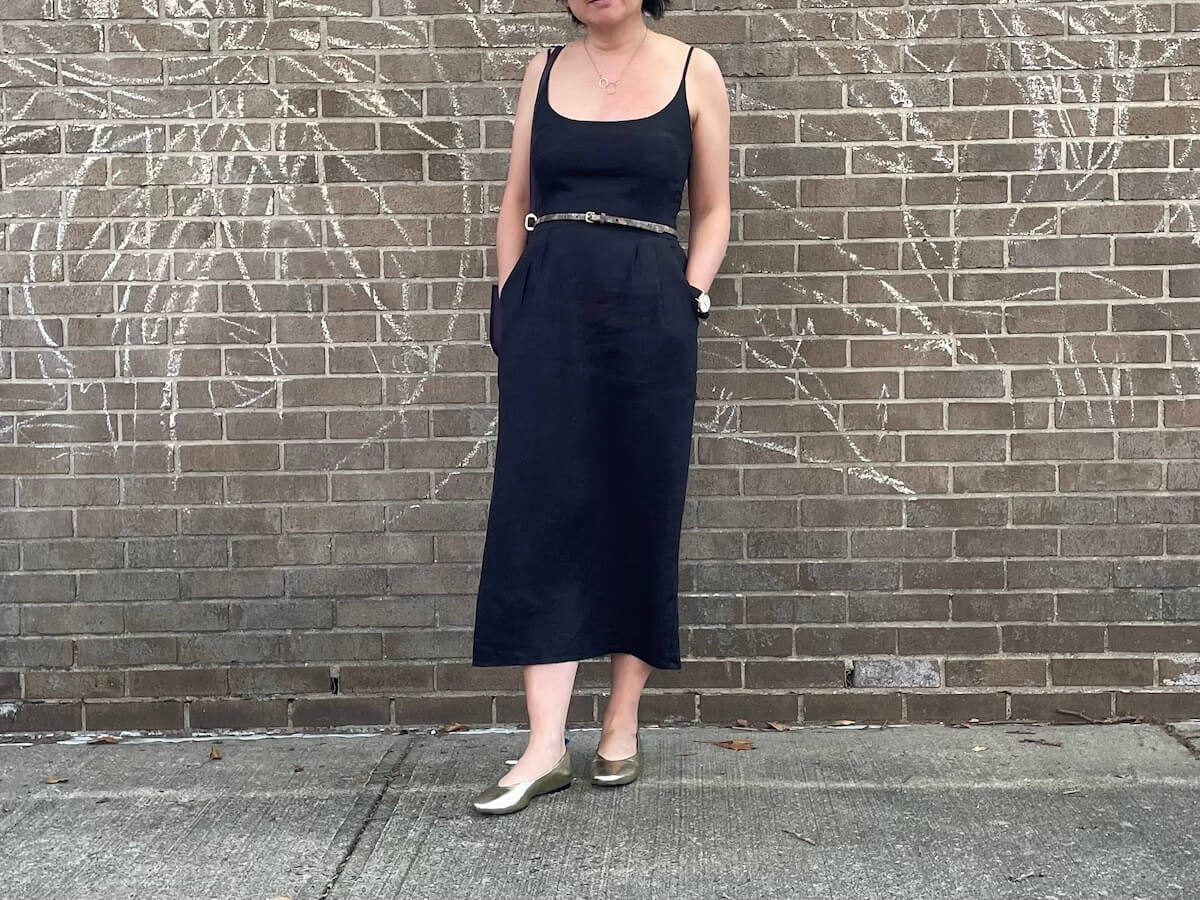
A person wears a black linen midi dress, posing in front of a wall

Dress courtesy of Quince. Wearing a size small. Also wearing these dr. Liza flats [review].

This linen midi dress is the one item I kept. It’s lined, which is why I can wear it. I find this dress quite flattering. I was a bit worried that it would be too long, but it worked well even for a petite person like me. The pleated skirt area hides my tummy pooch, the spaghetti straps are adjustable, and it has pockets! It’s probably not great for someone busty, though. For a more detailed review, please see this post where I styled it for spring.

Men’s 100% European Linen Drawstring Beach Pants

linen drawstring pants

The drawstring pants right out of the packaging.

Alright, welcome to the men’s section of this review. These linen pants have a nice relaxed summer look. Vacation vibes, anyone? They feature a drawstring elastic waist, slightly tapered leg, angled front pockets, and patch back pockets with a button each for closure. However, the Mister found these pants too tight on the calf. He ordered his usual size and while the waist fit fine, the leg was not working for him. (The leg opening was about 6.5″ measured flat.) While he’s a runner, I don’t think his calves are especially huge or anything.

Men’s 100% European Linen Pants

the front of a pair of linen pants

The waist is elastic, but also has a zip fly.

the back pockets of a pair of linen pants, with buttons

These pants have welt back pockets.

These linen pants convey a dressier look. While, like the beach pants, these pants have an elastic waist, there’s also a zip fly with a button closure. There are welt back pockets instead of patch pockets. The leg has a straight cut. Yet, the Mister also found that these were too tight in the calf. He was perplexed as to why they were cut so skinny. These pants look normal on the model, but I’m guessing the male models of Quince have skinny legs?

Men’s 100% European Linen Short Sleeve Shirt

a blue linen short sleeve shirt

The shirt right out of the packaging.

closeup of collar of a linen shirt from quince

A closer look. I still don’t understand why Quince puts hangtags on all their clothes when they ship direct and don’t have a store.

Our impression of this linen shirt was a good one. It’s got an easy fit but doesn’t seem too big. It fit true to size. And at $30, it’s a good deal (as most Quince items tend to be). However, the Mister sent this back. The sleeves were too long on him. But he often finds that this is an issue with American clothing brands for him. If that is not an issue you usually encounter, then this shirt will probably be fine, proportion wise. One small quibble: I wish the buttons were not so bright, as they really stand out on a darker color like navy. The buttons are white in every color.


This post contains affiliate links but was not produced in partnership with any brand. If you shop through my links, I may earn a commission. You can find a directory to all my clothing reviews here. If you found my review helpful, please consider shopping through my link. Thank you!
Three images of three different models wearing jumpsuits or dresses with bold, colorful nature-inspired prints.

Fitting Room Review: Mixed by Nasrin

Have you ever walked down the street and fallen in love with something that someone else was wearing? That’s how I found out about Mixed by Nasrin. I spied someone at the Brooklyn Book Festival wearing a jumpsuit with a fun print and asked her about it.

Mixed is known for its colorful prints, which are hand drawn by the designer, Nasrin. The name, Mixed, refers to her mixed heritage. The garments are made in a New Delhi factory that Nasrin says she visits regularly.

While I’ve had my eye on items on their website for awhile, I wasn’t sure how the pieces would fit and Mixed doesn’t have a storefront. However, from time to time they hold in-person shopping days at their Brooklyn studio. I finally signed up for one and tried on a bunch of things.

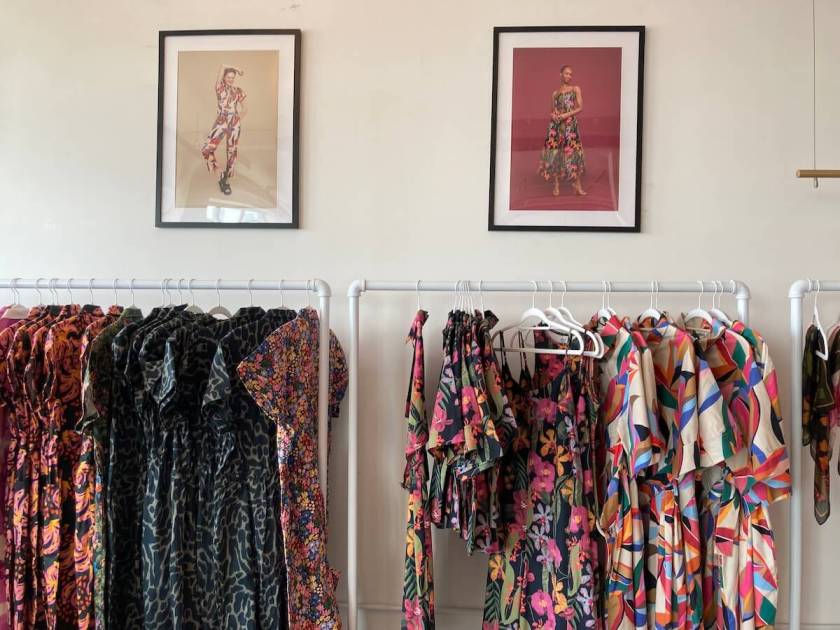
Colorful clothes hanging on white clothes racks.

Mixed by Nasrin has a spacious, light-filled studio in Brooklyn.

So, here’s what Mixed by Nasrin looks on me, a person who is 5′ 3.5″ and pear-shaped. For reference, I’m currently about 133 pounds, a 32D/34C, and wear a small in most brands, though I sometimes wear a medium, especially in bottoms.

Mixed by Nasrin Classic Jumpsuit

A model wears a short-sleeve jumpsuit with a jungle print.

Jumpsuit – $228

Above: a 5’6″ model wears size S in the jungle print. Below: 5’4″-ish me wearing S in a print that I don’t see on the website.

A person wearing a short-sleeve jumpsuit in a fitting area.

Wearing size S in the regular length. It also comes in a tall inseam.

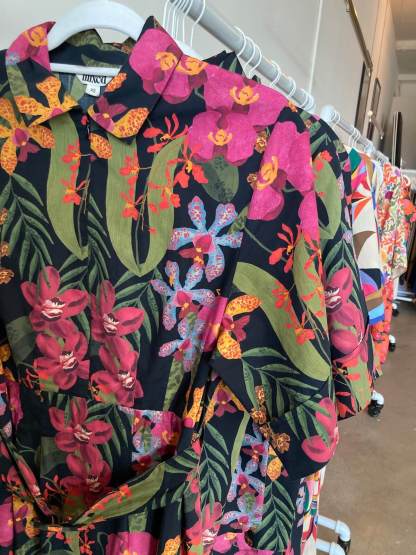
This slim jumpsuit with a tapered leg is what first caught my eye and put Mixed on my map. Made out of cotton with a bit of stretch, the fabric feels medium weight and not thin. The metal buttons are just for show — there’s a zipper closure down the front behind the button flap. It currently comes in 13 prints. This jungle print is my favorite. I also love the watermelon print and a mango one that is no longer on the website. It comes in two lengths: regular and tall. (Of course, as a shortie I’m wearing the regular length.)

Sadly, this cut didn’t work for me even though it looks cute from the front. While it has an elastic waist and I could get in on, it was tight around the belly. When I sized up to a medium, though, the thigh and leg were too baggy and the crotch hung pretty low. So, I’d say it fits true to size. It’s just not for my particular body shape. If you, like me, also possess a little belly pooch, then this may not fit comfortably.

Wide Leg Linen Jumpsuit

Above: a 5’7″ model wears an XS in the solea print. Below: 5’4″-ish me in an XS.

A person wearing a wide-legged V-neck jumpsuit with a floral print.

The length of this jumpsuit is cropped, even on me. So I think the model above must be wearing a sample with a longer inseam.

The wide leg jumpsuit, on the other hand, worked well for my shape. This double V-neck jumpsuit has room in the hips and a wide leg that’s cropped. A blend of 50% linen and 50% viscose, the fabric has the breathability of linen without the wrinkles. The fabric feels lighter than the fabric of the tapered jumpsuit, and drapes nicely.

Out of everything I tried on, this fit me the best. The waist is described as relaxed on the Mixed website, but I found it to be fitted, probably because I sized down to an XS. The top part is snug and the fabric doesn’t stretch, so if you’re busty, broader up top, or just want some wiggle room, try your regular size.

Rachel Dress

A model wears a shirt dress with an orchid print.

Rachel Dress – $228

Above: A 5’8″ model wears XS in the orchid print. Below: 5’4″ me in XS.

A person wearing a shirt dress with an orchid print in a fitting area.

This dress was oversized on petite me; it would look better on me with shorter sleeves. Wish there was a petite version!

This dress was at the top of my list to try on. A classic-looking shirt dress that comes in pretty prints (or denim), it features a matching belt and an invisible zipper at the front so you can adjust the neckline. The 100% cotton fabric is on the thinner side and lightweight. This dress has both structure and a flowy vibe with its A-line silhouette.

However, I found the proportions weren’t ideal for someone petite. It feels like there’s too much fabric for someone my size. On me, the dress was pretty long and the elbow-length sleeves are a bit much. I don’t think it looks bad necessarily, just that it could look better with some adjustments. I’m now wishing I had folded up the sleeves to see what that looks like.

This also ran big as I could comfortably wear an XS. (By the way, I adore this orchid print. The ruby print, which Nasrin brought back from a past season, is great too.)

Dayah Dress

A model wears a long-sleeve, knee-length shirt dress with a black and white print.

Dayah Dress – $185

Above: a 5’9″ model wears XS in the paloma print. Below: 5’4″ me in a S.

A person wearing a shirt dress in a fitting area.

Sleeves would need to be rolled up for someone petite.

This is another shirt dress, but with long sleeves and buttons for closure. It comes in a cotton poplin or denim that feels lightweight, similar to the Rachel Dress. A matching fabric belt cinches the waist, but of course you could style the dress without it.

This fit true to size, though the sleeves were a bit long for petite me and would look better rolled up. I think how the dress falls on the model at the knees looks better than where it falls on me past the knees. (Of course, it doesn’t help that I’m not posing in a flattering way.) While this was a perfectly fine shirt dress, it was the least exciting one out of the bunch to me. But, I personally don’t like long-sleeved shirt dresses, so I am biased.

Maxi Dress

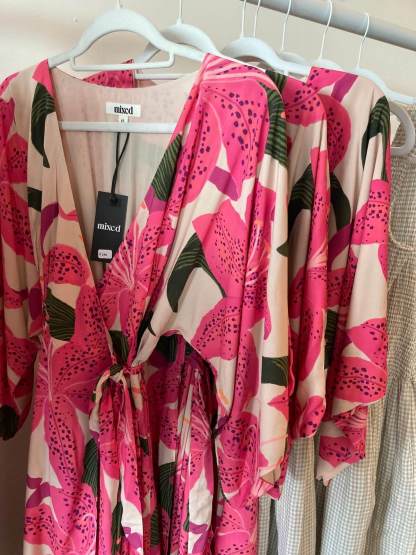
A model wears a flowy maxi wrap dress with a pink lily print.

Maxi Dress – $248

Above: a 5’8″ model wears XS in the lily print. Below: 5’4″ me in a S, I think. (I forgot to note which size I was wearing here. It could also be an XS, but I think I tried my regular size of S.)

A person wearing a long wrap dress posing in front of racks of clothing.

Pleasantly surprised by this dress.

This dress brings the drama! Made out of viscose, it hangs nicely off the body. It is a true wrap dress with the interior ties. The waist sits high, which I found flattering as it gives the illusion of a taller legs. Everything — the sleeves, the full skirt portion — is so flowy. When you walk in this dress, there is movement.

On petite me, the dress skims the floor. This is not my usual style, but I was surprised by how much I liked it. The cut looks good on many body types and bust sizes. This maxi dress currently comes in 11 prints. It’s definitely one to consider if you’re looking for a statement dress.

UPDATE 10/5/25 – For fall 2025, this dress is now made out of polyester with a viscose modal lining. The one I tried above was 100% viscose without a lining so make sure to check the fabric content as it’s different among the prints. (Personally, I’m trying to avoid polyester for environmental and hot flash reasons.)

Shopping at the Mixed Studio

Jumpsuits hanging on a white clothes rack

A rack of sample jumpsuits.

One more thing I want to point out is that all the dresses and jumpsuits above have good-sized pockets. Yes!

I also looked at a few of the tops, so here’s some quick impressions:

  • I tried on the KQ button up shirt, but the pleated waist felt constricting on me, and combined with the wide sleeves, it was a strange contrast that didn’t do my shape any favors.
  • While I didn’t try on the boatneck top, it looked small. I’d size up in this one.
  • The 100% cotton Alex sweater looked well made with fabric that felt thick. I like the cut: it’s cropped with billowy sleeves. I’m not into turtlenecks, so I’d love to see a crewneck version of it.

A model wears a floral print button up shirt with elbow-length sleeves.A model wears a sleeveless boatneck top with a palm print.A model wears a floral print turtleneck sweater.

The whole studio shopping experience was great. There were beverages on hand, different types of shoes to don with outfits, and the staff hang back to let you try things at your own pace.

Plus, there are items in the studio that you won’t find online, such as a few past prints and sample garments. The samples have different measurements from the regular stock or slight imperfections, so they were marked down.

I took home one of the wide leg jumpsuits and it is a mood brightener. I feel confident and comfortable in it. One of my style goals for this year is to dress more colorfully, and Mixed is helping me do that. I’m so glad I decided to visit the studio in person, and I look forward to seeing what Nasrin designs next!

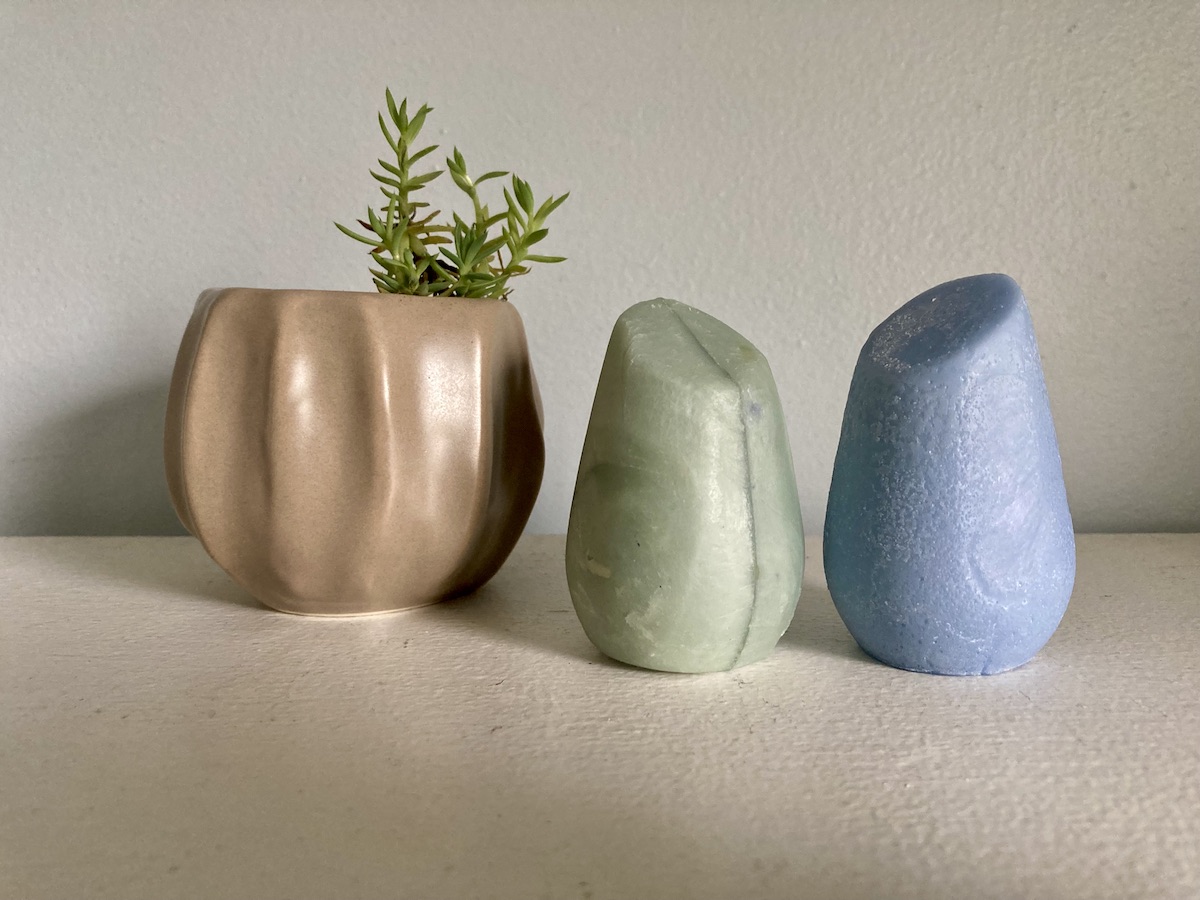
Two bar shampoos that look like little sculptures next to a small potted plant.

Shampoo & Conditioner Bar Review: HiBAR, Good Time, & LAMISSAPPLE

In an effort to use less plastic and make more sustainable and healthy choices for personal care, a few years back I switched to shampoo bars. I’ve tried a few brands — HiBAR, Good Time, and LAMISSAPPLE — so I thought I’d share my experiences here.

five bar shampoo and conditioners in front of a tiled wall

Haircare brands I tried: LAMISSAPPLE, HiBAR in the middle (after months of use), and Good Time.

In all cases below, I ordered the moisturizing hair products, but all of these brands carry products for different needs. All of the products in this review, which I purchased myself, are cruelty-free.

HiBAR

These bars look like little sculptures. They are tapered at the top for easy application. Launched in 2018, HiBAR was founded by some parents whose kids attended school together in Minneapolis. I bought these from Target, though of course we are not shopping there these days.

Key Ingredients: Coconut oil, Vitamin B5, rice protein (for detangling). These ingredients are in both the shampoo and the conditioner.

The back of the packaging on two HiBar items, which lists the ingredients.

The full ingredient list for the HiBAR shampoo (left) and conditioner (right).

Scent: There’s several types of citrus peel oils in these bars — orange, lime, lemon grapefruit — plus ginger root oil. This gives these a light fresh scent, which I find pleasant. However, if you are scent sensitive, HiBAR also makes a fragrance-free version.

My Experience: No complaints here. The shampoo lathers lightly. With the conditioner, there’s not much lathering, so you have to trust that when you’re rubbing it on your hair that it’s applying. My hair does feel soft after using these. I found the conditioner bar lasts longer than the shampoo.

Good Time

A hand holds a round bar shampoo from good time

Good Time Hydrating Hair Duo – $28

This is the sister brand to Who Gives a Crap, a certified B Corp, which I am a fan of. (My review here). Plus, their products won some awards, including an Allure beauty award.

Key Ingredients: In the shampoo: coconut, glycerin, birrea seed, jojoba oil, shea butter. In the conditioner: shea butter, coconut oil, and Vitamin E.

Scent: These had a strong, perfumey smell. When the package arrived, I could smell the scent even before opening up the box! Strangely, other people have called the scent “delicate” in their reviews but I found it strong.

My Experience: I didn’t even want to try the product given the strong smell, but in the name of bloggery I did. However, I only tried it once. The shampoo bar felt like a soft pebble in my hand, and it lathered fine. But I could not tell you how my hair felt and behaved afterwards because the scent bothered me enough that I had to immediately rewash my hair with another shampoo. So yeah, a big no from me.

In any case, it looks like Good Time, which launched in 2022, closed recently. A statement on the Who Gives a Crap site says that they’ve decided to focus on their core business of toilet paper and their goal of ensuring that everyone has access to clean water.

LAMISSAPPLE

Two bar shampoos that kind of look like muffins and a bamboo soap dish.

LAMISSAPPLE:  Mango Solid Shampoo for Dry Hair – $15, Conditioner Bar (which comes with a bamboo box) – $18

I first came across this California-based, made-by-hand brand at zero waste store Fillgood in Berkeley, CA. I get the sense that LAMISSAPPLE is a very small operation. In addition to hair care products (which have a muffin-like form factor), they also make eco-friendly cleaning products.

Key Ingredients: The entire ingredient list for the shampoo bar is: mango vegetable butter, SCI, sodium coco sulfate, mineral water, organic urucum powder, B5 protein, mango essential oil.

Ingredients for the conditioner bar are: castor oil, BTMS (short for behentrimonium methosulfate, an emulsifier that hydrates and contrary to its name, is not a sulfate), coca butter, cetearyl alcohol, coco-glucoside, absolute of Tahitian gardenia, almond extract.

Scent: The shampoo bar has a light, powdery, almost sweet scent. It smells just like what I’d imagine a small batch operation of shampoo bars to smell like. The conditioner bar, which is a newer offering, smells sort of like chocolate.

My Experience: The shampoo lathers up really nicely. It takes just a couple swipes of the bar on my hair to create a foamy lather. The conditioner bar, similar to the HiBAR one, doesn’t really lather up that much. The instructions say to rinse the conditioner with clear water and a mild shampoo. While my hair feels clean and soft after use, I don’t love that there’s this extra step of using shampoo again after the conditioner.

One nice thing about this brand is that you can purchase a travel-size piece for $5, so you can try before committing to a whole bar. As a repeat customer, I also automatically received a discount at checkout.

A side note: I’m confused by the name. The logo reads “LA Miss Apple” but the text on their site and in emails says “LAMISSAPPLE” in all caps. I’m not sure if I should be pronouncing this brand as one word or three. Lamissapple? La Miss Apple? LA (as in Los Angeles?) Miss Apple?

My Favorites

For the conditioner bar, it’s a tie between HiBAR and LAMISSAPPLE in terms of performance, though I have a preference for the citrus scent of the HiBAR and it seems easier to apply. When it comes to the shampoo bar, LAMISSAPPLE is my favorite. Both HiBAR and LAMISSAPPLE give me clean, soft hair, but I enjoy the luxurious lathering of LAMPISSAPPLE’s shampoo bar more.

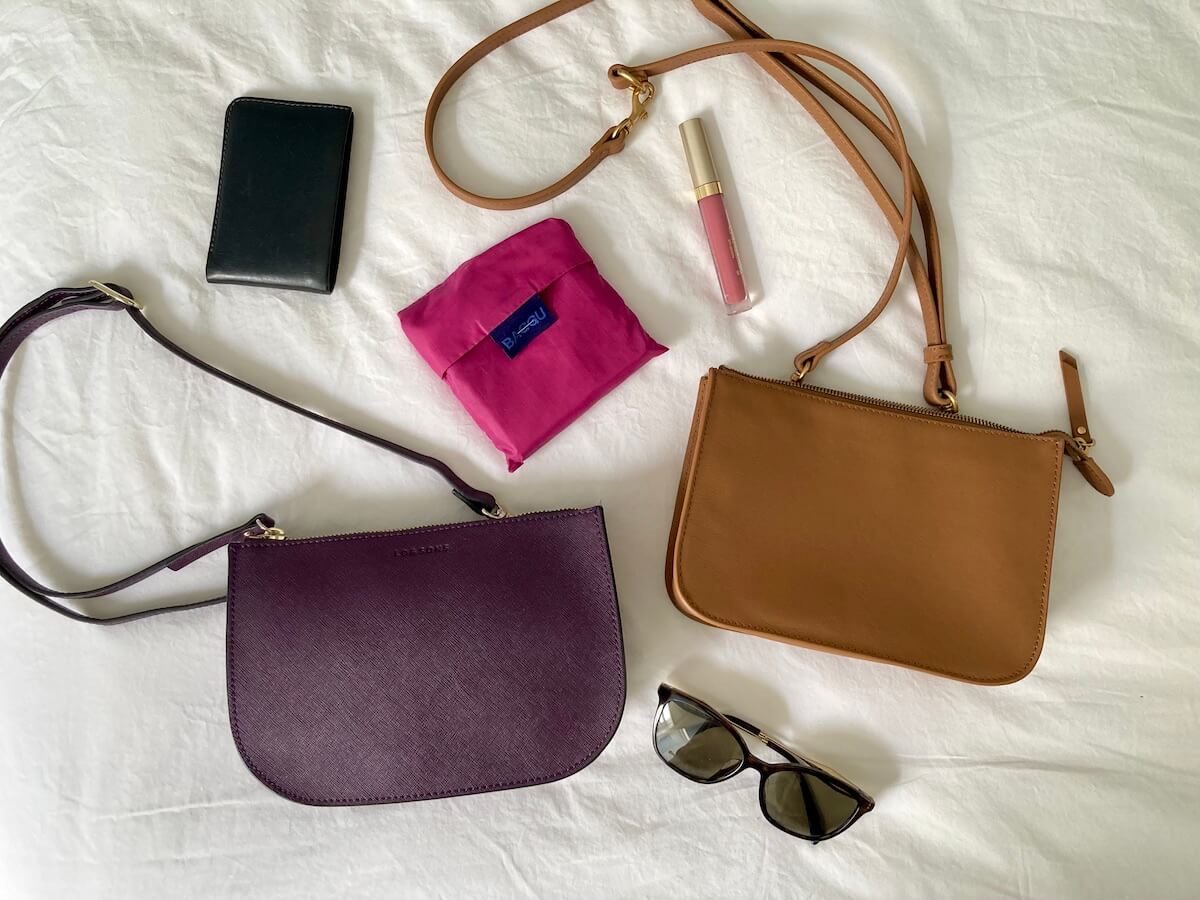
Two belt bags and various objects that may go in that bag, like sunglasses, wallet, lipstick, reusable bag.

Convertible Belt Bags: Lo & Sons vs. Quince

Back in the fall, I noticed that Quince had a new product in their lineup: a belt bag that sure looked a lot like the Waverley from Lo & Sons. As I shared in this review, the Waverley convertible belt bag is one of my favorite bags. I own two of them (the original and the 2) and wear them often. The Waverley is a must for me on travel days as well as a convenient bag to throw on when I’m running errands.

I do not need another belt bag, but my curiosity got the best of me. Plus, in the name of bloggery, I felt it was my duty to know how this Quince version compares. So I ordered the Quince Italian Leather Convertible Belt Bag in cognac, which I hoped would go with my brown dr. Liza sandals. Here’s how it compares to my trusty Lo & Sons Waverley.


The bags in this post were given to me by the respective brands and this post contains affiliate links. If you shop through my links, I may earn a commission. As always, I decide what to write about and all opinions are my own. Thanks for the support.


Design

Two belt bags, as seen from the wide. They are both tapered and wider at the bottom.

They both feature a tapered design.

Design-wise, these bags are quite similar. The Lo & Sons has a rounder shape at the bottom while Quince is more squared off. I think the Lo & Sons has a more pleasing shape, but the Quince shape is good too.

One note of difference: on the Quince the zipper extends beyond the bag, so there’s a bit that hangs over the edge.

I found another difference in the construction of the bag. The bottom of the Quince bag appears to be one piece of leather, but on the Lo & Sons it’s several. I don’t know that one is better than the other, just noting that they’re not the same.

The bottoms of two belt bags. The one on the left is made out of several pieces of leather stitched together.

The bottom of the bags reveal a different construction. The Lo & Sons is made out of several pieces of leather while the Quince appears to be made of one.

Organization

In general, I’ve found Lo & Sons bags to have organization that makes sense. The interior of the Waverley has a large slip pocket on one side. On the other side is a zippered pocket, and inside of that are three card slots.

The Quince similarly has a large slip pocket on one side and a zippered pocket on the other. It has two card slots, but these are outside of the zippered area, so they are less secure.

The biggest difference, though? The Lo & Sons has a card slot on the back of the bag.

The back of two belt bags. The one on the left has a back pocket.

The Lo & Sons Waverley 2 has a card slot on the back, which is handy for something you might need to reach for often like a transit card or hotel key.

Leather

I was disappointed when I opened the box from Quince, mostly because the color was not what I was expecting. The leather has a dull finish to it. Quince says their bag is made out of top-grain Italian leather whereas Lo & Sons offers the Waverley in three types of leather: nappa, saffiano, and cactus.

My first Waverley bag is made out of nappa leather, which feels soft and supple.(Though one drawback of nappa is that it can scratch easily.) Saffiano has been stamped with a crosshatch finish that makes it stiffer and more scratch resistant. I can’t speak to the cactus leather since I haven’t seen it.

My non-expert impression just from feel is that Lo & Sons uses nicer leather. The top-grain leather on the Quince bag is thinner and has a more plasticy feel to it.

But is it even top-grain leather? Tanner Leatherstein recently took apart a Quince tote bag advertised as top-grain leather and his conclusion was that was a lie! He said it’s actually split leather, the lowest grade of leather. That particular bag is no longer on the Quince site, but it was made in Gurgoan, India whereas the belt bag is from a factory in Dongguan, China. So, one cannot conclude that the belt bag is also false advertising, though one does wonder.

Both brands use leather tanned in a Leather Working Group-certified tannery. But Lo & Sons specifies that their nappa leather is gold certified (the highest level) while Quince does not say what level of certification they have.

A plum-colored saffiano belt bag from Lo & Sons

Lo & Sons Waverley 2 in saffiano leather.

Other Materials

Hardware: Quince’s hardware is a brassy gold color. Lo & Sons offers more hardware options: gold, silver, and gunmetal. The finish of the Quince hardware is more matte than Lo & Sons.

Edging: The edging on the Quince cognac bag matches the color in both the body and the strap, which is a nice touch. On both my black-colored and plum-colored Waverley bags, the edging is black. I checked photos of the Waverley in a brown, sienna, and it also has matching edging on the body, though the edging on the strap is black. However, other colors, like the dark tan, has all matching edging.

Closeup of hardware on straps. Top strap from Lo & Sons has shinier hardware.

The hardware on the Lo & Sons (top) is shinier than the Quince.

Sizing

Lo & Sons’ Waverley 2 comes in two sizes: small and large. The Quince belt bag is a touch bigger than the large Waverley in all dimensions. It is also a tad heavier at .84 lbs versus .80 lbs for the Waverley — not that I can feel the difference.

Lo & Sons Waverley Large: 8.3″w x 5.9″h x 2″d
Lo & Sons Waverley Small: 8.0″w x 5.6″h x 2″d
Quince Convertible Belt Bag: 8.46″ w x 6.3″ h x 2.36″

Both brands come with two straps, a short one, and a longer adjustable one. You can add the short one to the long one to wear the bag crossbody. The strap is thicker and harder to adjust on the Quince bag.

According to my measurements (which includes the hardware on either end):

Lo & Sons Waverley
Short strap: 15.5″
Long strap: 23.75″-42.75″
Total length at longest: 58.25

Quince Convertible Belt Bag:
Short strap: 16″
Long strap: 23.75″-41″
Total length at longest: 57″

As you can see below, the sizing between the large Waverley and the Quince convertible belt bag are more or less the same. They both fit my essentials: wallet, phone, a reusable bag, packet of tissues, lip balm, and sunglasses. (See the four ways to wear a convertible belt bag here.)

Tow images of the same person wearing two different belt bags cross body.

Lo & Sons (left) and Quince (right) worn crossbody.

Two images of the same person wearing two different belt bags around the waist.

Lo & Sons (left) and Quince (right) worn as a belt bag.

Summary & Final Thoughts

Price: Not surprisingly, Quince is cheaper because that’s what they do. Their convertible belt bag is priced at $69.90.

The large Waverley is $220 retail (an increase in price from a year ago) though it often goes on sale. Right now it’s 30% to 60% off depending on the leather, which puts it at $88-$154.

Here’s a summary:

Lo & Sons
Waverley 2
Quince
Italian Leather Convertible Belt Bag
Leather Nappa, Saffiano, Cactus Top-grain Italian
Size Large: 8.3″w x 5.9″h x 2″d
Small: 8.0″w x 5.6″h x 2″d
8.46″ w x 6.3″ h x 2.36″
Weight Large: .8 lbs
Small: .6 lbs
.84 lbs
Strap lengths 23″ – 58.25″ 23.75″ – 57″
Price Large: $220
Small: $210
But there’s often a sale
$69.90

Quince markets itself as luxury for less, but I wouldn’t say that this belt bag feels like a luxury item. However, I do think it’s a perfectly fine minimalist bag, particularly if you favor a neutral color like taupe. (The bag also came in black, but that and the cognac are not available at the moment.)

Having used two Lo & Sons Waverley bags extensively, I know that they’re nicer with higher-quality leather. They also offer more variety. Between the types of leather, color, and hardware, there’s 22 options.

Plus, Lo & Sons is a small, family-owned business that purports to care about sustainability. How sustainable or ethical is Quince? It also makes sustainability claims, but it’s been accused of greenwashing. (See my last post where I discuss an article that does a deep dive into the brand. ) Good On You gives Quince a “not good enough” rating while Lo & Sons is not in their database.

If you can spring for the Lo & Sons, I think it’s worth it to pay more for the better product. But at $70, the Quince bag isn’t a bad option at all.

Pink blossoms flowering on a tree, brownstone homes in the background

Low Buy 2025: Q1 Check-In & Recent Reads

Hello from Brooklyn, where the weather is all over the place this time of year. We had some really lovely days of 70°F, but now it’s back in the 40s. Anyways, that is all to say, getting dressed has its challenges during this season, the Spring of Deception. I am enjoying all the blossoming trees, though. (Except on days where my allergies act up).

No Buy Q1 Challenge

In my last low buy shopping update, I challenged myself to keep going with my No Buy January for the whole quarter. I succeeded — though not in spirit. You see, in March, I bought a secondhand dress from ThredUp. It was definitely an impulse buy. (What can I say? Things are terrible, and I was lured by the momentary feeling of — not joy exactly, but of something light.)

But, when it arrived, I found that it was four inches shorter than listed. I thought it was going to be knee-length, but it was more like a mini. So I returned it. That’s 0-2 when it comes to ThredUp. My first purchase from them a couple years back also went back because the garment had a hole in it.

What I Read on Shopping & Sustainability

There’s a sandwich bag of plastic in your brain – Well, this is alarming though not surprising. The writer, a doctor, suggests not using plastic water bottles because the bottles themselves, especially the caps “are significant sources of microplastics in general and polyethylene in particular.” After moving to NYC, I found myself using a reusable plastic water bottle more often because if I’m schlepping stuff around all day on foot, I want my load to be as light as possible. But after reading this article, I switched back to my favorite stainless steel water bottle.

However, another significant source of polyethylene exposure is from the air we breathe, which contains fibers from carpets and textiles, as well as dust from plastic goods. Doh! All of the carpeting and rugs in our apartment are synthetic, not to mention the textiles on our sofa and other seating. What can you do when you’re surrounded by plastic? Rebuying these items in natural fibers would be a pretty penny, too, and not something most households would probably be able to afford.

Buy all this, look rich – The Cut ran a lengthy story about the rise of Quince. I found the writer’s description of Quince spot on: “Short for quintessentials, Quince is a one-stop dupe shop for a new generation of discerning, albeit weary, consumers, mostly millennials who have been burned too many times by sketchy Amazon sellers and fast-fashion impulse buys. They aspire to a tastefully understated beige lifestyle of safe, classic status symbols — sans the logos and markups that typically accompany them.”  Ouch, that last sentence hurts a little. “Beige lifestyle.” Is this what I aspire to? (It’s true that I am no fan of logos.)

Seriously, though, I thought this article was a good dive into the brand and its appeal. It notes how the rise of Quince coincided with an increasing casualness in the way we dress. It enumerates the way the company cuts costs. For example, Quince doesn’t buy inventory upfront from factories, which is the traditional way of doing things, but only pays for a product after a customer has bought it and the factory ships it out. It also brings up Quince’s possible greenwashing and the contradiction of consumers caring more about natural fibers, but not about cost-cutting and whose expense that might be at.

How to clean your dishwasher and improve its efficiency – Lastly, I was quoted in this article on the Redfin blog about cleaning the cleaning device that is the dishwasher. I gave some tips about how to use natural ingredients to clean in an eco-friendlier way.


Driftwood beach at sunrise, orange blue sky

Off-Season: 2 Days on Jekyll Island

One big difference between living in my former city of San Francisco and here in Brooklyn is that the East Coast has actual seasons. That means that at some point in the midst of winter, you will tire of the cold and want to get away to a warmer locale. That’s how I recently ended up on Jekyll Island, a barrier island that is part of the Golden Isles off the coast of Georgia.

Besides warmer weather, the Mister and I had a few other requirements for a quick vacation. We didn’t want to travel too far. And we wanted to recharge with some nature — and no crowds. That last point made going somewhere in the off-season particularly appealing.

As a state park with beaches and bike trails, Jekyll Island fit the bill. We went at the end of January when temperatures were 60°F/15.5°C during the day, and in the upper 40s at night. While not exactly warm, it was much warmer than NYC.

How to Get to Jekyll Island

If you’re flying, the nearby major airports are in Jacksonville and Savannah. We flew into Savannah (flight time: 2.5 hours), which had better flight options from New York. From there, we rented a car. Savannah/Hilton Head International Airport is a small airport, and it was quick to navigate to the rental car counters.

The drive from Savannah to Jekyll Island is about 1.5 hours. It’s an hour and change from Jacksonville. Do note that as a state park, Jekyll Island charges a parking fee of $10 per day.

If you can’t or don’t want to drive, there are buses which go to the nearby city of Brunswick. From there, you’d have to take a taxi to the island.

Where We Stayed: The Jekyll Island Club Resort

The exterior of the Jekyll Island Club Resort, a yellow building with four floors and a turret.

The Jekyll Island Club opened in 1888 as an exclusive resort for America’s wealthiest families.

We decided to stay at the Jekyll Island Club Resort because of its historical interest. The Jekyll Island Club owned the island and was founded by some of America’s wealthiest families — think the Morgans, Rockefellers, and Vanderbilts. When you’re that rich, you can own not just a vacation home, but a whole vacation island. After WWII, the state of Georgia seized and bought the island, then turned it into a park for the public to enjoy.

The original clubhouse with its distinctive turret has been renovated and expanded. In addition, the resort has several “cottages,”  which are the former vacation homes of fancy families. I put “cottages” in quotes because they’re really mansions.

We opted to stay in Crane Cottage, which has 13 rooms, a library, an industrial kitchen and dining room for events, and a courtyard. So quiet was it that we wondered if there were even other guests staying in the building.

A fountain in the center of a courtyard of an Italian style building.

The courtyard at Crane Cottage.

A hotel room with a metal poster king bed and shutters over the window.

Our king room in Crane Cottage. I did not clean up before taking this photo so you could see what it’s really like. There is an armchair at the right corner (barely visible, but it’s orange) and one nightstand to the left of the bed.

We booked a traditional king room, which was advertised as 269 to 500 square feet. I’m not sure if that includes the nicely-sized bathroom (probably), but the room itself, with a modern four poster bed, was “cozy” in real estate parlance. There was only room for one nightstand and one armchair. The cabinet on which the TV sat contained a mini fridge, coffee maker, and safe. But there was no desk, closet, or wardrobe. The lack of clothes storage was a bit of a problem as there was nowhere for us to hang up our jackets. A coat rack or even hooks on the wall would have been helpful.

The cottage is just a five minute walk to the clubhouse. Leather armchairs, dark wood paneling, and framed vintage textiles give it an old world vibe. I especially admired the curved bar, a replica of the one in the movie The Legend of Bagger Vance, which was filmed at the resort in 1999.

Jekyll Island Club Resort curved bar with barstools that have tassels on them, a wooden liquor cabinet, and a chandelier.

Surprisingly, the clubhouse didn’t originally have a bar. The current one is a replica of the one in the movie The Legend of Bagger Vance.

There’s a decent sized pool, which I had all to myself during our stay. It’s heated so you can use it in colder months. In fact, as a lap swimmer, I found it too warm for my liking.

A pool with chairs and cabanas surrounding it at Jekyll Island Club Resort

The pool is a good size and heated in the winter. Cabanas can be reserved for an additional fee and have TVs. (That seems like it’d be annoying.)

Our room rate included a breakfast buffet — they gave us a credit to use in the dining room — which offered the typical items you’d expect from an American breakfast: scrambled eggs, bacon, sausage, cereal, pastries, yogurt, and potatoes (which were strangely tasteless). The buffet is usually priced at $34, which I wouldn’t have been happy paying full price for. It was satisfactory, but nothing special. I enjoyed the omelette station and the elegant Victorian dining room decorated with columns and chandeliers.

As I mentioned in my Philadelphia dining post, I’m immunocompromised, so I try to eat outdoors when I’m out. That wasn’t an option for the breakfast buffet. But at least in the off-season, the dining room wasn’t crowded.

Things to Do on Jekyll Island

We stayed for three nights, which meant two full days on the island, plus travel on either side. Here’s what we did in two days:

Bike Rides

Jekyll Island boasts 24 miles of bike trails. I am not the most confident on two wheels, but I felt safe biking on the island, as the trails are not shared with cars. On some parts you ride through lovely wooded paths, on others close to the beach, and then there are less scenic parts where the path is next to the road. Several companies on the island offer bike rentals, but we rented bikes from the resort. Biking was our main form of transit while we were on the island.

Driftwood Beach

Eroding driftwood trees on a beach, with slabs of stones in the foreground

The beach has hundreds of eroded trees.

The sun in the distance rising, trees and driftwood on the beach in the foreground

Driftwood Beach at sunrise

We biked to this beach on the northern end of the island, which has hundreds of fallen and eroded or petrified trees creating a haunting landscape. The water is shallow here, so the waves never pull the trees out into the sea and they lie on the beach like relics from another era. We liked it so much we came back the next morning for a magical sunrise.

St. Andrews Beach & The Wanderer Memory Trail

On the other end of the island is St. Andrew’s Beach. Near the picnic area (which has a public restroom), you’ll find the start to the Wanderer Memory Trail. The Wanderer was one of the last known slave ships to dock in America.

The trail is an outdoor installation with exhibits every so often that tells the story of a young African boy named Umawalla who was kidnapped and brought to America on the Wanderer in 1858. Some of the exhibits have audio, which you can hear with the push of a button. The trail ends at an observation deck. I thought it was well done, and appreciate the effort to educate about the dark history that took place here.

Georgia Sea Turtle Center

A sea turtle pokes its head out of a large tank at the Georgia Sea Turtle Center

A patient, rescued from a cold stunning event, at the Georgia Sea Turtle Center

Where do sea turtles go when they get sick or injured? If they’re lucky, they’re found and brought to the Georgia Sea Turtle Center, where they will be nursed back to health and released. There is general admission to an exhibit hall, but I recommend going on the behind-the-scenes tour where you will get to meet some of the aquatic patients, ask a veterinarian questions, and see cute hatchlings in their tanks.

History Tours

The Jekyll Island Club Resort has a tour about its history, free for hotel guests or $15 for non-guests, given by the hotel’s concierge. I found the tour uneven as some stories about various fancy people went on for a while, and I wanted to learn more about the workers, the majority of whom were Black, who maintained the resort, as well as the building’s architecture.

There are other history tours on the island, such as tram tours run by the Mosaic museum, which we didn’t get the chance to visit.

Where to Eat

A wet burrito with rice and beans, sopes in the background

The burrito adovado from Tacos La Fiesta, with grilled chicken simmered in adobo sauce.

This section is going to be short because I only want to share eateries that are worth mentioning, and honestly the food we had on Jekyll Island was mid.

However, one evening we drove over the causeway into the nearby city of Brunswick to patronize a modest Mexican restaurant with just a few tables. I was not expecting to eat one of the tastiest burritos of my life! But wow, it was fantastic. If you ever find yourself in this neck of the woods, I heartily recommend Tacos La Fiesta. (It doesn’t have outdoor seating, so we went on the early side to try to avoid other people.)

Closing Thoughts on Jekyll Island in the Off Season

Marshy lands on Jekyll Island with a field stretching out and wispy clouds in the sky.

A view during one of our bike rides.

If you have more time to spend, adding on a few days in Savannah would be worthwhile. We saw just a bit of the city on our last day in between checking out of the hotel and heading to the airport.

As to the island, I can see how it remains a vacation spot for more than 100 years. It’s got nature, beaches, and history. During peak tourist season in the summer, a water park opens. And more businesses are probably open then.

But honestly, even though it’s sleepier, I think it might be better to come in the off-season, especially if you, like me, don’t love crowds, bugs, or humidity.

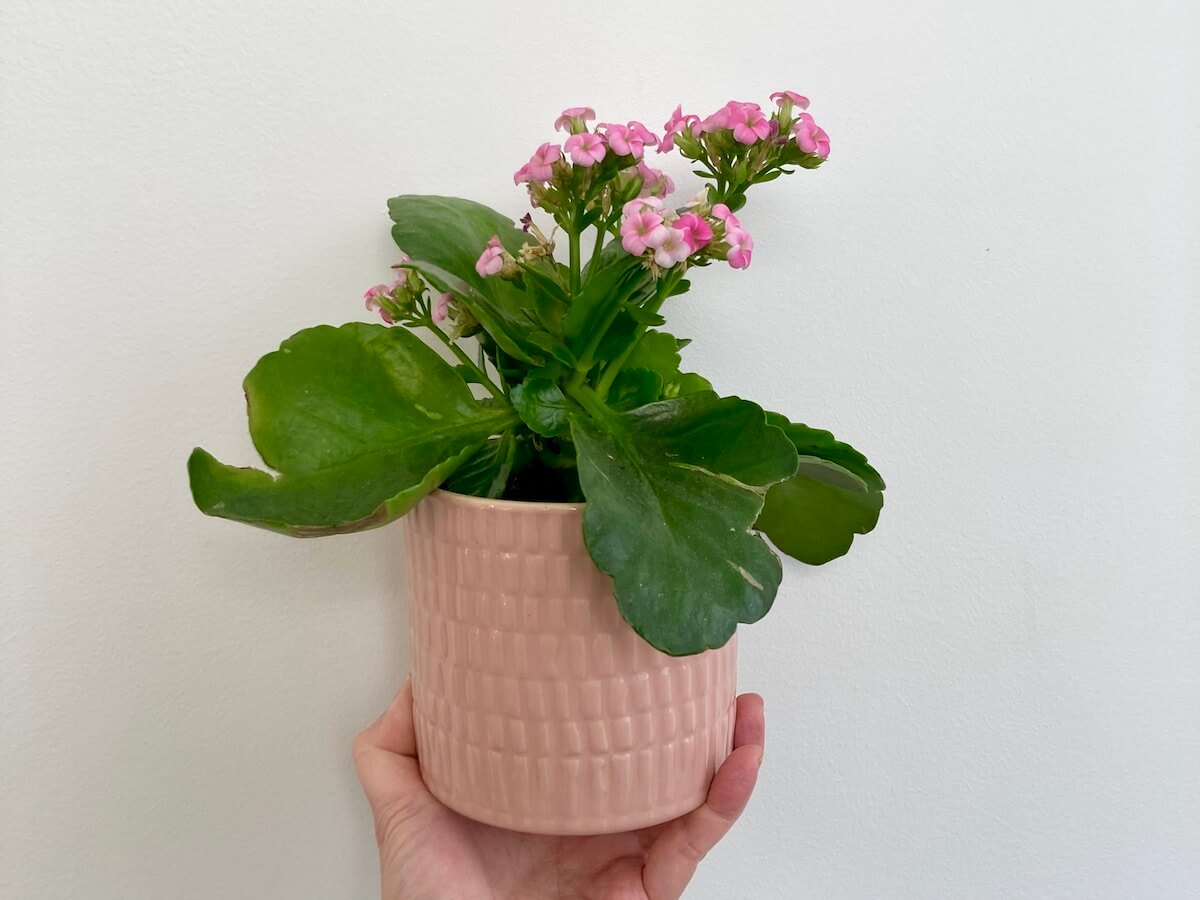
A hand holds up a potted plant with pink flowers.

Do I Keep Blogging in These Times?

I haven’t been paying much attention to the blog lately. Like, what is the point of blogging about making personal sustainable and ethical moves with (gestures all around) everything happening under this federal administration?

This time around feels worse too. As a woman of color, as someone from an immigrant community who cares about the environment, science, public education, civil rights, and many other things, I feel assaulted by the news every day. And I’m dismayed by all the people who are seemingly fine with authoritarianism.

I’m trying to figure out how to balance work, blogging, personal endeavors, and doing something to resist or at least help other people. Part of resisting is finding joy where we can and taking care of ourselves (which at the moment seems to have translated into eating more pastries, a delicious but not exactly healthy move).

I’ve been calling my reps. And I’ve also used some of my Quince coupons to donate clothing to a mutual aid group that helps migrants. (Thanks to everyone who has used my referral code.)

For now, I plan to continue blogging on here, though not as frequently. We’ll see. Also, I signed up for a Bluesky account. I remain on Instagram and Threads for the time being, but meh Meta. Cannot be beholden to these social media companies run by CEOs who are kissing the ring. Hell, I’m even contemplating restarting my newsletter (though I don’t love writing newsletters) because at least that’s something I can control.

A Successful No Buy January

I didn’t buy stuff in January. Please clap! Honestly, though, this was not hard for me. I’ve been slowing down my consumption for eight years now, and not buying any clothes or housewares for a month is easy peasy now. (Well, I did buy the plant above, but my rule is that plants don’t count!)

If I want to challenge myself, I should extend the time, so I’ll do just that. Can I do a No Buy Q1? I also remain committed to various boycotts and added a few. (I’m looking at you, Target.)

What I Read on Sustainability

What happens to 50,000 lbs of extra LA wildfire clothing donations? – When the wildfires happened, I saw people in NYC asking how they could donate clothes. And I thought, “Use your common sense! It makes no sense to ship your clothes across the country!” There were plenty of clothes donation locally. Too much, in fact as this story and others report. A surge of donations — and the labor it takes to sort and organize them — can actually impede relief efforts. It’s always best to give cash, if you’re able to, during a crisis.

Really appreciated this pair of articles from The City that demystified how to recycle in NYC – The first one is a guide to how to recycle, including what they take and don’t. And the second story takes you behind the scenes at the recycling plants. NYC says if you’re not sure about something, put it in the recycling bin and let them figure it out. Because if you put it in the trash, it is definitely going to the landfill.